
The wind shifts, doesn’t it? One day, a fragile peace holds, and the next, the old grief rises again from the earth. These conflicts, though tragic, cast a long shadow, and with that shadow comes a certain grim practicality. Men and women will bear the weight of it, and some companies will share in the making of it. It falls to us to look at those companies, not with approval, but with a clear eye.
Two names stand out in this landscape: Lockheed Martin and RTX. Both are builders of things that fly, things that strike, things that, at their heart, are meant to keep other men from harm – or to inflict it. For the investor, these are not merely stocks; they are pieces of a vast and complicated machine.
But which machine is better built? Which offers a more solid return, not just in dollars and cents, but in the long, slow reckoning of value?
The Maker’s Hand: Direct Force vs. Diversified Craft
Lockheed Martin, the larger of the two, is a direct line to the business of defense. They build the aircraft, the missiles, the systems that define modern warfare. The F-35 Lightning II, a marvel of engineering and a burden on the treasury, is their flagship, a testament to both American ingenuity and the endless appetite for innovation in the art of war. It’s a costly thing, that plane, but it keeps hands busy and money flowing.
RTX, on the other hand, is a more varied field. Their Collins and Pratt & Whitney divisions serve both the commercial airlines and the military. Raytheon, their defense arm, crafts the missiles, the air defenses, the systems that stand between a nation and a threat. They even have a hand in the Iron Dome, a shield over a troubled land. It’s a broader reach, a more diversified gamble.
War is a sorrowful business, and none of us wish to see it prolonged. But should it linger, these two companies will undoubtedly play a role in replenishing what is lost, in fortifying what remains.
Which Path Leads to Value?
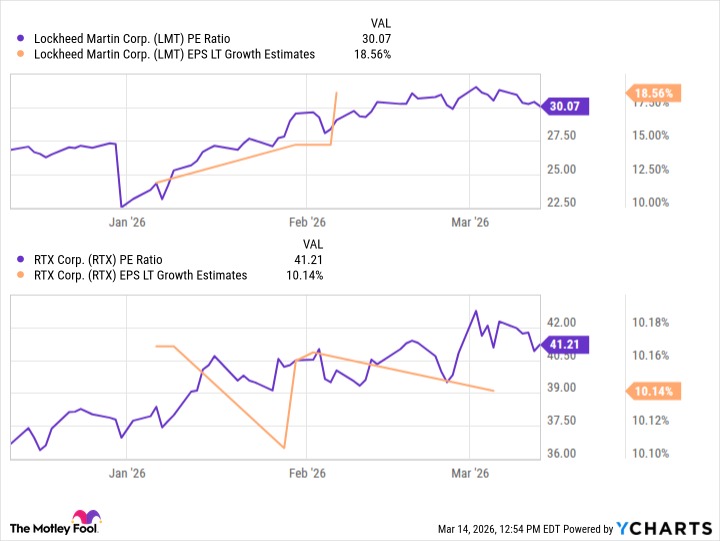
When we sift through the numbers, Lockheed Martin presents a clearer picture. It’s not simply about higher figures; it’s about the underlying strength, the solidity of the foundation.
Analysts anticipate stronger earnings growth from Lockheed Martin, a sign that the company is positioned to thrive in the years to come. And, ironically, the stock trades at a lower valuation. A price-to-earnings ratio of 30 is a reasonable price to pay for a company of this stature, especially when compared to RTX’s 41.
For those who seek a steady income, Lockheed Martin offers a more generous dividend yield of 2.1% compared to RTX’s 1.3%. And they have raised their dividend annually for more than two decades, a testament to their commitment to returning value to shareholders. It’s a quiet strength, a slow and steady growth.
Lockheed Martin also appears to be on firmer financial ground. Their leverage ratio is lower, indicating a more conservative approach to debt. Both companies have solid credit ratings from S&P Global, but Lockheed Martin’s A- rating offers a slightly greater margin of safety.
RTX is a capable company, no doubt. But Lockheed Martin simply checks more boxes. It’s a stronger, more stable, and more attractively valued investment. And in the long run, that’s what matters most.
Read More
- Invincible Season 4 Gender Swaps Tech Jacket As Fans Question Major Comic Change
- Building Agents That Learn and Improve Themselves
- Gold Rate Forecast
- Superman Flops Financially: $350M Budget, Still No Profit (Scoop Confirmed)
- Silver Rate Forecast
- Games That Faced Bans in Countries Over Political Themes
- 15 Films That Were Shot Entirely on Phones
- Trading Crypto with AI: A New Approach to Portfolio Management
- Unveiling the Schwab U.S. Dividend Equity ETF: A Portent of Financial Growth
- 22 Films Where the White Protagonist Is Canonically the Sidekick to a Black Lead
2026-03-17 21:44