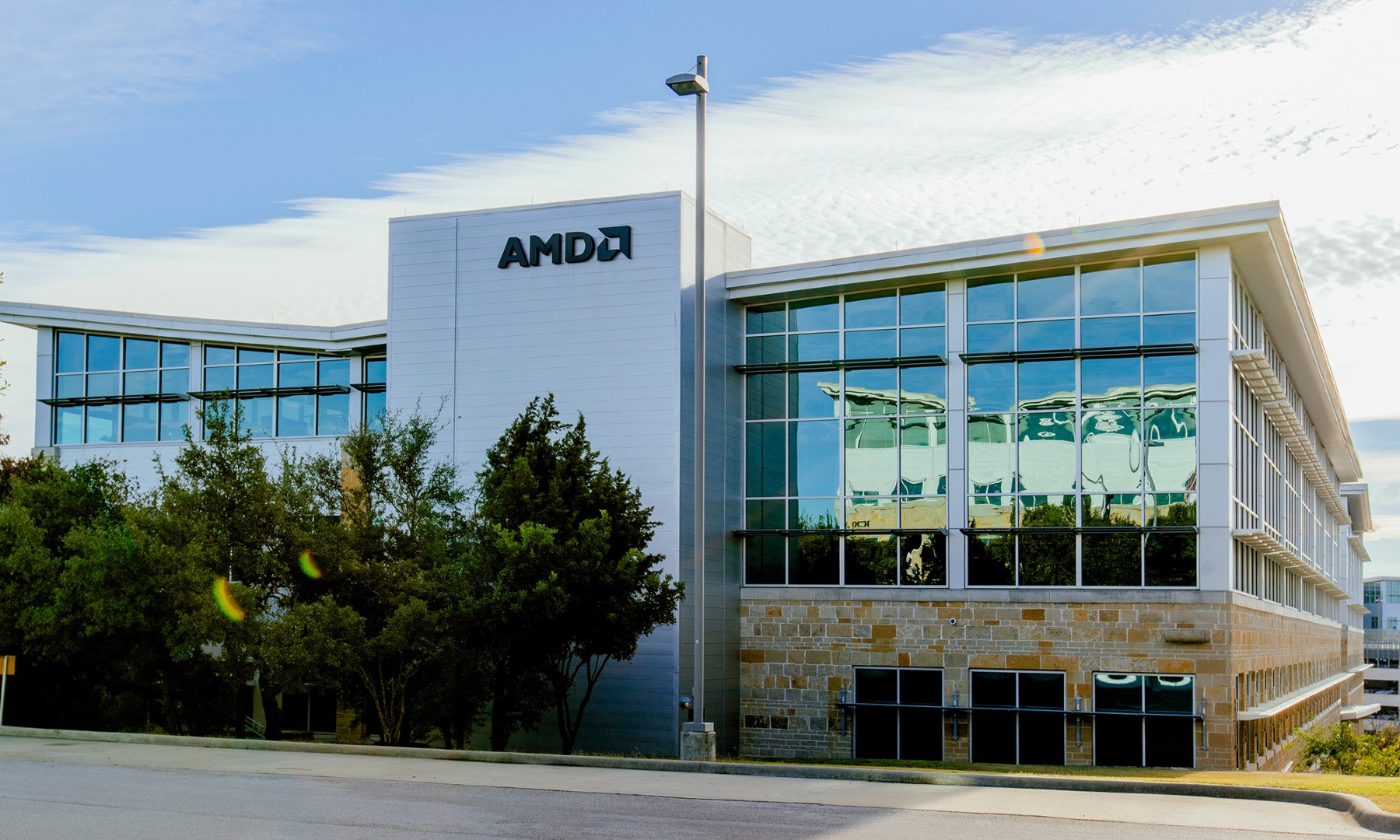
Now, one might think that the markets operate on logic, on careful consideration of future earnings. One would, of course, be quite wrong. Shares of Advanced Micro Devices (AMD +8.32%) took a bit of a tumble recently, which is always amusing. The reason? The future, apparently. Investors got a glimpse of what AMD expects for 2026 – a rather optimistic 32% growth in revenue – and decided that such prosperity was, well, improbable. The sheer illogicality of it all! It’s like a gnome refusing a perfectly good mushroom because it might be poisonous. AMD’s fourth-quarter results, incidentally, were perfectly respectable, showing a 34% year-over-year increase. But numbers? Bah. Markets prefer drama.
The interesting bit, though, isn’t the overall growth, but where that growth is coming from. The data center segment – where AMD peddles its EPYC server CPUs and Instinct data center GPUs – is doing rather well, growing revenue by 39% in the last quarter. And Lisa Su, the CEO – a woman who clearly understands the value of a well-polished spreadsheet – expects this to accelerate. She’s talking about over 60% annual growth for the next three to five years, and a staggering tens of billions in AI revenue by 2027. One suspects she’s been consulting with the Oracle of Silicon Valley.1
Now, one might assume this is all about the flashy bits – the AI accelerators, the MI400 series chips, the Helios rack-scale solutions. And yes, those are important. But there’s a rather surprising factor at play here: the humble CPU. It seems the CPU, long relegated to the role of dependable workhorse, is making a comeback. It’s a bit like finding out the stable boy is actually the rightful heir to the throne.2
AI Agents and the Return of the Processor
You see, the early days of Artificial Intelligence were rather simple. A chatbot asked a question, and the GPU, that tireless engine of graphical wizardry, spat out an answer drawn from its vast store of knowledge. All very straightforward. But things have become… complicated. We’ve moved on to AI agents. These aren’t just answering questions; they’re trying to do things.
An AI agent doesn’t just respond; it plans, it executes, it learns. It operates in a loop. You give it a request, and it decides what to do first. It has a toolbox at its disposal – web searches, file access, data analysis, code execution. And here’s the crucial bit: all that tool-calling happens on the CPU. The GPU is still involved, of course, but it’s the CPU that’s orchestrating the whole affair. It’s running the code, searching the web, manipulating the data. It’s the CPU that’s actually thinking about what to do next.
Imagine an agent tasked with creating a daily infographic of the 7-day weather forecast. First, it fetches the data from an external API. Then, it converts that data into a usable format. Then, it generates the graphic, either by running code or by calling an AI image service. Finally, it presents the result to you. The GPU is busy rendering the graphic, certainly, but it’s the CPU that’s directing the whole operation. As Ms. Su noted, these AI agents are spinning off a lot of traditional CPU tasks. It’s rather like a particularly efficient goblin accountant.
Ms. Su expects the server CPU market to expand strongly in 2026. AMD is increasing its production capacity, but CPUs could still be a bottleneck. Intel, unsurprisingly, is also seeing booming demand, but even they are struggling to keep up. It appears the world needs more silicon brains.
Multiple Paths to Prosperity
AMD has been steadily gaining market share from Intel in the server CPU space for years, and now an expanding market provides an additional tailwind. Intel is becoming more competitive, admittedly, but a rising tide lifts all boats. Even if AMD’s AI accelerator ramp-up is slower than expected, its EPYC server CPUs can still drive strong growth. It’s a bit like having a reliable mule alongside a fancy, but temperamental, warhorse.
In the data center GPU market, AMD faces a formidable opponent in Nvidia. But in the CPU market, AMD is in a stronger position. It’s a good thing to have options. A clever investor, after all, doesn’t put all their gold in one dragon’s hoard.3
So, what does all this mean? It means that AMD isn’t just riding the AI wave; it’s building a seaworthy vessel. It’s a company with multiple avenues for growth, and a CEO who understands the value of a well-executed plan. And that, my friends, is something worth paying attention to. Even if the markets don’t quite understand it yet.
1The Oracle of Silicon Valley is, of course, a highly eccentric individual who communicates primarily through cryptic tweets and complex algorithms.
2A stable boy, when revealed as the rightful heir, usually causes a great deal of consternation among the established nobility.
3Dragons, while magnificent creatures, are notoriously unreliable when it comes to financial matters.
Read More
- Games That Faced Bans in Countries Over Political Themes
- Gold Rate Forecast
- Silver Rate Forecast
- 15 Films That Were Shot Entirely on Phones
- Unveiling the Schwab U.S. Dividend Equity ETF: A Portent of Financial Growth
- 22 Films Where the White Protagonist Is Canonically the Sidekick to a Black Lead
- 20 Movies Where the Black Villain Was Secretly the Most Popular Character
- The Best Directors of 2025
- Brent Oil Forecast
- Superman Flops Financially: $350M Budget, Still No Profit (Scoop Confirmed)
2026-02-07 14:22