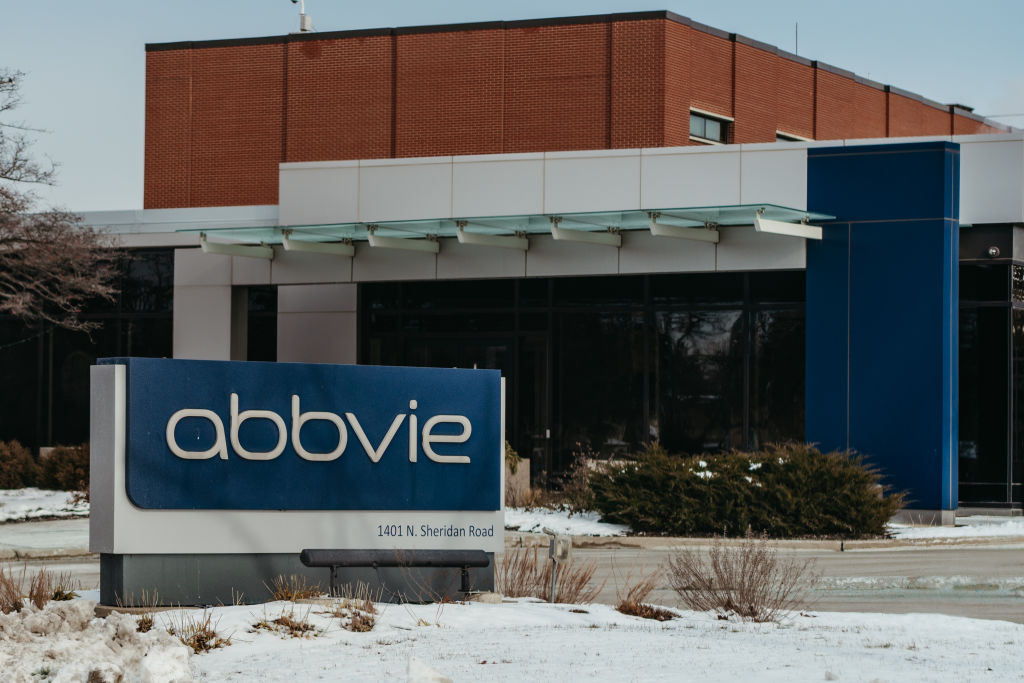
Thirteen years ago, AbbVie existed only as a promising appendix to Abbott Labs. A spin-off, you understand—like a particularly profitable limb deciding to pursue independent ventures. Now, it ranks third amongst the world’s healthcare behemoths. A respectable climb, wouldn’t you agree? One might even say…ambitious.
I acquired a modest parcel of AbbVie shares some time ago, and I have no intention of parting with them. Not a single share. The reasons are, shall we say, less about fervent belief in pharmaceutical miracles and more about a keen appreciation for corporate longevity. It’s a simple principle, really: a business that survives is a business that can, eventually, enrich.
The Art of Not Disappearing
Naturally, there are the usual enticements. AbbVie is a ‘Dividend King’—a rather regal title for a company dispensing payments—and currently yields a respectable 3.1%. A tidy sum for those inclined towards passive income. They also dabble in innovation, with roughly 90 programs bubbling away in their laboratories. A veritable cauldron of potential blockbusters, or, more realistically, a few modest successes and a handful of spectacular failures. That’s the nature of the game, isn’t it?
The stock has, predictably, doubled over the last five years. A performance that inspires confidence, although past prosperity is, as the disclaimers so diligently point out, no guarantee of future gains. Still, one can’t help but admire a company that consistently manages to extract profits from the human condition. It’s a skill, truly.
But none of that is the crux of my conviction. I intend to hold onto AbbVie not because of what it is, but because of its demonstrated ability to not become something else. Something…obsolete. A business, you see, is much like a well-trained acrobat: it must constantly adapt to avoid a rather unpleasant fall.
The capacity to evolve, to reinvent itself, is, in my estimation, the most crucial attribute any enterprise can possess. Without it, a company risks becoming a relic, a museum piece. And who wants to invest in a museum?
AbbVie boasts a surprisingly lengthy pedigree, tracing its origins back to 1888. A considerable lifespan in the cutthroat world of commerce. It has weathered numerous storms, including the dreaded ‘patent cliff’—a moment of truth for any pharmaceutical giant. When Humira, their star performer, lost exclusivity, many predicted a swift decline. But AbbVie, with a combination of shrewd acquisitions and relentless research, managed to navigate the crisis. A rather impressive feat, wouldn’t you say?
Never Say Never, But…
Can I definitively state that I will never sell my AbbVie shares? Such absolute pronouncements are best left to fortune tellers and politicians. The market, as any seasoned observer knows, is a capricious mistress. It’s entirely possible that AbbVie could stumble, lose its way, and fall into decline. But based on everything I’ve observed, that seems…unlikely.
AbbVie, in my view, is a stock that investors can rely on to deliver both dividends and growth over the long haul. It’s not a glamorous investment, perhaps, but then again, lasting prosperity rarely is. It’s a quiet, durable machine, quietly converting scientific discovery into shareholder value. And in this age of fleeting fads and unsustainable bubbles, that, my friends, is a rare and valuable thing indeed.
Read More
- Top 20 Dinosaur Movies, Ranked
- 20 Movies Where the Black Villain Was Secretly the Most Popular Character
- 25 “Woke” Films That Used Black Trauma to Humanize White Leads
- Silver Rate Forecast
- Gold Rate Forecast
- Spotting the Loops in Autonomous Systems
- From Bids to Best Policies: Smarter Auto-Bidding with Generative AI
- Celebs Who Narrowly Escaped The 9/11 Attacks
- 22 Films Where the White Protagonist Is Canonically the Sidekick to a Black Lead
- Can AI Lie with a Picture? Detecting Deception in Multimodal Models
2026-02-12 12:54