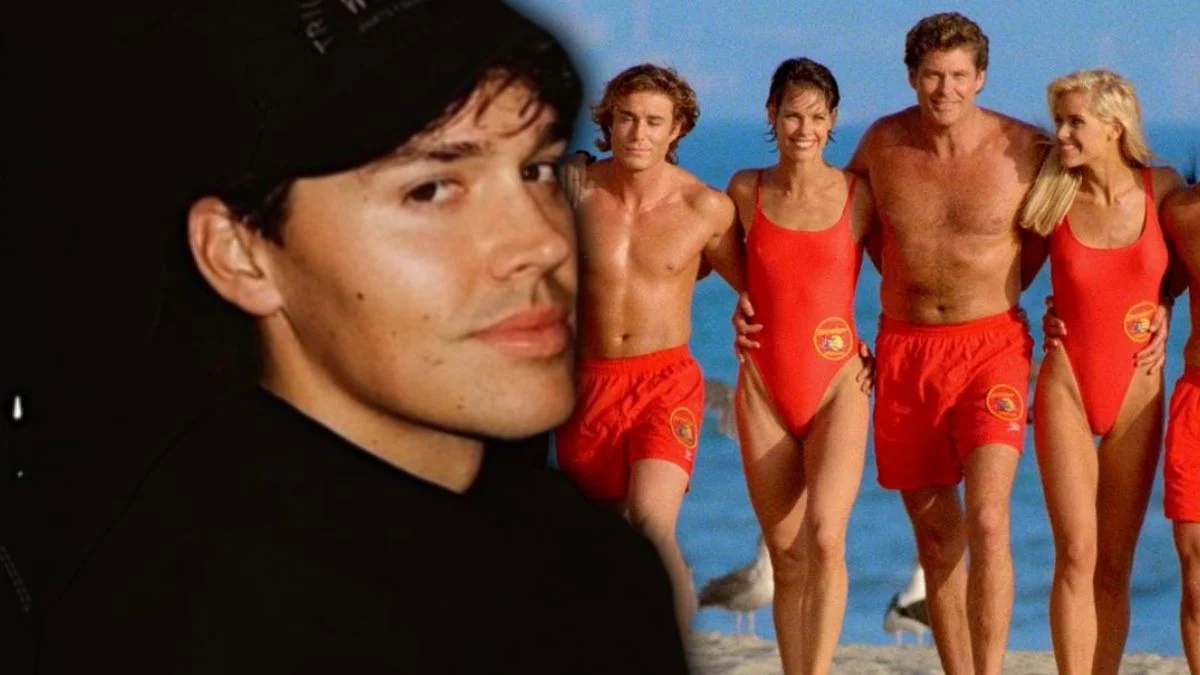
Filming for the new Baywatch series is underway in Los Angeles, and fans are getting their first glimpse thanks to photos shared from the set. Noah Beck recently posted behind-the-scenes pictures that quickly gained popularity online.
Beck shared photos on social media with the caption “whole lotta red.” The pictures show him dressed as a Baywatch lifeguard on a beach, sporting the iconic red swimsuit and uniform – complete with the official patch – that’s recognizable from the show. His look closely resembles the classic style of the original series.
The photos reveal him standing by a red lifeguard truck on a bright Los Angeles beach. This beach setting echoes the classic rescue scenarios that made the original series a global hit. The new version of the show is being filmed on location at real beaches, like Venice and Zuma.
View this post on InstagramA post shared by Noah Beck (@noahbeck)
The upcoming Baywatch series won’t be a complete reboot; instead, it will continue the original story. The show centers on Hobie Buchannon, who is now a leader and working with a fresh group of lifeguards. Actor Beck will play Luke, a new lifeguard with a firefighting background who joins the team.
The show features both familiar faces and new cast members. Stephen Amell stars as Hobie Buchannon, and David Chokachi is back from the original series. Brooks Nader, Livvy Dunne, and Jessica Belkin also join the cast.
Beck is taking on this series while also building his career as an actor. He’s transitioning from being known for social media to appearing in scripted shows and movies. He’s recently been in projects like the soccer drama Baton and the film Sidelined 2: Intercepted, which shows he’s increasingly focused on acting.
Okay, so “Baywatch” is coming back to television, and I’m hearing it’s going to be a 12-episode season on Fox. From what I understand, they’re sticking to what made the original show fun – lots of exciting lifeguard rescues, beautiful beach scenery, and plenty of personal drama between the characters. But don’t worry, it’s being updated to feel fresh and relevant for today’s viewers. It sounds like they’re aiming for a blend of nostalgia and a modern twist, which could be a winning combination.
People are becoming increasingly excited about the project as filming progresses. The combination of established stars and new faces has already generated a lot of buzz online, particularly after photos from Beck’s set were shared on social media.
Read More
- Gold Rate Forecast
- Games That Faced Bans in Countries Over Political Themes
- Silver Rate Forecast
- Unveiling the Schwab U.S. Dividend Equity ETF: A Portent of Financial Growth
- 22 Films Where the White Protagonist Is Canonically the Sidekick to a Black Lead
- 20 Movies Where the Black Villain Was Secretly the Most Popular Character
- Superman Flops Financially: $350M Budget, Still No Profit (Scoop Confirmed)
- How to Do Sculptor Without a Future in KCD2 – Get 3 Sculptor’s Things
- Celebs Who Narrowly Escaped The 9/11 Attacks
- 14 Movies Where the Black Character Refuses to Save the White Protagonist
2026-03-21 10:45