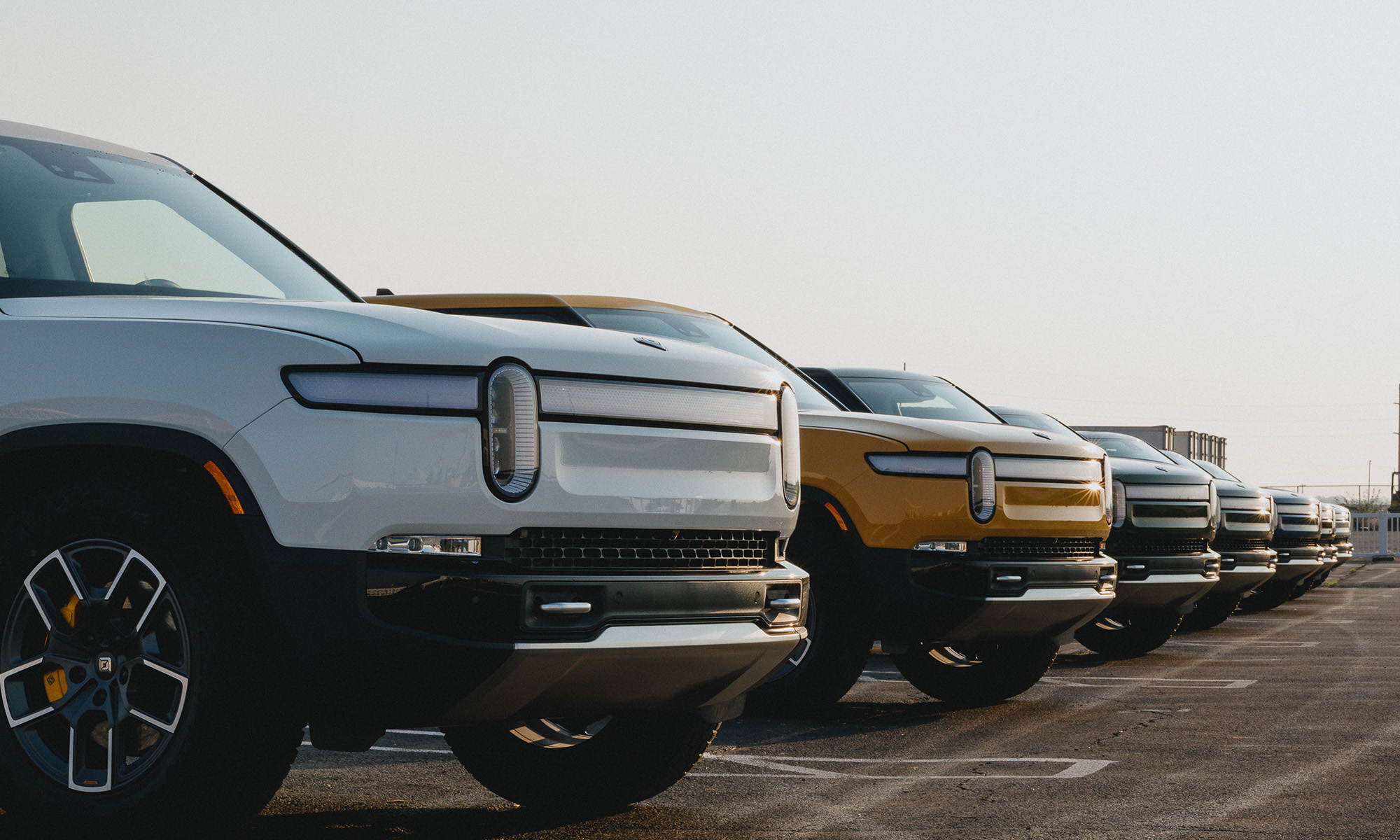
Right then. Rivian. A name whispered in the Guild of Alchemists and Venture Capitalists1 with a mixture of hope and the sort of grim resignation one reserves for particularly stubborn weather patterns. They’re currently a rather small fish in a pond rapidly filling with electric sharks – 42,284 vehicles produced last year, which, let’s be honest, is a rounding error compared to Tesla’s 1.65 million. But Rivian, you see, is attempting a maneuver straight out of the Tesla playbook, a bit like a goblin trying to imitate a knight. The question is, will they manage to pull it off before the market decides it’s had enough of shiny, expensive wagons?
Following the Trail of Sparks
Tesla, if you recall, started by building something for those who could afford to look down on everyone else. Then, once the production kinks were…mostly ironed out (a process involving a lot of shouting and possibly minor explosions), they aimed for the masses. Rivian is attempting the same. They’ve begun with a high-end truck – a perfectly respectable beast, if a bit pricey – and are now wrestling with the complexities of scaling up production. To their credit, they managed a small gross profit last year. A tiny flicker of light in the darkness, but a profit nonetheless. It suggests someone, somewhere, knows what they’re doing, or at least has a very persuasive accountant.
The next crucial step is the launch of the R2, a lower-cost truck aimed squarely at the…well, not exactly the masses, but a significantly larger slice of the pie. They’re promising deliveries in 2026, with pricing recently announced. The first models are expected in spring, with the truly affordable versions trickling out in early 2027. A long wait, you might think? In the world of manufacturing, it’s practically warp speed.2
Positioned for a Push, or Just a Gentle Nudge?
Rivian ended last year with roughly $6 billion in cash and short-term investments. That’s a respectable war chest, enough to get the R2 launched, and possibly even fund a small expedition to find the lost city of perfectly efficient supply chains. Buying in now, naturally, is a gamble. A punt on the assumption that this next step will be a leap forward. It’s a move for the…let’s call them ‘enthusiastic’ investor. The sort who believes in the power of positive thinking and has a spare dragon or two lying around.
The problem, of course, is the market. Back when Tesla first appeared, the automotive landscape was…simpler. Now, every major manufacturer is churning out electric vehicles. The field is crowded, fiercely competitive, and frankly, a bit terrifying. If the R2 fails to gain traction, Rivian might find itself struggling to turn a sustainable profit. It’s a bit like trying to sell ice to penguins.
A High-Risk/High-Reward Proposition
Rivian makes award-winning trucks, undeniably. They’re well-built, desirable, and beloved by those who can afford them. But the R2 launch is the pivotal moment. It’s the roll of the dice. The fate of the company rests on whether it can convince enough ordinary folk to trade in their combustion engines for something a little…different. More cautious investors would be wise to wait and see how the market responds before jumping aboard. Observe, analyze, and then, perhaps, consider a small wager. After all, even the most seasoned trader knows that sometimes, the best move is to simply…watch.
1 The Guild, naturally, operates on a complex system of favors, rumors, and suspiciously accurate predictions. It’s rumored to be funded by a consortium of gnomes and venture capitalists with an unhealthy obsession with disruptive technologies.
2 Time, as any seasoned wizard will tell you, is a remarkably fluid concept. It tends to speed up when you’re having fun, and slows down considerably when you’re dealing with bureaucratic paperwork.
Read More
- Spotting the Loops in Autonomous Systems
- Seeing Through the Lies: A New Approach to Detecting Image Forgeries
- Staying Ahead of the Fakes: A New Approach to Detecting AI-Generated Images
- Julia Roberts, 58, Turns Heads With Sexy Plunging Dress at the Golden Globes
- Palantir and Tesla: A Tale of Two Stocks
- The Glitch in the Machine: Spotting AI-Generated Images Beyond the Obvious
- Gold Rate Forecast
- How to rank up with Tuvalkane – Soulframe
- TV Shows That Race-Bent Villains and Confused Everyone
- 2025 Crypto Wallets: Secure, Smart, and Surprisingly Simple!
2026-03-17 22:22