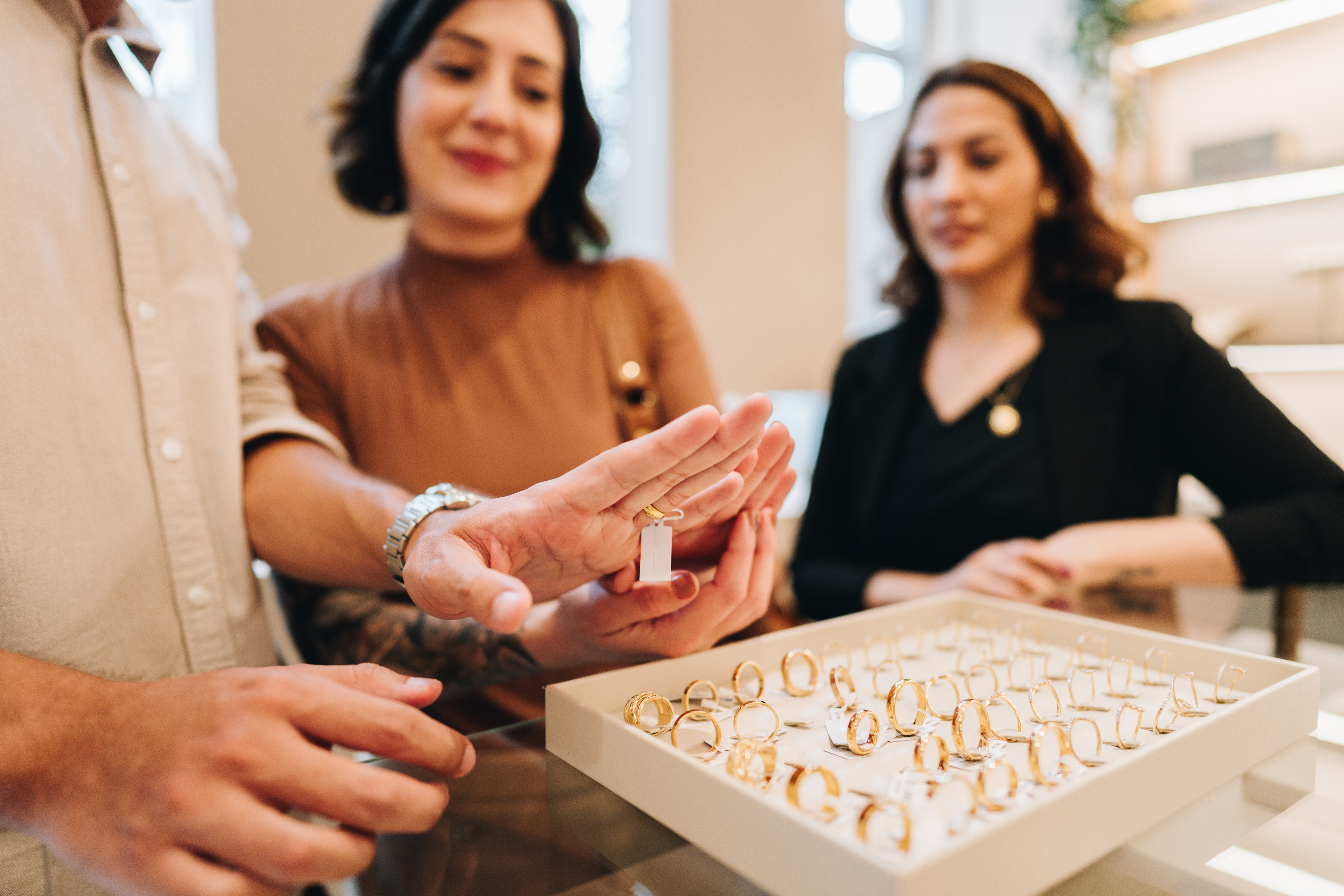
Everyone thinks of Signet Jewelers (SIG +1.21%) as…well, jewelry. Which is accurate, I suppose. But lately, looking at their numbers, it feels a little like diagnosing a patient with a common cold and then discovering they’ve secretly been training for a marathon. It’s not just about rings; it’s about a quiet revolution happening inside the display cases. They’re pushing lab-grown diamonds, and it’s…interesting. About 40% of their bridal band sales now, and fashion jewelry revenue has doubled in a year. Doubled. My Aunt Carol would have a field day with that. She’s convinced all diamonds are just glass anyway.
I’ve spent my career staring at spreadsheets, trying to predict the unpredictable. And honestly, this feels less like prediction and more like observing a slow, sparkly pivot. These lab-grown stones have higher margins, lower price points, and, crucially, are attracting customers who wouldn’t normally darken the door of a Kay or Zales. It’s the same impulse that drives people to buy expensive artisanal coffee; a little self-indulgence disguised as practicality.
Their recent preliminary financials support this. Fiscal 2026 brought in roughly $6.8 billion in revenue, with same-store sales up a modest 1.2% to 1.3%. Not earth-shattering, but solid. Operating income between $388 and $393 million, and they’re projecting over $500 million in free cash flow. And average unit retail rose 4-5% in Q4, 6-7% for the year. All largely driven by this shift to lab-grown. It’s like they’ve discovered a cheat code for retail.
The key, and what I find particularly compelling, is that these aren’t replacing natural diamonds. They’re expanding the category. The CEO, J.K. Symancyk, put it bluntly: “It is a category extender.” Which is a wonderfully clinical way of saying, “More people are buying sparkly things.” My own fiancé, bless her heart, initially balked at the idea of anything not “real.” It took a very patient jeweler and a detailed explanation of carbon structures for her to come around. She still sighs dramatically when I mention the price difference, though.
Jefferies estimates Signet only holds 5% of the $43 billion fashion jewelry market, compared to 28% of the $10 billion bridal market. That’s a huge runway for growth. And lab-grown diamonds are the vehicle. It’s a surprisingly elegant strategy, and it’s working. They’ve also been shrewd with their capital allocation, reducing their diluted share count by nearly 20% in fiscal 2025, returning about $1 billion to shareholders through buybacks and preferred share redemptions. They’ve even raised their dividend for four consecutive years. It’s…responsible. Which, in this market, feels almost radical.
Of course, there are risks. Consumer spending could soften – it always could. Gold prices are a constant pressure. And they saw a modest decline in gross merchandise margin in Q4 after offering broader promotions. But those are standard retail headwinds. The bigger risk, I think, is execution. Symancyk is rolling out a “Grow Brand Love” strategy, reorganizing the business, and shifting over 10% of their mall locations. That’s a lot of moving parts, and a lot of potential for things to go wrong.
But at a market cap of $3.7 billion, a trailing P/E around 26, and analyst fair value estimates around $113 against a current price near $80, the stock appears undervalued. It’s not a slam dunk, but it’s a compelling opportunity. Signet is capitalizing on disruption and shopping trends. They’re taking a calculated gamble, and I think it will pay off. It’s not about believing in magic, it’s about recognizing a good value when you see it. And sometimes, just sometimes, a little sparkle is worth the mild regret.
Read More
- Spotting the Loops in Autonomous Systems
- Seeing Through the Lies: A New Approach to Detecting Image Forgeries
- Staying Ahead of the Fakes: A New Approach to Detecting AI-Generated Images
- Julia Roberts, 58, Turns Heads With Sexy Plunging Dress at the Golden Globes
- Palantir and Tesla: A Tale of Two Stocks
- The Glitch in the Machine: Spotting AI-Generated Images Beyond the Obvious
- Gold Rate Forecast
- How to rank up with Tuvalkane – Soulframe
- TV Shows That Race-Bent Villains and Confused Everyone
- 2025 Crypto Wallets: Secure, Smart, and Surprisingly Simple!
2026-03-17 21:02