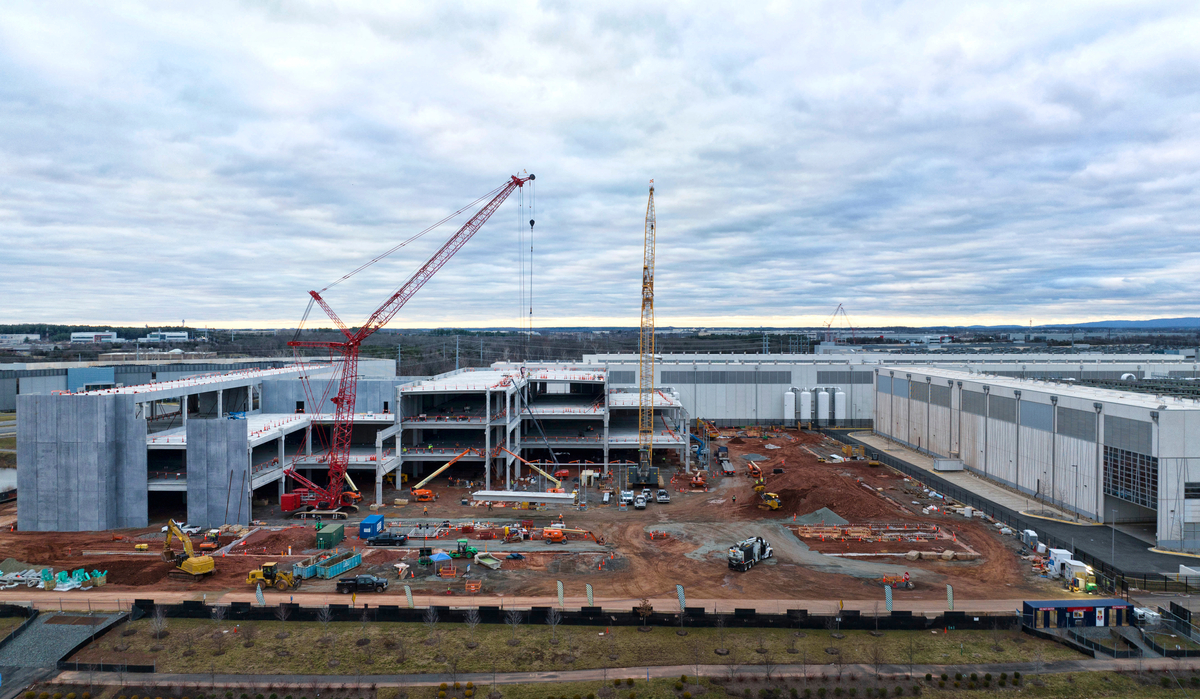
One observes Oracle, and it is not entirely unlike watching a man build an elaborate addition to a house already burdened by years of accumulated possessions. There is a certain energy, a striving, but also a nagging sense that the foundations may not quite bear the weight of it all.
The stock, after a brief, hopeful flutter following the latest earnings report, has settled back into a familiar pattern of decline. Twenty percent down year to date, it trails the broader market, a quiet disappointment in a sea of modest gains. It is as if the market, with its usual taciturnity, is merely observing, waiting to see if the structure will stand.
The company speaks of “hypergrowth,” of a future powered by artificial intelligence. A grand vision, certainly. But one cannot help but notice the considerable expense, the relentless cash burn, a slow draining of resources that feels… unsustainable. It is a common story, this ambition outpacing means. A familiar human drama played out on the stage of the financial markets.
The Cost of Dreams
Last September, Oracle laid out its plans, a detailed roadmap to AI dominance. An admirable undertaking. But a roadmap requires paving, and paving requires stone, and stone, it seems, is proving rather expensive. The company has taken on debt, a considerable sum, because the profits from its established businesses—databases, data management—are simply not enough to cover the costs of this new venture.
The numbers are… sobering. A staggering $43.8 billion in negative free cash flow over the last three quarters. Compared to a positive flow the year before. One wonders if the architects of this expansion fully considered the implications. Or perhaps they believed the potential rewards justified the risk. It is often the case, isn’t it? We convince ourselves that a beautiful outcome will somehow negate the unpleasant necessities along the way.
Mr. Magouyrk, one of the company’s co-CEOs, addressed the matter with a certain… practicality. He spoke of construction, of minimizing costs, of a future where the capacity they are building will be fully utilized and profitable. A reasonable assessment, perhaps. But it lacked a certain… poetry. It was the language of a man focused on the immediate, on the practicalities of keeping the structure from collapsing, rather than on the grand vision that inspired it.
The costs, they say, are coming down. Lower networking costs, cheaper hardware, more efficient power consumption. But the spending continues. Billions pledged for the current year, projections for even more in the year to come. And yet, when pressed for specifics, management remains… evasive. They will provide further details in June, they say. A delay, perhaps, born of uncertainty. Or perhaps simply a reluctance to reveal the full extent of the expense.
A Gamble on the Future
Oracle is, undeniably, a bold bet. A high-risk, high-potential-reward scenario. But one must ask: for whom? For the investors who are willing to tolerate the leverage, to accept the possibility of further decline? Or for the company itself, which is staking its future on a technology that is still in its infancy?
The company’s infrastructure is well-suited for AI, it is true. And its partnerships with Amazon, Microsoft, and Alphabet offer a competitive advantage. But these advantages are not insurmountable. And the market is littered with the wreckage of companies that once believed they had a lock on the future.
One observes Oracle, and it is not entirely unlike watching a man build an elaborate addition to a house already burdened by years of accumulated possessions. There is a certain energy, a striving, but also a nagging sense that the foundations may not quite bear the weight of it all. And the rain, one suspects, will eventually come.
Read More
- Spotting the Loops in Autonomous Systems
- Seeing Through the Lies: A New Approach to Detecting Image Forgeries
- 20 Best TV Shows Featuring All-White Casts You Should See
- Staying Ahead of the Fakes: A New Approach to Detecting AI-Generated Images
- Julia Roberts, 58, Turns Heads With Sexy Plunging Dress at the Golden Globes
- The Best Directors of 2025
- Palantir and Tesla: A Tale of Two Stocks
- The Glitch in the Machine: Spotting AI-Generated Images Beyond the Obvious
- Gold Rate Forecast
- How to rank up with Tuvalkane – Soulframe
2026-03-17 19:52