Micron Technology. The name tasted like static on the line. They’d been riding a wave, a real humdinger of a run. Up 180% in six months. That kind of action always made me squint. Too good. Always too good. The question wasn’t whether it could go higher, but whether the climb had already used up all its oxygen.
Let’s look under the hood. See if there’s anything real in there, or just polished chrome.
The Chip Game
Micron deals in memory chips. The stuff that makes everything else remember things. It’s a commodity business, mostly. One chip is pretty much like another. No room for artistry. That meant no pricing power, just a race to the bottom. Their fate rested on demand, and lately, that demand had been…substantial. Thanks to this AI craze, everyone wanted more memory. It was a thirsty market, and Micron was selling the water.
Production was spoken for. Prices were climbing faster than a politician’s promises. A year ago, you could get a RAM stick for a reasonable sum. Now? Now it cost an arm and a leg, and a decent pair of shoes. Investors were buying the stock because profits were soaring. Simple as that. Greed, dressed up as foresight.
The competition was scrambling, of course. Trying to build new factories, but that takes time. Micron’s Idaho plant wasn’t due to come online until 2027, with a second one following in 2028. They were betting big on continued growth. Huge growth. The addressable market for their high bandwidth memory – the good stuff, the AI fuel – was projected to jump from $35 billion in 2025 to $100 billion by 2028. A nice little leap. If it happened.
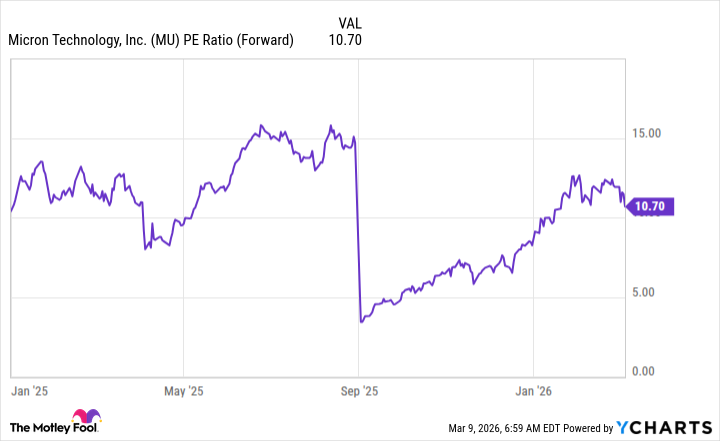
But there was a catch, and there always is. This memory market…it had a pulse, but it wasn’t steady. It was cyclical. A swing of the pendulum. Once the AI thirst was quenched, the party could be over. And when it was, prices would fall. Fast. It could happen in months, years, or next week. Nobody knew. That uncertainty was why the stock wasn’t priced to the moon. The market wasn’t stupid, just impatient.
The stock traded at 11 times forward earnings. Seemed cheap enough. But the market was factoring in the risk. If AI demand held up for a few years, Micron could be a smart play. A real winner. But if the supply crunch eased quickly, prices would come down, dragging profits with them. It wasn’t a stock to tuck away and forget. It needed watching. Constant monitoring. A hawk’s eye on the numbers. If you were willing to do that, Micron might just be worth a look. A gamble, sure, but a calculated one. Right now, it felt like a memory worth watching, even if it meant staying up late with the shadows.
Read More
- Building 3D Worlds from Words: Is Reinforcement Learning the Key?
- The Best Directors of 2025
- Spotting the Loops in Autonomous Systems
- 2025 Crypto Wallets: Secure, Smart, and Surprisingly Simple!
- 20 Best TV Shows Featuring All-White Casts You Should See
- Umamusume: Gold Ship build guide
- Mel Gibson, 69, and Rosalind Ross, 35, Call It Quits After Nearly a Decade: “It’s Sad To End This Chapter in our Lives”
- Uncovering Hidden Signals in Finance with AI
- Gold Rate Forecast
- TV Shows That Race-Bent Villains and Confused Everyone
2026-03-14 20:23