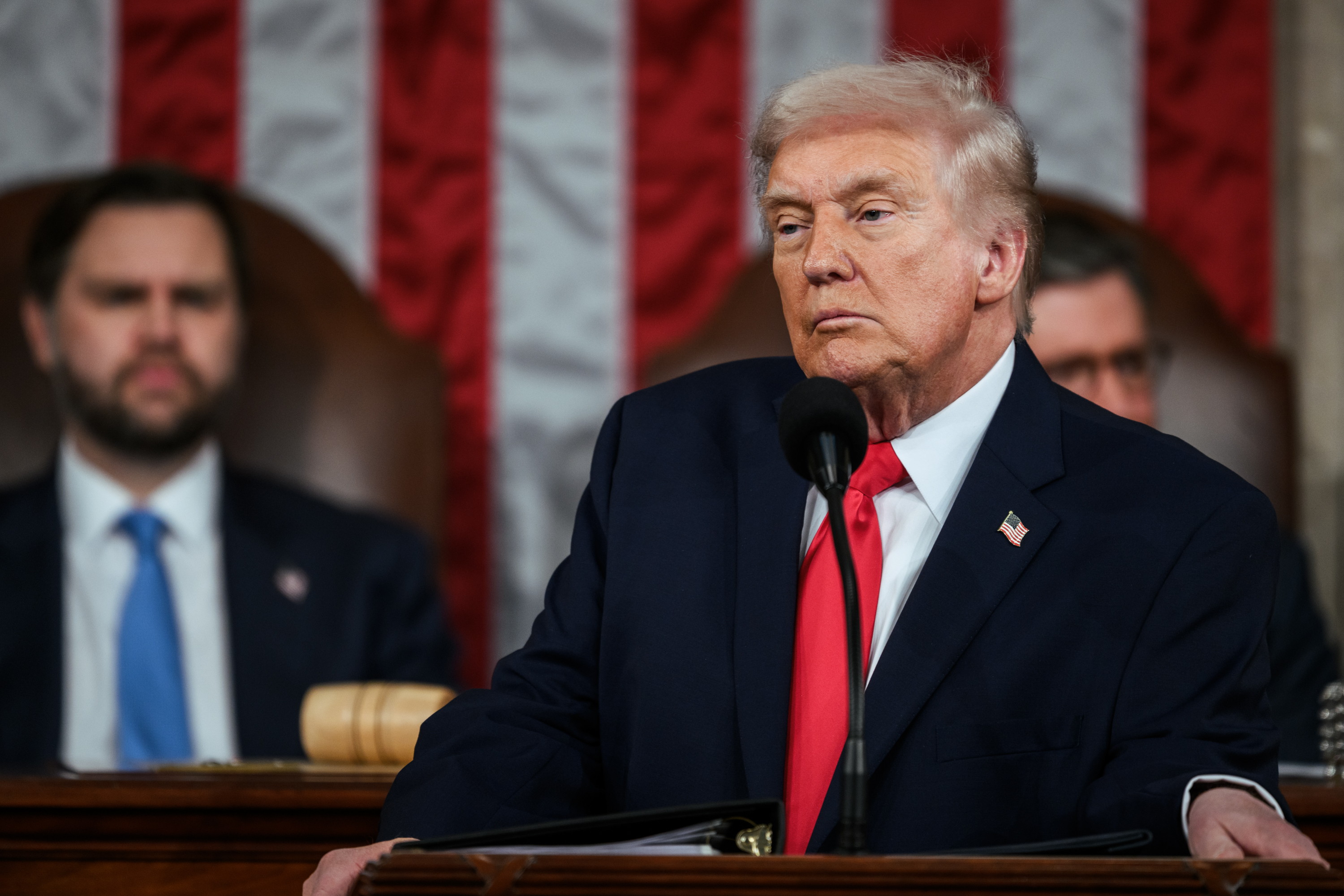
The markets, dear friends, have enjoyed a most agreeable run under the present administration. A veritable golden age, one might say – though history teaches us that such ages are often built upon foundations of sand, or, in this instance, perhaps, upon an excess of optimism. The Dow Jones Industrial Average, the S&P 500, and the Nasdaq Composite have, as it were, danced merrily to the tune of prosperity, gaining substantial ground. One cannot help but observe, however, that such sustained success breeds a certain…complacency. It is a truth universally acknowledged that a market in possession of good fortune must be in want of a correction.
There is much chatter, naturally, about the President’s pronouncements on trade – tariffs and the like. These are presented as potential calamities, as if a few well-aimed duties could bring the entire edifice crashing down. While such policies are not without consequence, to fixate upon them as the primary threat is akin to blaming the footman for the master’s folly. The true dangers, I assure you, lie deeper, concealed within the very mechanisms designed to safeguard our prosperity.
The Federal Reserve: A House Divided
The Federal Reserve, that august body entrusted with the nation’s monetary health, is, alas, exhibiting signs of internal discord. It is a curious spectacle to witness such disagreement amongst those charged with maintaining stability. One expects a conductor to lead an orchestra with a unified vision, not to engage in a spirited debate mid-symphony. The current Chairman, Mr. Powell, has attempted to maintain order, but even his authority appears strained, with dissenting voices growing louder with each deliberation.
And looming on the horizon is the matter of succession. The President has seen fit to nominate a new Chairman, a gentleman named Warsh, whose inclinations lean towards a more…austere approach. While prudence is admirable, a sudden shift in policy could prove most unsettling. Imagine, if you will, a ship altering course abruptly in a storm. The results, I fear, could be disastrous. Mr. Warsh, it seems, views the current levels of debt with a distinctly disapproving eye, and harbors a desire to reduce the nation’s holdings. A noble ambition, perhaps, but one that could easily extinguish the embers of our current prosperity.
The Vanity of Valuation
But even these matters of policy pale in comparison to the sheer…extravagance of current valuations. The market, it seems, has succumbed to a most delightful delusion – a belief that prices can rise indefinitely, divorced from the realities of earnings and growth. It is a spectacle worthy of a grand opera, a tragicomedy of excess and speculation.
There exists a metric, known as the Shiller P/E Ratio, a most ingenious device for discerning the true worth of the market. It considers not merely the earnings of a single year, but a decade, smoothing out the vagaries of fortune and revealing the underlying trend. And what does this metric reveal? That the market is, at present, more richly valued than at almost any time in its history – surpassed only by the feverish days of the dot-com bubble.
One might argue that this time is different, that new technologies and unprecedented growth justify these lofty prices. But history, my friends, is a stern teacher. It reminds us that bubbles, however grand, invariably burst. The Shiller P/E has, on each of the previous occasions it reached such heights, been followed by a substantial correction – a humbling reminder that even the most dazzling fortunes are built upon a foundation of risk. To ignore this lesson is to invite disaster – to believe, like so many foolish characters in a well-worn play, that the music will never stop.
Thus, while tariffs and trade disputes may capture the headlines, it is the internal divisions within the Federal Reserve and the sheer vanity of current valuations that pose the greatest threat to the market. Let us observe these developments with a discerning eye, and prepare ourselves for the inevitable reckoning. For in the world of finance, as in the theatre, the curtain must eventually fall.
Read More
- Gold Rate Forecast
- DOT PREDICTION. DOT cryptocurrency
- Silver Rate Forecast
- Securing the Agent Ecosystem: Detecting Malicious Workflow Patterns
- 4 Reasons to Buy Interactive Brokers Stock Like There’s No Tomorrow
- EUR UAH PREDICTION
- NEAR PREDICTION. NEAR cryptocurrency
- Top 15 Insanely Popular Android Games
- Did Alan Cumming Reveal Comic-Accurate Costume for AVENGERS: DOOMSDAY?
- USD COP PREDICTION
2026-03-07 12:12