The market, they say, anticipates. A lie. It reacts. And this week, it reacted with the predictable clumsiness of a man stumbling in the dark, grasping for purchase on a floor that isn’t there. The tremors started subtly, a twitch in the indices, then escalated with the blunt force of a hammer blow. Wall Street, always eager to find a new master, turned tail again, abandoning the pretense of risk appetite.
The initial spasm subsided mid-morning, a fleeting moment of hope, like a cough before the sickness truly sets in. But by the close, the rot had spread. The leading indexes – those carefully constructed illusions of prosperity – were all bleeding, down roughly one percent. A small wound, perhaps, but a harbinger of deeper ailments.
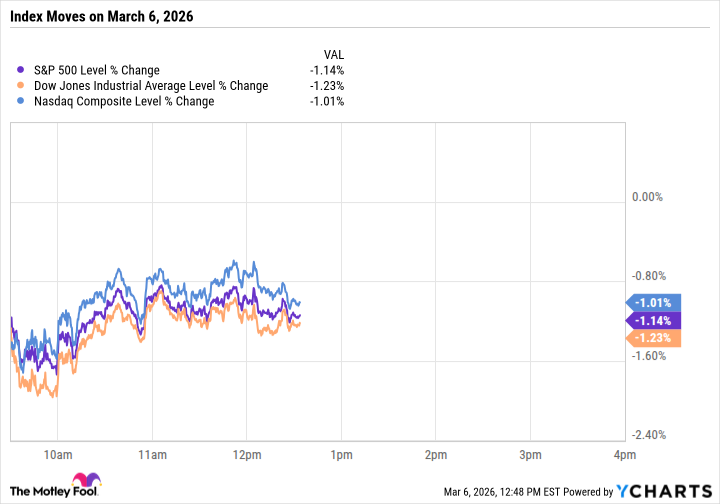
The Nasdaq, that playground of speculative excess, fared slightly better than the Dow and the S&P. An oddity. One expects the tech sector to lead the fall, to be the first to panic. But this time, the trouble wasn’t born in Silicon Valley. It arose from the dust and heat of the Middle East, from the chokepoint at the Strait of Hormuz, and the rising price of a commodity as old as civilization itself.
Oil, Anxieties, and the Strait of Hormuz
This week served as a brutal lesson in the speed with which geopolitical storms can wreck the carefully laid plans of financiers. The tankers halted, the airlines rerouted, and the markets… they did what markets always do when faced with genuine uncertainty: they fled. The grand strategies, the earnings reports, the optimistic projections – all rendered meaningless by the simple fact that oil doesn’t flow freely.
There were whispers of resilience, fueled by strong earnings from a few bellwether companies. A temporary distraction, like offering a crust of bread to a starving man. The underlying trend remained resolutely bearish, dragging down everything from the tech giants to the industrial behemoths.
Crude oil surged, breaching the ninety-dollar mark. A boon for those who hoard, a burden for everyone else. Energy is the lifeblood of this system, and when that flow is constricted, the consequences ripple outwards, impacting every corner of the global economy. The driver filling his tank, the factory worker facing layoffs, the small business owner struggling to stay afloat – they are the ones who pay the price for these geopolitical games.
The Broad Market Blues
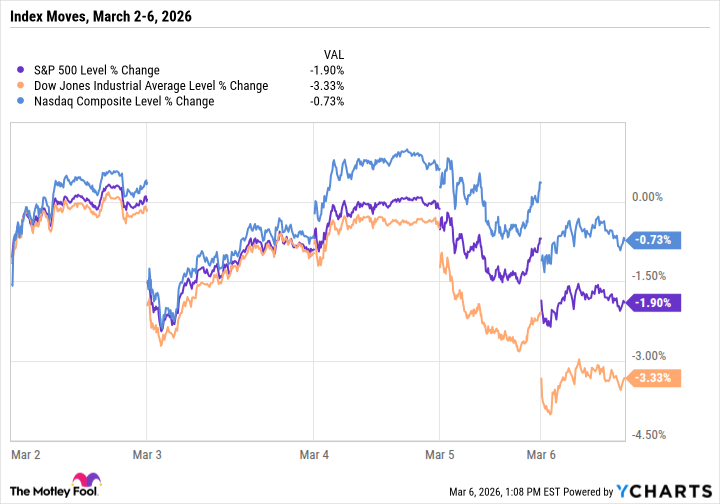
As the anxieties surrounding energy supply mounted, equities stumbled. Traders, those vultures circling above the wreckage, rotated into cash, finding safety in liquidity rather than chasing the mirage of growth. The drop on March 5th and the subsequent decline mirrored the escalating news cycle with chilling precision. Investors, finally acknowledging the reality of the situation, were repricing the conflict’s duration and its potential economic fallout in real-time.
The Dow, weighted down by its industrial holdings, bore the brunt of the damage. But no index escaped unscathed. The Nasdaq, usually the most volatile of the bunch, held up marginally better. Perhaps the promise of silicon chips felt safer than the prospect of steel and shipping in a world where tanker routes are contested. A fleeting illusion of security, no doubt.
The truth is, these markets are built on sand. They are a house of cards, vulnerable to the slightest tremor. And when the foundations begin to crack, it is not the masters of finance who suffer, but the millions who toil in the shadows, struggling to make ends meet.
Read More
- Gold Rate Forecast
- Securing the Agent Ecosystem: Detecting Malicious Workflow Patterns
- Silver Rate Forecast
- DOT PREDICTION. DOT cryptocurrency
- 4 Reasons to Buy Interactive Brokers Stock Like There’s No Tomorrow
- EUR UAH PREDICTION
- NEAR PREDICTION. NEAR cryptocurrency
- Top 15 Insanely Popular Android Games
- Did Alan Cumming Reveal Comic-Accurate Costume for AVENGERS: DOOMSDAY?
- USD COP PREDICTION
2026-03-06 21:44