
Gold and silver are both metals dug from the earth, frequently touted as refuges in times of trouble. It is a curious habit of humankind to place faith in inert substances when faith in institutions falters. However, to equate the two is to ignore the fundamental differences in their nature, differences that matter considerably to any investor. The recent performance of either the SPDR Gold Shares (GLD +0.86%) or the iShares Silver Trust (SLV +0.51%) should not be the sole basis for a decision.
The Illusion of Direct Ownership
There are those who believe a genuine crisis demands physical possession – stacks of coins or bars hidden away. This is, of course, a logistical undertaking, fraught with the inefficiencies of any market dealing in tangible goods. Storage, insurance, and the constant worry of theft are the inevitable costs. Most investors, sensibly, will opt for an exchange-traded fund. These funds, in essence, purchase and hold the metals on your behalf, offering a convenient, if somewhat illusory, sense of direct ownership. It is a compromise, a way to prepare for a storm without necessarily believing the world will end.
The critical point, however, is that gold and silver are not interchangeable commodities. To treat them as such is to misunderstand their respective roles in the economic order.
The Weight of Tradition
Gold has, for centuries, been considered the ultimate store of value. It is embedded in culture, hoarded by nations, and adorns the bodies of the wealthy. Its industrial applications, while present, are secondary to its symbolic weight. Silver, conversely, is more practical. It finds use in manufacturing, photography, and, yes, jewelry, but its lower cost makes it a more active component in the flow of commerce.
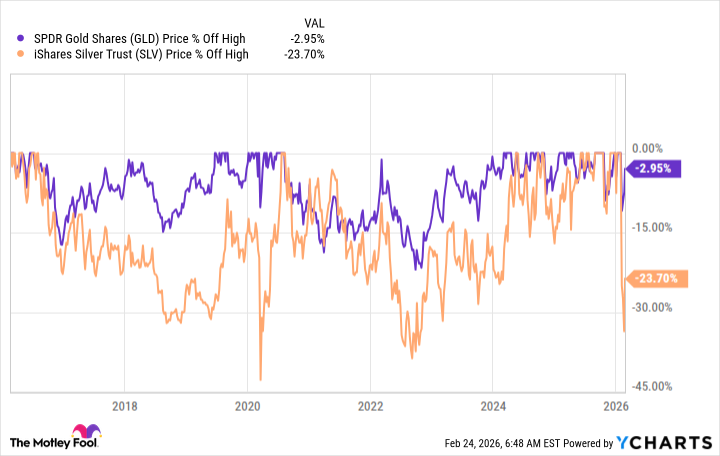
The consequence of this difference is stability. Gold, while not immune to fluctuations, tends to exhibit less volatility than silver. Silver’s price is more susceptible to the whims of economic activity; a downturn will depress demand, leading to sharper declines. The chart above illustrates this point plainly. Silver can, of course, outperform during periods of expansion, but relying on such optimism is a dangerous game. If one seeks a safe haven, a smoother ride is preferable to a speculative gamble.
The Current Fever
Both gold and silver are presently enjoying a surge in attention, fueled by recent price increases. It is a common error to chase such movements, assuming they will continue indefinitely. Notably, silver has already experienced a significant correction, dragging the iShares Silver Trust with it. If one is determined to allocate capital to these metals for diversification purposes, a modest commitment to SPDR Gold Shares appears the more rational choice. It is not a guarantee of profit, merely a recognition that some refuges are more stable than others. And in a world increasingly prone to turbulence, stability, however limited, is a virtue.
Read More
- Gold Rate Forecast
- 2025 Crypto Wallets: Secure, Smart, and Surprisingly Simple!
- The 10 Most Beautiful Women in the World for 2026, According to the Golden Ratio
- HSR 3.7 story ending explained: What happened to the Chrysos Heirs?
- ETH PREDICTION. ETH cryptocurrency
- Top 15 Insanely Popular Android Games
- Games That Faced Bans in Countries Over Political Themes
- Uncovering Hidden Groups: A New Approach to Social Network Analysis
- ‘Zootopia 2’ Wins Over Critics with Strong Reviews and High Rotten Tomatoes Score
- Best Ways to Farm Prestige in Kingdom Come: Deliverance 2
2026-02-27 16:52