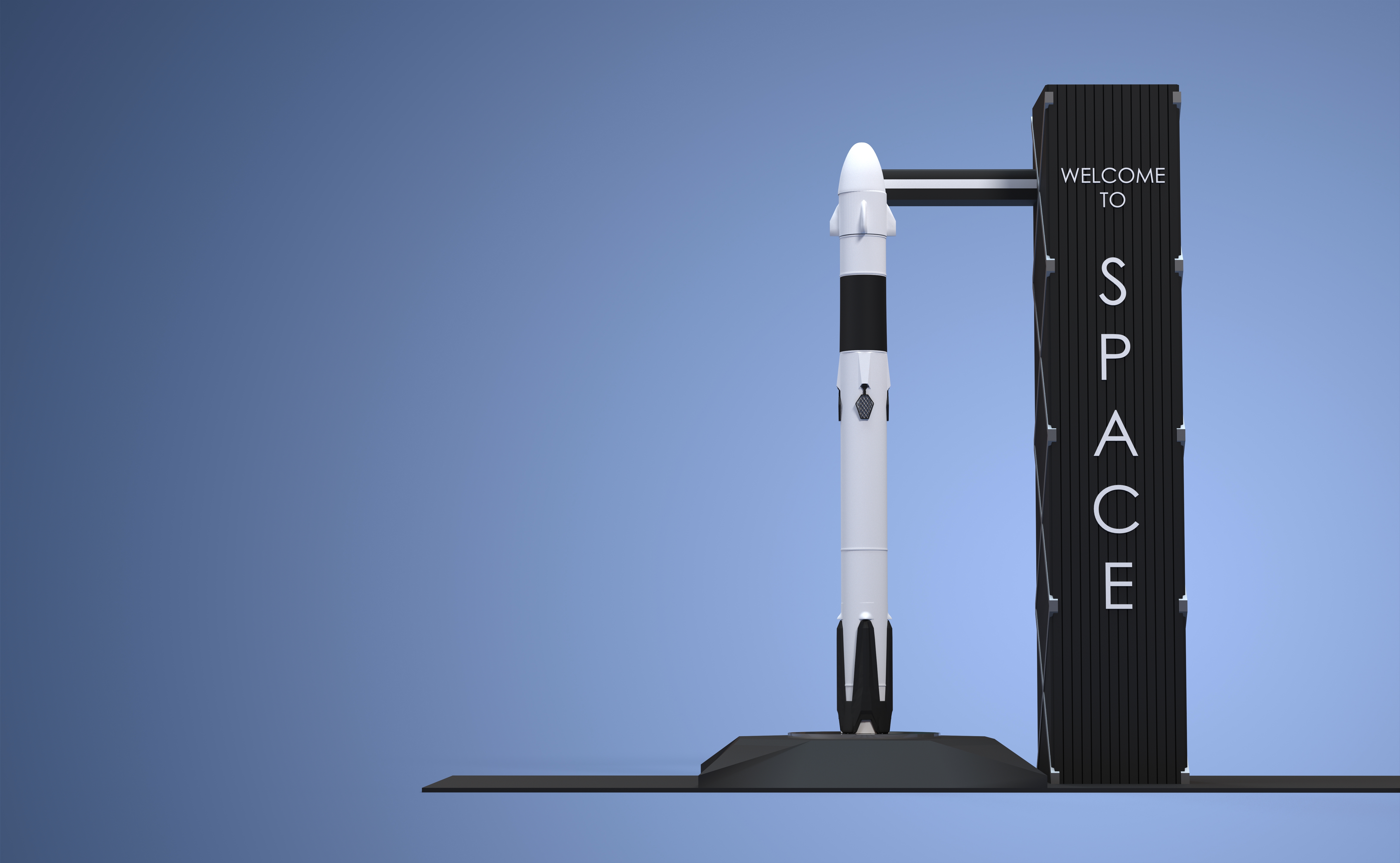
The pursuit of growth, in these restless times, often leads one to consider the smaller vessels navigating the vast ocean of commerce. These companies, though burdened by a greater fragility than their established counterparts, hold the promise – however faint – of returns that might truly reshape a portfolio. Rocket Lab, a specialist in the burgeoning field of aerospace, presents such a case. Let us, with a degree of circumspection, examine the balance between its inherent risks and potential rewards, and consider what the coming five years might hold for those who venture a stake.
The industry itself, as projected by McKinsey & Co., anticipates a reach of $1.8 trillion by 2035, propelled by the ever-increasing demand for satellites and their terrestrial applications. One has, of course, grown accustomed to such optimistic forecasts, often shimmering mirages on the horizon of technological advancement. Yet, in this instance, there are nascent indications that this projection may possess a degree of substance. The spectacle of Starlink, a privately held enterprise, reportedly generating $8 billion in profits on revenues of $15 to $16 billion, is not to be dismissed lightly. It suggests a capacity for both growth and margin that is uncommon in these early stages. However, the shadow of SpaceX, poised to enter the public markets with a valuation of $1.5 trillion, looms large, and one suspects much of the anticipated gain has already been accounted for.
It is in this context that smaller concerns, such as Rocket Lab, with its comparatively modest market capitalization of $38 billion, present a peculiar appeal. They offer the possibility of entering, at the ground floor, a venture that, if skillfully guided, might yield substantial returns. But the path is rarely straight, and the currents of fortune are often unpredictable.
A Rival to the Titans?
Rocket Lab positions itself as a provider of end-to-end space services, encompassing manufacture, launch, and satellite deployment. Its current strength lies in the Electron, an expendable launch vehicle capable of delivering payloads of up to 300 kilograms to low Earth orbit. The company displays a commendable pragmatism, prioritizing cost-efficiency and scalability through the integration of technologies like 3D printing. However, it must contend with the sheer scale of its principal competitor. SpaceX, with its massive Starship, capable of transporting 100 to 150 metric tons, casts a long shadow. Rocket Lab hopes to bridge this gap with the Neutron, a larger vehicle anticipated to enter service later this year.
The Neutron, with an expected payload capacity of 13,000 kg, represents a significant increase in scale. This, in turn, could yield economies of scale, lowering the cost per kilogram to orbit. It would also allow Rocket Lab to compete for larger commercial and governmental contracts, particularly in the burgeoning field of satellite constellations. Furthermore, the design incorporates reusability, a feature that, if successfully implemented, could further reduce costs and enhance scalability. One is reminded of the grand ambitions of a younger generation, striving to prove themselves against the established order.
The Spectre of Delay
On paper, the Neutron appears to be the catalyst that will transform Rocket Lab from a speculative venture into a serious contender in the aerospace industry. Yet, one must always approach such pronouncements with a degree of skepticism. Early-stage companies are often prone to overpromise and underdeliver, particularly when it comes to timelines. The Neutron launch, initially slated for 2025, has already been postponed to 2026. Given this pattern, it would be imprudent to assume that the current date is set in stone. Indeed, one should anticipate further delays as technical challenges are addressed. Meanwhile, operational results reveal a persistent struggle. While third-quarter revenue increased by 48% year-over-year to $155 million, operating losses remain stubbornly high, at $59 million. A familiar refrain, echoing through the halls of countless aspiring enterprises.
The Years to Come
Rocket Lab stands at a critical juncture, poised to become either a sustainable and attractive business or another cautionary tale. Over the next five years, it could, conceivably, establish itself as a viable alternative to industry leaders like SpaceX. However, with a price-to-sales multiple of 62, much of this success appears to be already priced into its current valuation. Like a carefully crafted illusion, the edifice of expectation is fragile. A sharp correction could occur if there are further delays or uncertainties surrounding the Neutron launch. Prudence, therefore, dictates a wait-and-see approach. Long-term investors would be well-advised to observe the unfolding drama with a detached curiosity, before committing their capital. For in the grand theater of commerce, patience is often the most valuable of virtues.
Read More
- 2025 Crypto Wallets: Secure, Smart, and Surprisingly Simple!
- Gold Rate Forecast
- Brown Dust 2 Mirror Wars (PvP) Tier List – July 2025
- Banks & Shadows: A 2026 Outlook
- HSR 3.7 story ending explained: What happened to the Chrysos Heirs?
- The 10 Most Beautiful Women in the World for 2026, According to the Golden Ratio
- ETH PREDICTION. ETH cryptocurrency
- Gay Actors Who Are Notoriously Private About Their Lives
- Games That Faced Bans in Countries Over Political Themes
- 9 Video Games That Reshaped Our Moral Lens
2026-02-25 18:24