Author: Denis Avetisyan
Researchers have developed a machine learning tool to efficiently identify rare and unusual events in vast amounts of solar observation data, promising new discoveries in solar physics.
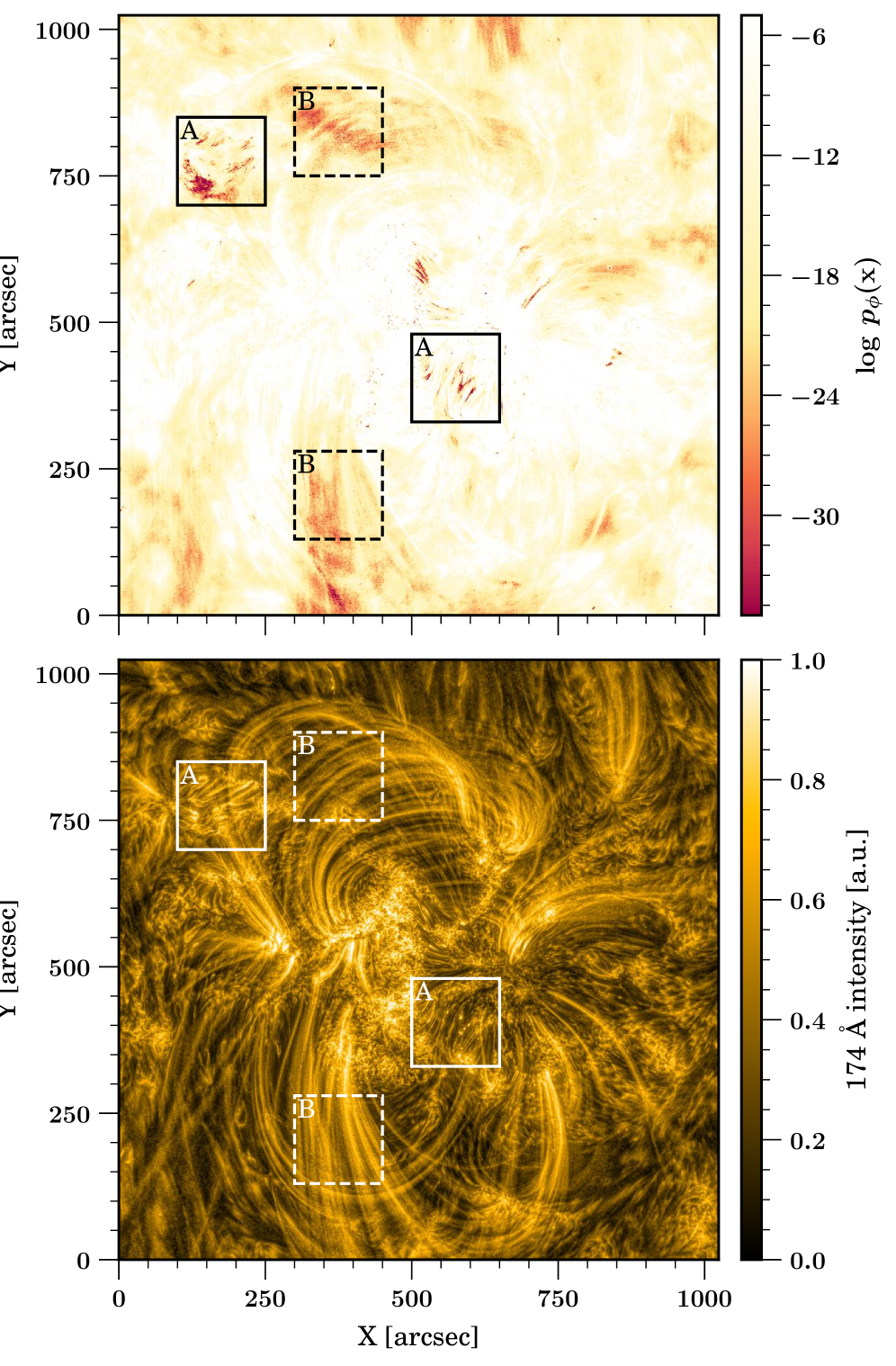
Inspectorch utilizes normalizing flows to improve anomaly detection and density estimation in spectropolarimetric solar observations.
The increasing volume of solar observations challenges conventional analytical methods, often obscuring critical but infrequent events. To address this, we present Inspectorch: Efficient rare event exploration in solar observations, an open-source framework leveraging normalizing flows to efficiently identify anomalous patterns within multidimensional solar datasets. This approach assigns probabilistic anomaly scores, enabling focused analysis on the most physically relevant and previously overlooked phenomena-such as unusual spectral profiles indicative of small-scale reconnection-and significantly optimizing computational resources. Will this density estimation technique unlock a new era of discovery in solar physics by revealing the subtle signatures of extreme space weather events?
The Sun’s Whispers: Detecting the Transient Signs of a Dynamic Star
The Sun is far from a static beacon; it constantly undergoes a diverse array of transient phenomena – sudden, short-lived bursts of energy and material. These range from dramatic solar flares and coronal mass ejections, capable of disrupting Earth’s technological infrastructure, to more subtle events like magnetic reconnections, where tangled magnetic field lines abruptly rearrange. These fleeting occurrences are not merely spectacular displays; they are fundamental to understanding the Sun’s dynamic behavior and its influence on the surrounding space environment – collectively known as space weather. Crucially, the frequency and intensity of these events dictate the potential hazards posed to satellites, communication systems, and even power grids on Earth, making their study paramount. A comprehensive grasp of these transient processes is, therefore, essential for predicting and mitigating the risks associated with solar activity and safeguarding critical technologies.
The detection of transient solar events presents a significant challenge due to their inherent rarity and often subtle nature. These phenomena, while crucial for understanding the Sun’s behavior and its impact on space weather, occur infrequently and can be exceedingly faint, making them difficult to distinguish from background noise and instrument artifacts. Traditional analytical methods, designed for consistent and strong signals, struggle to reliably identify these fleeting occurrences, which may comprise less than 0.1% of the total data observed. This limitation isn’t simply a matter of signal strength; it’s a fundamental problem of statistical significance, requiring researchers to develop new techniques capable of discerning genuine events from random fluctuations within massive datasets. Consequently, a considerable portion of solar activity remains hidden, hindering comprehensive models of the Sun and limiting predictive capabilities regarding potentially disruptive space weather.
The dynamic nature of the Sun presents a significant challenge to contemporary observation, as crucial transient events often occur with limited duration and subtle signatures. Existing instruments, while powerful, struggle to consistently capture these fleeting phenomena, leading to incomplete datasets and hindering comprehensive analysis. This observational difficulty directly impacts the accuracy of space weather forecasting; without a clear understanding of the frequency, intensity, and propagation of solar flares, coronal mass ejections, and smaller-scale reconnection events, predicting their arrival and potential effects on Earth’s technological infrastructure and even biological systems remains a complex undertaking. The inherent faintness and rapid evolution of these events demand innovative data processing techniques and enhanced observational capabilities to fully characterize solar activity and mitigate potential risks.
Recognizing the ephemeral nature of significant solar events, researchers are developing innovative computational tools to analyze the immense volume of data generated by modern solar observatories. These events, often occupying less than 0.1% of total observations, require algorithms capable of distinguishing faint signals from noise and reliably identifying transient phenomena that might otherwise be missed. The focus extends beyond simple detection; these advanced tools aim to characterize the properties of these fleeting events – their intensity, duration, and magnetic field configurations – providing crucial insights into the underlying physical processes. This necessitates a shift from traditional, manual analysis techniques to automated, data-driven approaches capable of processing terabytes of information and extracting meaningful patterns, ultimately improving the forecasting of space weather impacts on Earth and technological infrastructure.
Unveiling the Subtle Anomalies: A Probabilistic Lens on Solar Events
Inspectorch is an open-source software tool developed for the identification of anomalous solar events through probabilistic assessment of observational data. The tool operates by assigning a probability score to each observed solar feature, allowing for the detection of events that fall outside the range of typical behavior. This probabilistic approach enables the identification of rare events that might be missed by traditional threshold-based methods. The software is designed to be adaptable to various data sources and feature types, providing a flexible framework for solar event discovery and analysis. Inspectorch’s open-source nature facilitates community contribution and customization for specialized research applications.
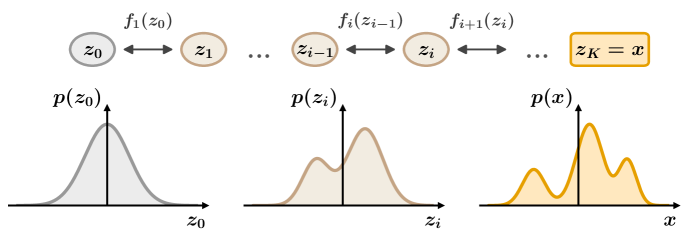
Inspectorch utilizes Normalizing Flows to model the probability distribution of solar features, enabling the identification of anomalous events. Normalizing Flows are a class of generative models that learn a transformation from a simple, known distribution – typically a Gaussian – to a complex, unknown data distribution. This is achieved through a series of invertible transformations, allowing for both sampling from and density estimation of the solar feature space. By accurately representing the distribution of typical solar activity, Inspectorch can then assess the probability of newly observed features, flagging those with low probabilities as potentially rare or significant events. The density estimation capability is crucial for quantifying the unusualness of a given observation and is calculated using the change of variables formula derived from the invertible transformations within the flow.
Inspectorch utilizes Flow Matching as its primary training method for Normalizing Flows, resulting in a 5x speedup compared to conventional training techniques. Flow Matching circumvents the need for complex score-based likelihood estimation, instead focusing on directly learning the vector field that transforms a simple distribution into the target data distribution. This approach streamlines the training process and significantly reduces computational demands, allowing for faster convergence and more efficient learning of the underlying patterns within solar data. The method’s efficiency is achieved by framing the training problem as an optimization task focused on minimizing the distance between the predicted and actual trajectories of the flow.
Inspectorch leverages Rational-Quadratic Spline Coupling Layers within its normalizing flow architecture to improve model capacity and represent complex data distributions. These layers employ monotonically increasing splines for the transformations applied to the data, ensuring a smooth and stable learning process. Rational-quadratic splines offer a balance between flexibility and computational efficiency, allowing the model to capture intricate relationships in the solar feature data without introducing unwanted oscillations or discontinuities. The use of monotonically increasing splines guarantees that the transformation preserves the order of the data, which is crucial for accurate probability estimation and anomaly detection.
Validating the Anomalous: Ground Truth from Multi-Instrument Observations
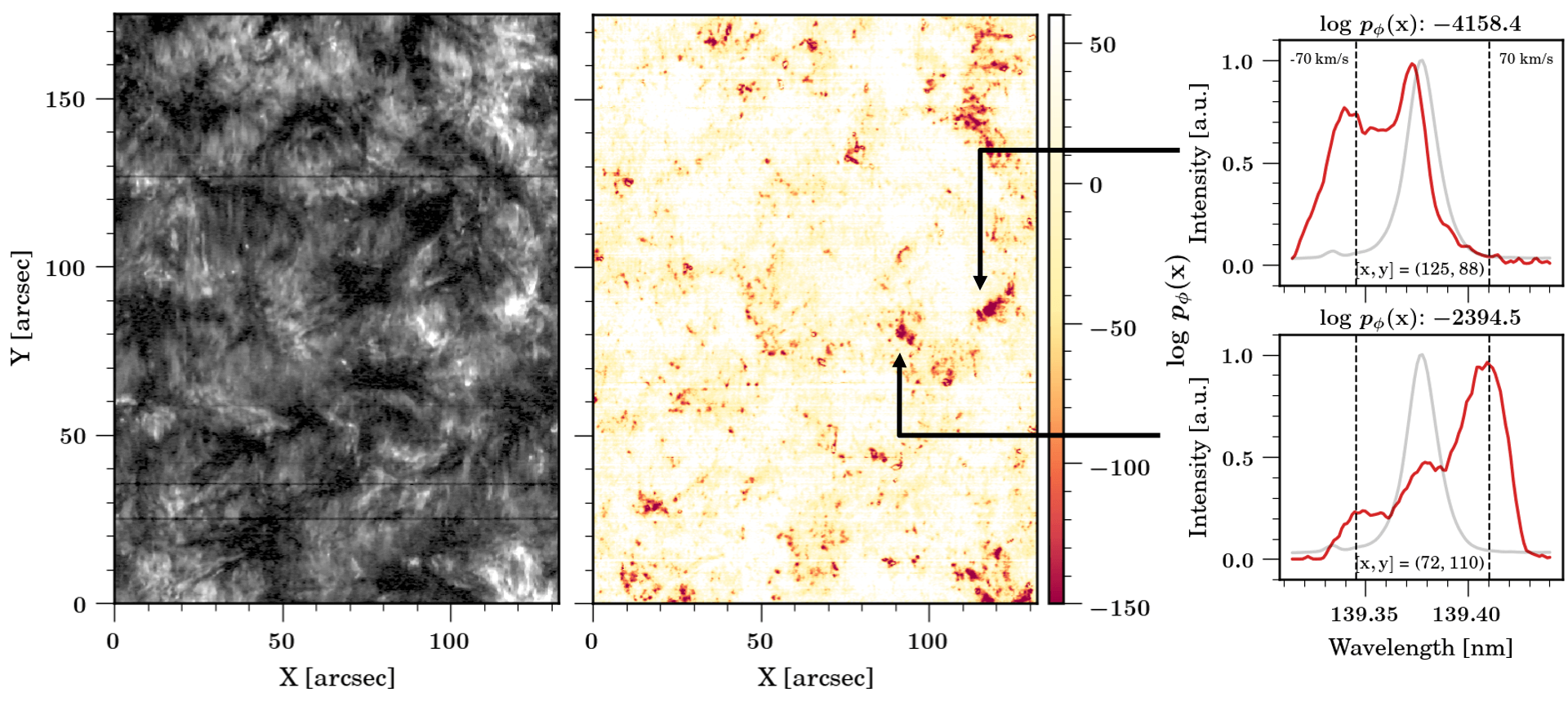
Validation of Inspectorch utilized data acquired from the Hinode Solar Polarimeter (SP) instrument, specifically focusing on measurements of the second-order Stokes parameters, I and V. These parameters are crucial for detailed analysis of the magnetic field vector within solar atmospheric features. The high spectral and spatial resolution of Hinode/SP allowed for precise quantification of magnetic field strength and inclination, providing a benchmark for evaluating Inspectorch’s accuracy in determining these values. The data set comprised observations across various solar features, enabling assessment of Inspectorch’s performance under diverse magnetic field configurations and intensities, and confirming its ability to reliably derive magnetic field parameters from spectral data.
Data from the Solar Dynamics Observatory’s Atmospheric Imaging Assembly (SDO/AIA) provides crucial context for interpreting events identified by Inspectorch within the solar corona. Specifically, AIA’s multi-wavelength imaging capabilities enable the identification of coronal holes – regions of open magnetic field – and their relationship to observed phenomena. By superimposing Inspectorch’s findings onto AIA imagery, researchers can determine if events are occurring within, at the boundaries of, or entirely separate from coronal hole structures, aiding in the understanding of the source regions of solar wind and potential space weather impacts. AIA’s broad field of view also allows for the tracking of event evolution within the larger coronal context, revealing connections to other active regions or features.
Inspectorch was successfully utilized with high-resolution spectral data obtained from the MiHI/SST instrument to detect and characterize Ellerman Bombs. This detection capability was maintained even under challenging observational conditions, demonstrating the robustness of the Inspectorch algorithm. The analysis focused on identifying the characteristic spectral signatures of Ellerman Bombs – bright, transient features in the H{\alpha} line – and quantifying their properties, including intensity, Doppler width, and spatial extent. The MiHI/SST data provided sufficient spatial and spectral resolution to resolve the fine structure within these events, allowing for detailed characterization and contributing to a better understanding of their formation and evolution.
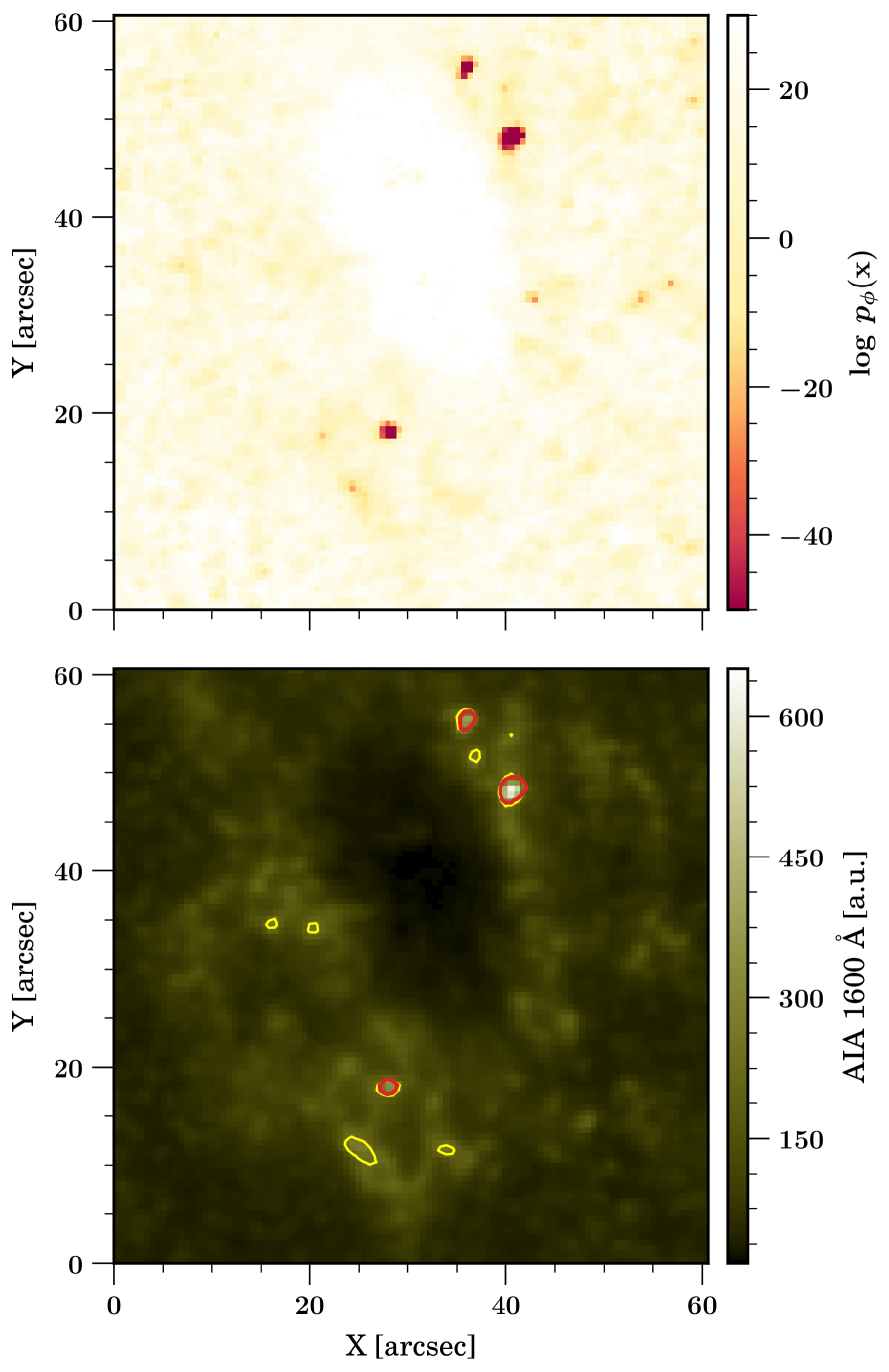
The Interface Region Imaging Spectrograph (IRIS) was utilized to investigate the solar transition region (STR) during the observed events, complementing data acquired from other instruments. IRIS observations, focusing on ultraviolet emission lines formed at temperatures between 104 and 106 K, allowed for detailed analysis of the atmospheric response in the lower solar atmosphere. Specifically, the instrument captured information regarding temperature, density, and velocity fields within the STR, revealing dynamics associated with the identified events and providing a multi-wavelength perspective crucial for understanding the coupling between chromospheric and coronal activity. Analysis of IRIS data facilitated the observation of enhanced emission in key spectral lines, indicating localized heating and changes in plasma characteristics within the transition region during the events.
Towards a Predictive Heliophysics: Unveiling the Sun’s Hidden Language
The dynamic behavior of the Sun’s magnetic fields is notoriously difficult to chart, yet crucial for understanding-and predicting-space weather. Recent advancements in automated image analysis, exemplified by the Inspectorch system, are proving invaluable in this endeavor. Inspectorch excels at pinpointing subtle and infrequent occurrences, such as ‘Quiet-Sun Ellerman Bombs’ – small-scale magnetic explosions previously lost in observational noise. These events, though occupying a tiny fraction of solar data, serve as visible markers of magnetic field restructuring at the Sun’s surface. By systematically identifying and characterizing these fleeting phenomena, Inspectorch provides a more complete picture of how solar magnetism evolves, allowing scientists to trace the complex interplay of forces that drive solar activity and ultimately impact the entire solar system.
The source of the ‘Fast Solar Wind’ – a continuous stream of charged particles emanating from the Sun – has long been a subject of scientific inquiry, with strong evidence pointing towards its origination in coronal holes – vast regions of open magnetic field lines. Recent observations from the Solar Orbiter’s Extreme Ultraviolet Imager (EUI), when combined with the automated event detection capabilities of Inspectorch, are poised to revolutionize understanding of this phenomenon. Inspectorch’s ability to pinpoint subtle magnetic reconnection events within and around these coronal holes allows researchers to trace the precise mechanisms driving the acceleration of solar wind particles. By linking these localized events to the broader outflow of the Fast Solar Wind, this combined approach promises an unprecedented view of how the Sun’s magnetic field structures shape and energize this constant stream, ultimately influencing space weather throughout the solar system and providing crucial data for forecasting potential impacts on Earth.
The automatic detection and characterization of infrequent solar events, comprising less than 0.1% of all observed data, represents a significant leap forward in heliophysics. Prior methods, reliant on manual review of vast datasets, often missed these subtle indicators of magnetic field evolution. Inspectorch, however, efficiently identifies and catalogues these fleeting phenomena, enabling continuous, real-time monitoring of solar activity. This capability is crucial for improving space weather forecasting, as these small-scale events can serve as precursors to larger, more impactful solar eruptions. By providing an early warning system, Inspectorch allows for more accurate predictions of geomagnetic disturbances that can disrupt satellite operations, power grids, and communication systems on Earth, ultimately bolstering our ability to mitigate the risks posed by the Sun’s dynamic behavior.
The capacity to automatically monitor and interpret subtle solar phenomena, as demonstrated by this research, represents a significant step towards a holistic understanding of the Sun’s complex behavior. Previously difficult-to-detect events, when consistently tracked, reveal crucial information about the generation of solar wind – a constant stream of particles impacting planetary atmospheres and magnetospheres throughout the solar system. This refined ability to characterize the Sun’s magnetic field evolution not only deepens fundamental astrophysical knowledge but also provides the groundwork for more accurate space weather prediction, safeguarding critical infrastructure on Earth and enabling safer deep-space exploration. Ultimately, this work promises to move beyond reactive responses to solar events toward a predictive capability, allowing for proactive mitigation of potential disruptions and a more complete picture of the Sun-Earth connection.

The pursuit of identifying rare events in solar observations, as detailed in this work with Inspectorch, mirrors a humbling confrontation with the unknown. Any model, no matter how sophisticated, operates within boundaries of observed data. As Pyotr Kapitsa once stated, “It is very difficult to predict what will happen in the future, but it is even more difficult to explain what has already happened.” This sentiment resonates deeply; Inspectorch, utilizing normalizing flows, doesn’t claim to know all solar phenomena, but rather provides a framework to efficiently explore the edges of current understanding – a tool to navigate the event horizon of the unexplored, where existing theories might simply dissolve. The tool acknowledges the inherent limitations of any predictive model, focusing instead on efficient discovery within those boundaries.
What Lies Beyond the Horizon?
Inspectorch, as a method, offers an efficient means of charting the unfamiliar in vast datasets. Yet, the true challenge isn’t simply finding anomalies, but recognizing that any labeled ‘anomaly’ is merely a transient flicker against an infinitely complex background. The tool illuminates, but doesn’t explain. It reveals what deviates from the expected, but the ‘expected’ itself is a construct, perpetually provisional. Any hypothesis about the solar corona, like any hypothesis about singularities, is just an attempt to hold infinity on a sheet of paper.
Future iterations of such tools will undoubtedly increase in sophistication, capable of discerning ever more subtle deviations. However, the fundamental limit remains: a model, no matter how elegant, is always an approximation. The solar disk presents a boundless source of potential surprises. The real progress won’t come from building ever-more-complex anomaly detectors, but from cultivating the patience to accept that most of what lies beyond the familiar is likely beyond comprehension.
Black holes teach patience and humility; they accept neither haste nor noise. Inspectorch, in its quiet exploration of solar data, hints at this same lesson. The goal isn’t to conquer the unknown, but to learn to live with its immensity, acknowledging that the most profound discoveries may be those that reveal the limits of what can be known.
Original article: https://arxiv.org/pdf/2602.20316.pdf
Contact the author: https://www.linkedin.com/in/avetisyan/
See also:
- 2025 Crypto Wallets: Secure, Smart, and Surprisingly Simple!
- Gold Rate Forecast
- Brown Dust 2 Mirror Wars (PvP) Tier List – July 2025
- Banks & Shadows: A 2026 Outlook
- ETH PREDICTION. ETH cryptocurrency
- HSR 3.7 story ending explained: What happened to the Chrysos Heirs?
- The 10 Most Beautiful Women in the World for 2026, According to the Golden Ratio
- Gay Actors Who Are Notoriously Private About Their Lives
- 9 Video Games That Reshaped Our Moral Lens
- Zack Snyder Shares New Ben Affleck Batman Image: ‘No Question — This Man Is Batman’
2026-02-25 14:44