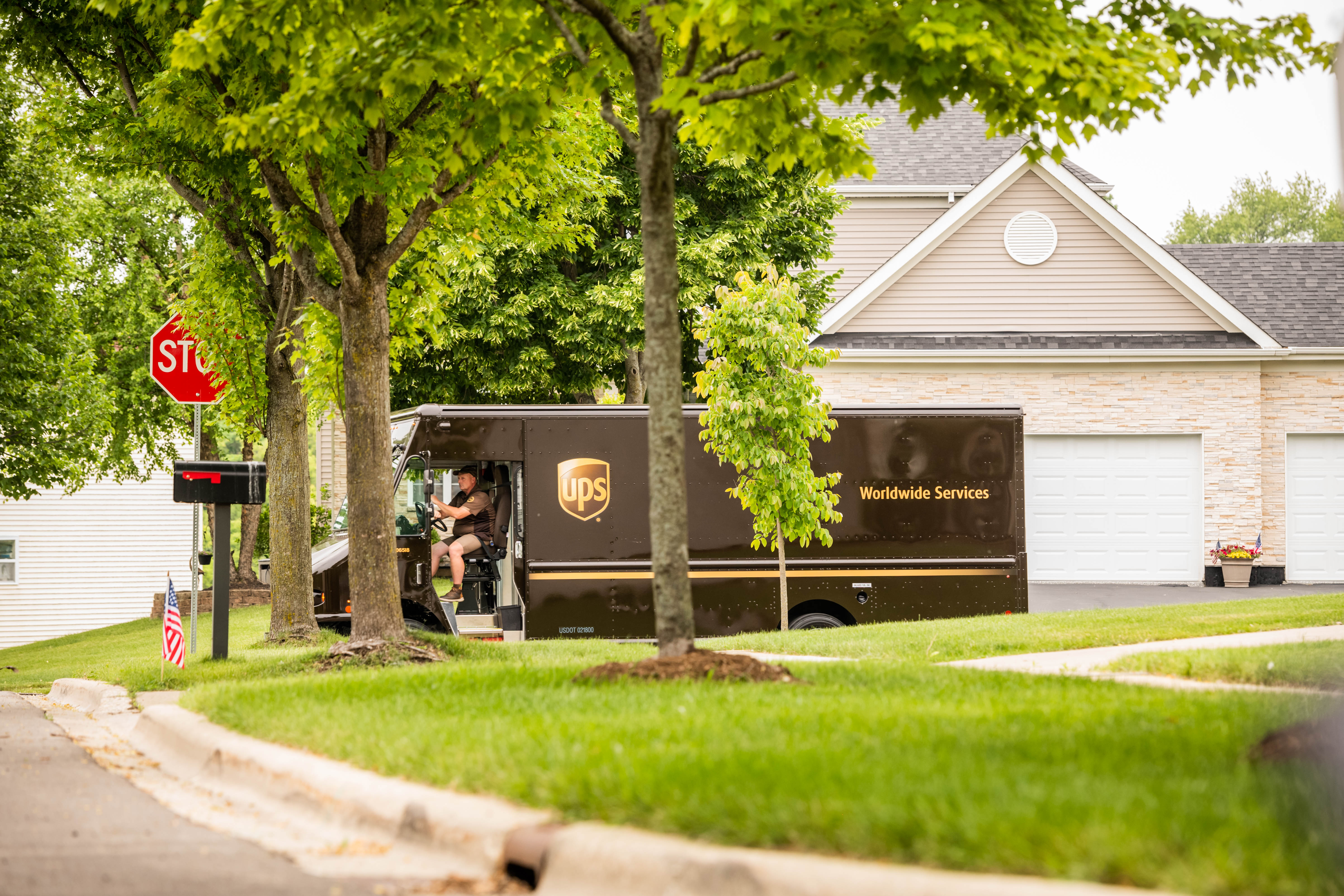
United Parcel Service. They move a lot of stuff. Twenty-odd million packages a day, if you’re counting. Which, of course, somebody is. And for a while there, the investors weren’t moving much at all. Down roughly 37% since early 2023. A sad little tumble for a company that promises next-day delivery of…well, everything. So it goes.
Some folks see that and walk away. Perfectly reasonable. I bought more. Here’s why. It’s not a story of triumph, mind you. Just a slightly less dismal one than most.
1. The Comeback, Such as It Is
I figured UPS would eventually pull itself together. Companies usually do, or they don’t. This one seems to be trying. The stock is up over 24% in the last three months. Which, in the grand scheme of things, is a blip. But a blip in the right direction. It even beat the S&P 500 and the broader industrial sector. A small victory, but a victory nonetheless.
They surprised Wall Street with their earnings. A temporary reprieve, perhaps. The CEO, Carol Tomé, mentioned a “dynamic macro environment” and “geopolitical concerns.” As if delivering packages wasn’t hard enough. It always comes down to something. They managed to do okay, despite the chaos. That’s something, isn’t it?
Don’t expect miracles in the first half of 2026, though. The world doesn’t work that way. But they think things will improve. They always think that. And beyond 2026? More growth, they say. We’ll see. We always do.
2. Profitability: A Fleeting Dream
I suspect UPS will become more profitable. Shares and earnings tend to dance together, eventually. It’s not a perfect waltz, but a clumsy shuffle. They’ve already cut costs. Three and a half billion dollars, they claim. That’s a lot of boxes.
The Amazon volume is dwindling, which is good for UPS. Less work for the drivers. They’re even offering a voluntary separation program. A polite way of saying goodbye. Another three billion in savings. They’re squeezing pennies, and who can blame them?
They’re trying to get into the healthcare logistics business. A complicated field. Lots of regulations, lots of paperwork. But higher margins. That’s the lure. They also want more business from small and medium-sized companies. And business-to-business customers. A slow, steady climb. They increased their SMB penetration to 31.8% of total U.S. volume. A small step, but a step nonetheless.
3. The Dividend: A Fragile Hope
The dividend is attractive. Around 6%. A juicy number. But it was shaky for a while. They were spending more on dividends than they were earning. A dangerous game.
That’s changing, they say. They expect to pay $5.4 billion in dividends in 2026. And generate around $6.5 billion in free cash flow. Including pension contributions. It’s a delicate balance. A tightrope walk over a pit of debt.
A 6% yield makes it more likely the stock will deliver a double-digit total return. A faint glimmer of hope in a world of disappointment. And when I finally want to use the dividends for income, I suspect UPS will still be delivering. If we’re all still here, that is. So it goes.
Read More
- 2025 Crypto Wallets: Secure, Smart, and Surprisingly Simple!
- Gold Rate Forecast
- Brown Dust 2 Mirror Wars (PvP) Tier List – July 2025
- Banks & Shadows: A 2026 Outlook
- Gemini’s Execs Vanish Like Ghosts-Crypto’s Latest Drama!
- Wuchang Fallen Feathers Save File Location on PC
- ETH PREDICTION. ETH cryptocurrency
- The 10 Most Beautiful Women in the World for 2026, According to the Golden Ratio
- QuantumScape: A Speculative Venture
- Gay Actors Who Are Notoriously Private About Their Lives
2026-02-23 12:52