

The first season of A Knight of the Seven Kingdoms featured a significant exchange – a relatively unknown knight risked everything to save a prince. Despite this dramatic turn, the finale was full of connections to the broader world of George R.R. Martin’s stories. This includes references to A Song of Ice and Fire, Game of Thrones, House of the Dragon, and the history of Westeros. Here’s a breakdown of all the Easter eggs, terminology, and lore found in the sixth and final episode.
Tarth
When Lord Lyonel Baratheon tried to hire Ser Duncan, he also promised a trip to Tarth – a stunning island in the Narrow Sea near his castle. Known as the Sapphire Isle, it’s famous not for sapphires themselves, but for the incredibly clear, blue color of the water surrounding it, as fans of Game of Thrones will remember.
Tarth is the ancestral home of House Tarth, a powerful family sworn to House Baratheon. It’s also where Brienne, a descendant of the legendary Ser Duncan the Tall, comes from. This connection is why a simple mention of the island – briefly seen by Jaime Lannister in the show Game of Thrones – felt significant to viewers.
Others
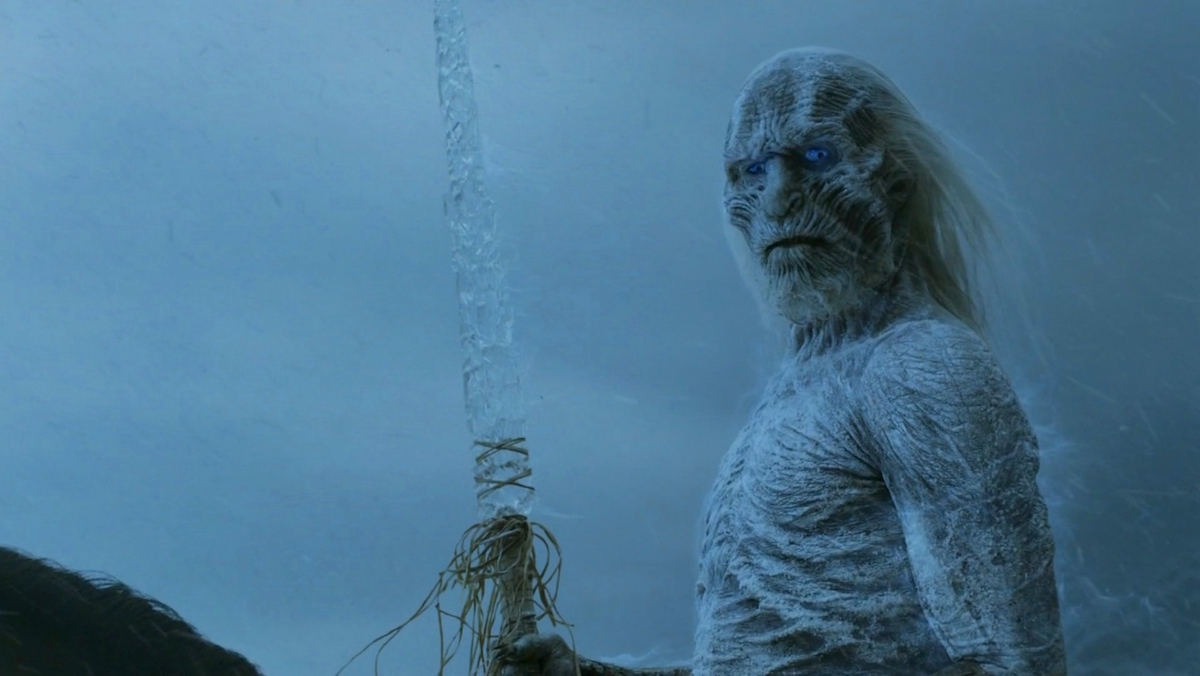
As a huge fan of the show, I always get a kick out of the little details. Instead of the usual “Seven bloody hells,” Lyonel Baratheon dropped a pretty colorful curse – he actually said, “Others fing geld me!” It’s a funny little difference because, for those who don’t know, the “Others” are what George R.R. Martin calls the White Walkers in his A Song of Ice and Fire books. The show, Game of Thrones, just refers to them as White Walkers, so it’s a neat nod to the source material when the show uses the book’s name for the curse.
The Grand Conspiracy Against House Targaryen

“A war is coming,” Lyonel Baratheon unexpectedly told a simple knight. It was an odd statement, raising questions about who would be fighting and why. For fifteen years, the kingdom had enjoyed relative peace, even though some rebels from the Battle of the Redgrass had fled overseas. These exiles didn’t appear to be a serious danger, so what made Lyonel believe a war was on the horizon?
The idea of a war with the Others, as he’d just mentioned, seemed far-fetched. At the time, almost no one in Westeros thought the White Walkers would ever return, and many even doubted they’d existed at all. Even a century from now, people would likely dismiss the reports, despite plenty of evidence. So, was Lord Baratheon simply warning that conflict was inevitable? Absolutely. He may have been acknowledging his own desire for battle, or perhaps just recognizing that in Westeros, peace never lasts. The realm is a place where conflict is always looming.

Perhaps he meant the powerful families of Westeros are tired of being ruled by outsiders who repeatedly lead them into deadly civil wars. That’s why, according to him, a dragon that’s gone is the best kind of dragon. The first season of A Knight of the Seven Kingdoms clearly demonstrates how unpopular House Targaryen has become at this point in time. When they had dragons, they were formidable, but without those creatures, they’re just like any other family, and their internal conflicts keep costing their followers their lives.
In A Knight of the Seven Kingdoms, Raymum Fossoway didn’t hide his disdain for House Targaryen, telling Dunk they were outsiders who practiced incest and used dark magic. He described them as oppressive rulers who had harmed his people, ignored their history, and shown no respect for their traditions, with each new Targaryen ruler being more unstable than the last. His cousin, Steffon, confidently predicted his family would survive the Targaryens—a prediction that came true a century later with Robert’s Rebellion, which nearly wiped out House Targaryen and led to their downfall.
The war his ancestor faced might be the very same one Lyonel fears is on the horizon, though he doesn’t know exactly when or how it will begin. The lords of Westeros were clearly fed up with House Targaryen and its often dreadful rulers. Even before Rhaegar took Lyanna Stark, there are signs the Great Houses were already plotting to overthrow the Targaryens.

A widely discussed fan theory in the world of A Song of Ice and Fire suggests that many of the great houses were secretly plotting a rebellion against the Iron Throne, and were working to build alliances against the Targaryen family. Traditionally, these powerful houses strengthened their positions through marriages with their loyal supporters. The Seven Kingdoms were generally very self-contained, but Ned Stark began making unusual moves. He arranged a marriage between his eldest son and a daughter of House Tully, and sent his second son to be fostered by Lord Jon Arryn in the Vale. It was there Ned met another foster child – the eldest son of Lord Baratheon, Robert, who was then betrothed to Lyanna Stark.
It’s strange – why did these important and powerful families suddenly begin behaving so differently? They rarely cooperated, so why start arranging marriages and alliances? Some think it was a plan to unite through family ties – like the close bond between Ned and Robert – so they could eventually challenge the king. And that’s precisely what happened, though not in the way they originally envisioned.
Silent Sisters

The Silent Sisters are a group of devout women within the Faith of the Seven who traditionally care for the bodies of the deceased and collect their ashes after cremation. They perform this solemn duty for anyone who follows the new gods in Westeros. Viewers first saw them in the very first episode of Game of Thrones during the funeral of Jon Arryn.
Unlike septas who care for people, teach them, and enforce discipline, the Silent Sisters attend to the dead. Their simple, serious way of life sometimes leads to women being sent to the order as a form of punishment. They wear hooded robes that cover their faces – it’s considered unlucky to look directly at death. In the world of HBO’s Westeros, they also carry a banner displaying the symbol of the Seven on their backs, framing their heads. They serve as a constant, quiet reminder of everyone’s mortality.
Green Fossoways

House Fossoway divided into two distinct lines during the Tourney of Ashford. Raymun demonstrated his separation from his cousin during the Trial of Seven by creating a unique family crest. Instead of the traditional red apple emblem of House Fossoway, he chose a green apple for his shield. (The television series depicts this change happening after the Trial, not immediately before.)
Following the events at Ashford, all branches of House Fossoway continued to pledge their loyalty to House Tyrell of the Reach. However, each branch became known by a distinct nickname based on color. Those at Cider Hall were called the red-apple Fossoways, while the branch at New Barrel became known as the green-apple Fossoways.
Pennytree

The late Ser Arlan, a key figure in the realm, came from the riverlands village of Pennytree, nestled between two hills known as “the Teats.” This large village is located in a historically contentious area, caught between the lands of two feuding families – Houses Bracken and Blackwood – whose rivalry has been a long-running issue, even appearing in House of the Dragon. Because of this dangerous location, Pennytree is heavily fortified with twelve-foot-high stone walls, providing residents with a quick refuge when trouble arises. The village is also somewhat protected by its status as a royal territory.
Ser Arlen explained the touching but somber custom of his village, which inspired its name. Before heading off to war, soldiers would hammer a copper penny into a large oak tree. If a soldier never returned, the penny stayed there as a permanent memorial.
Targaryen Madness

Cersei Lannister observes that many Targaryens have suffered from madness, and there’s an old saying that with each Targaryen birth, the gods essentially gamble with their sanity.
The dragonlord families of Westeros became known for having members with mental health problems, and this was especially true for the Targaryens, with their last king, Aerys II, being a prime example. Initially charming and seemingly stable, Aerys later became known as the “Mad King.” Other Targaryens, who often married close relatives to maintain their family line, also showed signs of mental instability. However, it’s often debated whether this “madness” was truly mental illness or simply unacceptable behavior from a privileged and isolated royal family. In the first season finale of A Knight of the Seven Kingdoms, Prince Daeron questions the basis of the long-held belief about his family’s history.
He explained to Ser Duncan that while some in his family might be touched by madness, his cruel brother Aerion wasn’t born evil. Aerion had enjoyed fishing as a child, but only changed into a monster after being forced to grow up and become a man.

Daeron believed his family’s bad behavior stemmed from their upbringing, not from any inherent traits or fate (often referred to as the will of the gods). This idea was persuasive, and it convinced Ser Duncan the Tall to take Egg on as a squire, hoping to change the young boy’s destiny and avoid the troubles that seemed unavoidable for the Targaryen family.
Dunk’s main concern now is guiding the young Targaryen boy and preventing him from becoming as volatile and dangerous as his older brother.
Mikey Walsh writes for TopMob and is organizing a tour of Westeros, with stops in Tarth and Pennytree. Find him on Bluesky at @burgermike, or wherever people are debating the best Targaryen kings.
Read More
- 2025 Crypto Wallets: Secure, Smart, and Surprisingly Simple!
- Gold Rate Forecast
- Brown Dust 2 Mirror Wars (PvP) Tier List – July 2025
- Banks & Shadows: A 2026 Outlook
- Gemini’s Execs Vanish Like Ghosts-Crypto’s Latest Drama!
- Wuchang Fallen Feathers Save File Location on PC
- The 10 Most Beautiful Women in the World for 2026, According to the Golden Ratio
- ETH PREDICTION. ETH cryptocurrency
- QuantumScape: A Speculative Venture
- Gay Actors Who Are Notoriously Private About Their Lives
2026-02-23 07:07