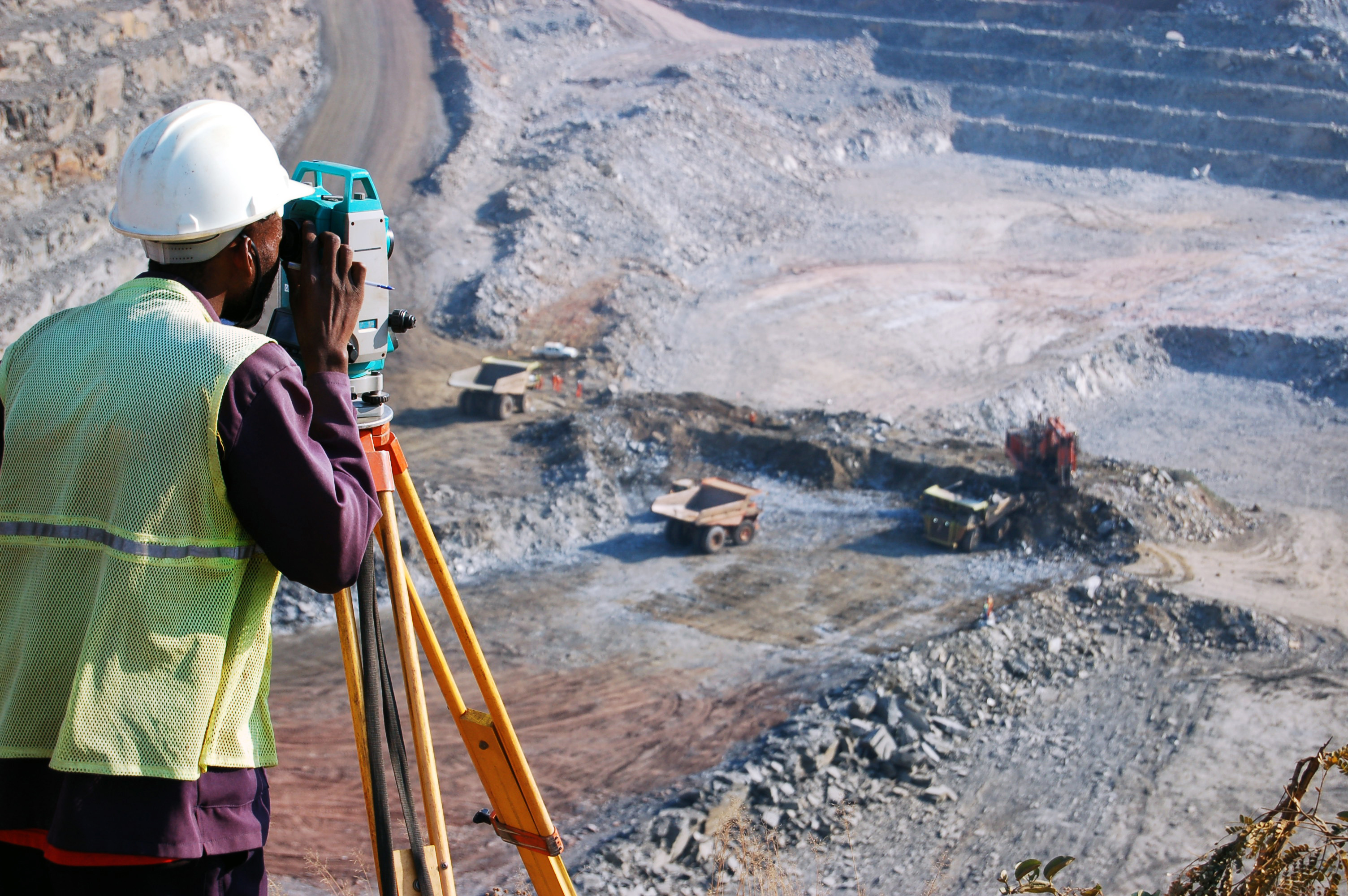
USA Rare Earth (USAR 4.31%) has attracted attention, predictably so. The company concerns itself with rare-earth minerals—materials essential for the manufacture of powerful magnets. The current enthusiasm, however, should be regarded with a degree of circumspection.
The designation ‘rare-earth’ is a misnomer. These elements are not, in truth, scarce within the Earth’s crust. The difficulty lies in locating them in concentrations sufficient to justify the cost of extraction. Seventeen chemically similar elements fall under this classification, valued for their magnetic, luminescent, and electrochemical properties. They are integral to electric vehicle motors, robotics, wind turbines, and the ubiquitous electronics that now govern modern life. Their presence is also, disturbingly, felt in military applications – guidance systems, sonar, and the technologies of concealment.
The company’s stock has experienced a substantial increase this year, exceeding 60%. Maintaining this trajectory for the next three years appears improbable, though certain factors may offer some support. These factors, however, are less about the inherent viability of the company and more about the geopolitical currents that now dictate so much of industrial policy.
The Hand of Government
In January, the U.S. government pledged $1.6 billion to USA Rare Earth, as part of a broader initiative to lessen reliance on China for these critical materials. This comprises a $1.3 billion loan, authorized under the CHIPS Act of 2022, and $277 million in grants. In return, the government will acquire a 10% equity stake. The arrangement is, plainly, a subsidy.
These funds are intended to facilitate the development of the Round Top Heavy Rare Earth, Lithium, and Critical Minerals Project in Texas, and to complete a magnet manufacturing facility in Oklahoma. The logic is straightforward: Washington seeks to diminish China’s capacity to wield its dominance in rare-earth extraction as a tool of political leverage. It is a matter of national security, framed as economic opportunity.
The implication is clear: USA Rare Earth’s success is not solely dependent on market forces, but on the continued flow of public funds. This creates a peculiar dynamic, one where profitability is less a measure of efficiency and more a function of political will.
A Question of Revenue
The company anticipates bringing its Oklahoma manufacturing facility online in the first half of 2026. This plant will produce neodymium iron boron (NdFeB) magnets, used in a variety of industrial applications. Initially, the plant will rely on rare-earth metals sourced from other mining companies. By 2028, however, the company expects to achieve vertical integration, controlling the entire supply chain from ore to magnet, thanks to the Round Top project.
Round Top is said to contain significant deposits of gallium and beryllium. If these claims prove accurate, it could give USA Rare Earth a first-mover advantage within the United States. By 2029, the company projects an annual production capacity of over 10,000 metric tons of rare-earth magnets. Current U.S. demand is approximately 50,000 tons, with projections of a doubling by 2035. The figures are impressive, but they depend on a sustained period of favorable conditions and continued investment.
Vertical integration, if achieved, would allow USA Rare Earth to capture a larger share of the profit margin and mitigate the volatility of external suppliers. However, it also carries significant risk. A single point of failure within the supply chain could disrupt the entire operation.
The Illusion of Certainty
Recent increases in rare-earth metal prices are, on the surface, encouraging. However, these fluctuations are often driven by speculation and geopolitical events, making long-term forecasting unreliable.
The company’s projections—$2.6 billion in annual revenue and $1.2 billion in EBITDA by 2030—should be regarded with skepticism. While the government’s support mitigates some of the inherent risk associated with a pre-revenue company, it does not guarantee success. The crucial question remains: how profitably can USA Rare Earth operate once it scales up its operations?
For investors with a high tolerance for risk, USA Rare Earth may offer significant upside potential. The stock could, conceivably, double or triple over the next three years. However, it is essential to remember that speculative investments are rarely a path to secure returns. The prevailing narrative of technological advancement and national security concerns may create a temporary bubble, but bubbles, by their nature, eventually burst.
Read More
- 2025 Crypto Wallets: Secure, Smart, and Surprisingly Simple!
- Wuchang Fallen Feathers Save File Location on PC
- Gold Rate Forecast
- Brown Dust 2 Mirror Wars (PvP) Tier List – July 2025
- Crypto Chaos: Is Your Portfolio Doomed? 😱
- HSR 3.7 breaks Hidden Passages, so here’s a workaround
- 17 Black Actresses Who Forced Studios to Rewrite “Sassy Best Friend” Lines
- The 10 Most Beautiful Women in the World for 2026, According to the Golden Ratio
- The Best Single-Player Games Released in 2025
- Where to Change Hair Color in Where Winds Meet
2026-02-19 17:24