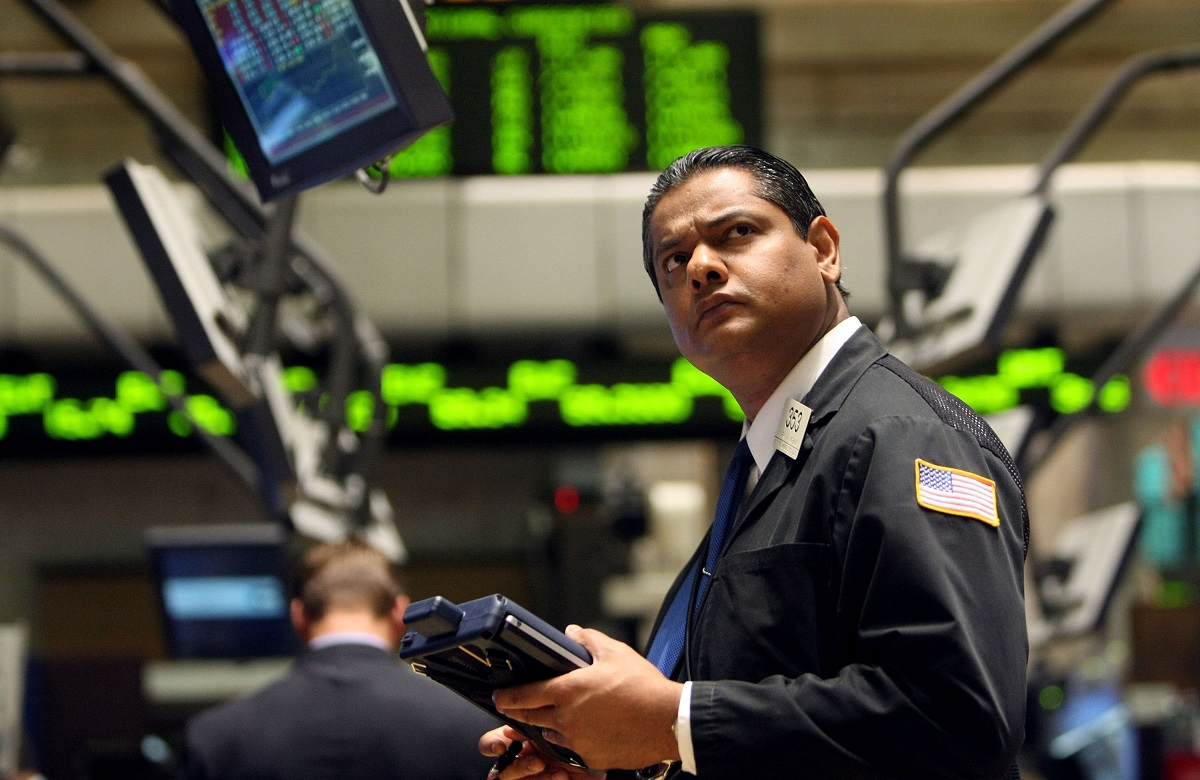
For the last seven years, the stock market has behaved with a disconcerting degree of… optimism. The S&P 500, that curious collection of 500 companies (mostly selling things people mostly want, or at least are persuaded they want), has enjoyed a run of success that defies not so much gravity as common sense. The Dow Jones Industrial Average, a name that sounds suspiciously like a Victorian plumbing problem, has even breached the 50,000 mark – a number so large it feels less like a financial metric and more like a postcode in a particularly ambitious sci-fi novel. And the Nasdaq, that digital bazaar of technological promise (and occasional hype), has consistently delivered returns that make one question the fundamental laws of probability. (It’s worth noting that ‘consistent’ in financial terms often means ‘until it doesn’t’.)
Naturally, this has led to a surfeit of explanations involving artificial intelligence, quantum computing, and the ever-reliable promise of lower interest rates. (The idea that cutting the cost of borrowing will magically solve all economic woes is akin to believing that rearranging the deckchairs on the Titanic will improve its seaworthiness.) Record share buybacks, a practice which essentially involves companies using their own money to inflate their stock price, have also been cited. (It’s a bit like a dog chasing its own tail, only with significantly more zeroes involved.)
But history, that relentless and often inconvenient teacher, suggests that when things appear almost unbelievably good, they almost certainly are. Or, at least, they’re about to become less so. And recently, the S&P 500 has performed a statistical maneuver that hasn’t been seen since the bursting of the dot-com bubble – a period when investors were convinced that a pet food delivery service could achieve infinite growth. (It didn’t.)
A Precedent of Mild Concern
Before we descend too deeply into the realm of speculation (which, let’s be honest, is where most financial journalism resides), a disclaimer is in order. Historical correlations, while occasionally useful for identifying patterns, are notoriously unreliable predictors of future events. The stock market, much like a particularly capricious deity, operates on its own inscrutable logic. (Or, more likely, random chance.) However, some historical indicators do possess a disconcerting tendency to foreshadow impending doom. Or, at least, a significant correction.
Recently, someone at The Compound podcast, using data from Bloomberg Finance, began tracking instances where 115 or more companies within the S&P 500 experienced a single-session drawdown of at least 7%. (A drawdown, for the uninitiated, is a decline in value. 7% is, shall we say, a noticeable decline. Think of it as the financial equivalent of tripping over a very small, but surprisingly solid, obstacle.) This, it turns out, is a rather rare occurrence. Typically, these events coincide with periods of market stress, such as the COVID-19 crash or the unveiling of a particularly ill-advised tariff policy. (Tariffs, in case you were wondering, are essentially taxes on imports. They’re a bit like telling everyone you’re not allowed to trade with anyone unless they pay you a fee. It rarely ends well.)
Loading…
—
Over the last 26 years, the average S&P 500 drawdown from its high has been around 34% when this particular indicator is triggered. But recently, this indicator flared up while the S&P 500 was only 2% below its all-time high. This hasn’t happened since the early stages of the dot-com bubble. (A bubble, for those unfamiliar with the term, is a period of irrational exuberance, where asset prices are driven to unsustainable levels. It’s a bit like blowing air into a balloon until it inevitably bursts.)
This, combined with the fact that the stock market is currently one of the most expensive in history (according to the Shiller P/E Ratio, a metric that attempts to account for inflation and cyclical fluctuations), suggests that the odds of a significant correction are increasing. Historically, when the Shiller P/E Ratio exceeds 30 for an extended period, the market tends to experience a rather unpleasant reckoning. (The magnitude of this reckoning can vary, from a modest 20% decline to a catastrophic 89% plunge. It’s a bit like playing Russian roulette with your portfolio.)

The Inevitable Undulation
While the headwinds appear to be mounting, it’s important to remember that stock market corrections, bear markets, and outright crashes are perfectly normal, healthy, and inevitable. No amount of tinkering by the Federal Reserve, government intervention, or wishful thinking can prevent these periodic bouts of market turbulence. (Attempting to control the stock market is a bit like trying to herd cats. It’s a futile exercise that will likely result in scratches and frustration.)
A recent analysis by Bespoke Investment Group revealed a fascinating disparity between the length of bull and bear markets. The average bear market lasts around 286 calendar days (about 9.5 months), while the average bull market persists for a considerably longer 1,011 calendar days. (This suggests that the market is more resilient to declines than it is to sustained gains. Or, perhaps, that investors are simply more patient when it comes to recovering from losses.)
Loading…
—
Statistically, wagering on the stock market’s long-term upward trajectory has been a wise decision. This means that any significant decline in the Dow Jones Industrial Average, S&P 500, and Nasdaq Composite should be viewed as a potential buying opportunity for investors with a long-term perspective. (Of course, timing the market is notoriously difficult. Attempting to predict the bottom is a bit like trying to catch a falling knife.)
If history repeats itself, and this particular drawdown indicator proves to be a reliable predictor of future events, bargains may abound for investors in the not-too-distant future. (Or, perhaps, the market will defy all expectations and continue its relentless ascent into the stratosphere. Either way, it’s bound to be interesting.)
Read More
- 2025 Crypto Wallets: Secure, Smart, and Surprisingly Simple!
- Wuchang Fallen Feathers Save File Location on PC
- Gold Rate Forecast
- Brown Dust 2 Mirror Wars (PvP) Tier List – July 2025
- 17 Black Actresses Who Forced Studios to Rewrite “Sassy Best Friend” Lines
- Crypto Chaos: Is Your Portfolio Doomed? 😱
- HSR 3.7 breaks Hidden Passages, so here’s a workaround
- Elden Ring’s Fire Giant Has Been Beaten At Level 1 With Only Bare Fists
- Here Are the Best TV Shows to Stream this Weekend on Hulu, Including ‘Fire Force’
- Anime Series Hiding Clues in Background Graffiti
2026-02-19 12:13