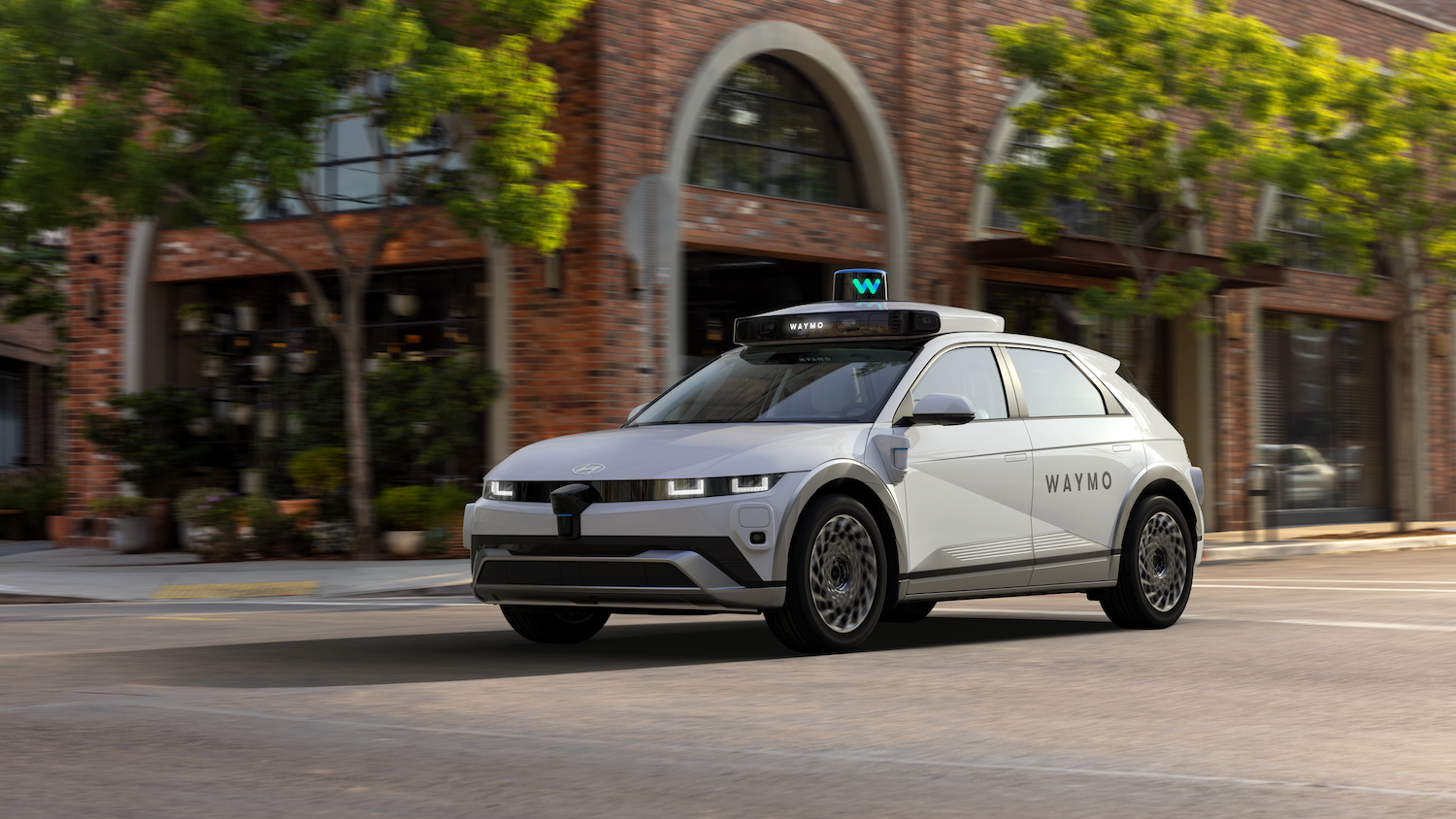
So, Alphabet. A perfectly good name, really. Suggests a certain order, doesn’t it? Like they’ve meticulously cataloged all the letters of the universe. Which, given their current trajectory, isn’t entirely implausible. They’ve recently injected another $16 billion into Waymo, their driverless car division. Sixteen billion. That’s… a lot of buses. Or, if you prefer, a statistically significant number of slightly-used planets. It elevates Waymo’s valuation to $126 billion, which, let’s be honest, is a figure so large it begins to lose all meaning. It’s like trying to comprehend the distance to the nearest galaxy – you eventually just give up and have a cup of tea.
This isn’t just about cars that drive themselves, you see. It’s about the relentless, almost unsettling, expansion of Alphabet’s artificial intelligence footprint. They’re not just building algorithms; they’re constructing a digital nervous system for the planet. (And one does wonder if this system will eventually develop opinions. Hopefully, they’ll be polite ones.) This latest funding round is merely one facet of a much larger, shimmering, and potentially world-altering opportunity.
How $16 Billion Buys You a Future (Probably)
Autonomous vehicles, it turns out, require a bit more than just a steering wheel and a vague sense of direction. They demand, shall we say, a certain degree of computational horsepower. A frankly alarming amount, when you think about it. Alphabet has been diligently tinkering with self-driving technology for over a decade, which, in internet years, is roughly equivalent to the Jurassic period. And now, finally, they’re starting to see a return on that investment. Waymo completed a staggering 15 million rides last year – more than three times the previous year. Which means, statistically speaking, a lot of people are trusting a computer to not drive them into a ditch. (A surprisingly brave act, when you consider how often humans manage that feat.)
They currently operate in six U.S. cities, and plan to expand to 20 more, plus international locations. The idea, apparently, is to scale up a commercial reality. (A rather ambitious undertaking, considering the inherent unpredictability of reality itself.) Tekedra Mawakana and Dmitri Dolgov, Waymo’s co-CEOs, have boldly declared their intention to launch ride-hailing operations in over 20 cities by 2026, including Tokyo and London. (One hopes they’ve factored in the possibility of rogue pigeons and unusually assertive pedestrians.)
The autonomous vehicle market is projected to be worth a staggering $2.2 trillion by 2030. (A number so large it’s practically a philosophical concept.) This, of course, is just one piece of the AI cake Alphabet is attempting to devour.
Beyond the Driverless Dream
Waymo is, undeniably, important. But it’s not the whole story. Alphabet’s AI ambitions extend far beyond simply automating transportation. Consider Google Gemini, their chatbot, which now boasts 750 million monthly active users – up from 400 million just nine months ago. That’s a lot of people asking a computer to write their emails and explain quantum physics. (One wonders if the computer is secretly judging them.) This rapid growth demonstrates not only the utility of Gemini but also the sheer power of Alphabet’s ecosystem – their uncanny ability to convince people to try new AI services.
And the AI collaborations don’t stop there. Apple, in a move that will likely result in billions of dollars flowing Alphabet’s way over the next several years, will be integrating Gemini into a new version of Siri. (One anticipates Siri will become significantly more sarcastic.)
Much of Alphabet’s AI revenue is currently generated through Google Cloud, which saw a remarkable 48% surge in the fourth quarter, reaching $17.6 billion. This helped the company surpass $400 billion in annual revenue in 2025 – a record high. (Which, one suspects, will be broken again next year.)
The recent Waymo investment, Gemini’s user gains, and Alphabet’s surging cloud sales all point to one inescapable conclusion: their artificial intelligence ambitions are already paying off. The competition will, of course, be fierce. (After all, everyone wants a piece of the future.) But these moves demonstrate that Alphabet is, without a doubt, a top AI stock for 2026 and beyond. (Unless, of course, the robots decide they no longer approve of our financial systems. But that’s a discussion for another day.)
Read More
- Gold Rate Forecast
- 22 Films Where the White Protagonist Is Canonically the Sidekick to a Black Lead
- Games That Faced Bans in Countries Over Political Themes
- Silver Rate Forecast
- Unveiling the Schwab U.S. Dividend Equity ETF: A Portent of Financial Growth
- Celebs Who Narrowly Escaped The 9/11 Attacks
- Brent Oil Forecast
- How to Do Sculptor Without a Future in KCD2 – Get 3 Sculptor’s Things
- Superman Flops Financially: $350M Budget, Still No Profit (Scoop Confirmed)
- 14 Movies Where the Black Character Refuses to Save the White Protagonist
2026-02-10 01:33