
The air thickens with promise, doesn’t it? Everyone speaks of Joby and Archer, those bright, insistent birds vying for altitude in this nascent sky of vertical flight. But the true current, the deeper flow, often lies elsewhere. It is Boeing’s Wisk, a name whispered rather than shouted, that commands my attention. Not for its immediate clamor, but for a quiet ambition, a long game played with the patience of geological time.
Boeing and Wisk
Each of these ventures—Joby, Archer, Wisk—traces a different path, a distinct vein of possibility. Archer, a craftsman, building its vessels to sell, a fleeting prosperity dependent on the whims of others. Joby, a carrier, seeking to establish routes, to bind destinations with threads of swift transit, a service predicated on human hands at the controls. But Wisk… Wisk dreams of something more elemental. It seeks not merely to transport, but to liberate flight from the burden of the pilot, to allow the machine to navigate by its own reckoning.
This pursuit of autonomy, it is a dangerous, beautiful thing. Like a sapling reaching for the sun, it requires a fortitude that many lack. Joby, partnered with Delta and Uber, builds a bridge to the present. Wisk, however, lays the foundations for a different future—one where the sky is not navigated, but understood by the machine itself.
The Weight of Silence
But the path to such a future is not paved with ease. The FAA, a cautious guardian of the skies, demands proof, layers upon layers of validation. Wisk, aiming for full autonomy with its Generation 6 aircraft, faces a certification process that stretches towards the end of the decade. A long wait, yes, but a necessary one. It is a period of gestation, of silent refinement. Joby and Archer, with their more conventional approaches, gain a fleeting advantage, a head start in a race that may yet have unforeseen turns.
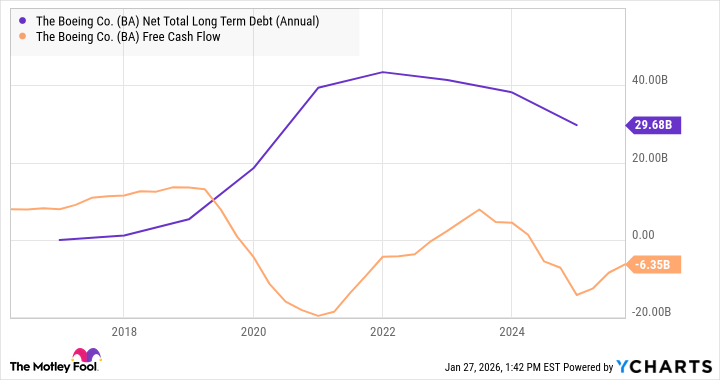
And here lies the crux for Boeing. It carries the weight of debt, the responsibility of a legacy, the need to fund not just dreams of the future, but the necessities of the present—a new narrow-body aircraft, the backbone of commercial flight. Wisk, then, is not merely a venture, but a calculated risk, a gamble on a distant horizon.
Boeing proposes a new “Concept of Operations for Automated Flight Rules (AFR).” It is a vision of a sky woven with digital threads, where aircraft communicate not through voice, but through data, where the ground itself becomes a watchful intelligence. It is a shift from navigating within the air, to understanding the air itself. This is not the impulsive leap of Tesla’s Full Self-Driving, a bravado attempt to conquer all terrains. It is a deliberate, methodical approach, a careful orchestration of ground operations, digital twins, and unwavering precision.
For the Patient Investor
This is not a story of immediate returns. It is a story of long-term potential, of a company willing to invest in a future that may not fully materialize for years. It demands capital, patience, and a willingness to embrace complexity. Boeing must prove it can not only build the technology, but also navigate the regulatory landscape, and convince the world that a sky governed by algorithms is a safe and reliable sky.
There are hurdles, certainly. The need to generate cash flow, to reduce debt, to prioritize competing demands. But for the investor with a long view, the one who understands that true innovation requires both courage and restraint, Wisk represents a compelling opportunity. It is a silent ascent, a slow unfolding of potential, a promise whispered on the wind. It may not be the loudest voice in the sky, but it is the one I am watching most closely.
Read More
- Invincible Season 4 Gender Swaps Tech Jacket As Fans Question Major Comic Change
- Gold Rate Forecast
- Silver Rate Forecast
- 15 Films That Were Shot Entirely on Phones
- 22 Films Where the White Protagonist Is Canonically the Sidekick to a Black Lead
- Building Agents That Learn and Improve Themselves
- 20 Movies Where the Black Villain Was Secretly the Most Popular Character
- Celebs Who Narrowly Escaped The 9/11 Attacks
- Games That Faced Bans in Countries Over Political Themes
- 20 Films Where Black Directors Subverted Hollywood’s White Savior Tropes
2026-01-31 20:22