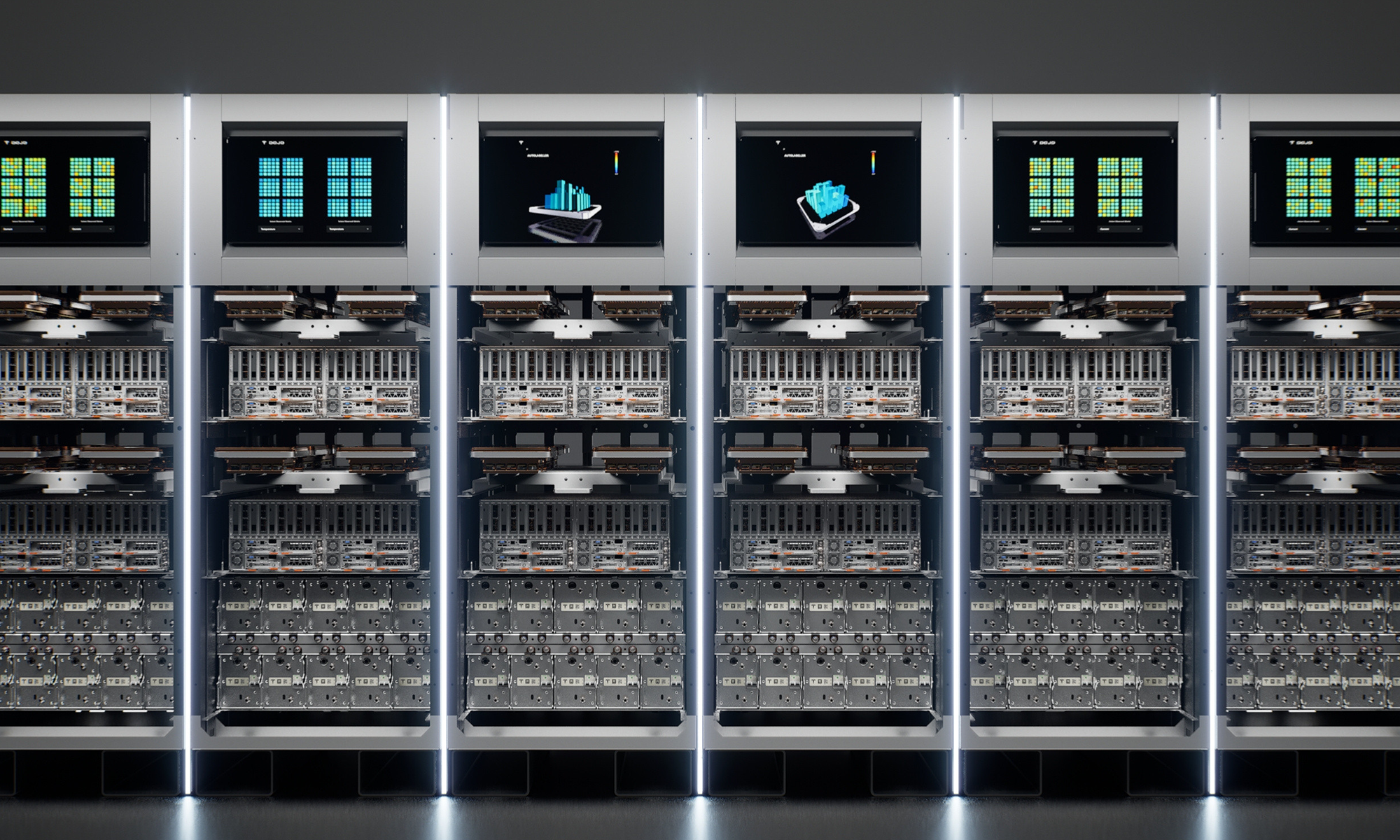
Today, the shares of Tesla—a construct built upon the fervent hopes and considerable capital of many—experienced a momentary ascendance. A rise of as much as 5.6% by mid-morning, triggered by whispers—or perhaps, more accurately, by the deliberate seeding of conjecture—regarding a potential consolidation with SpaceX. Accompanying this, reports suggest discussions are also underway involving SpaceX and xAI, the artificial intelligence venture similarly overseen by the same singular directing hand. It is a spectacle not of organic growth, but of financial maneuvering, a testament to the enduring power of personality over prudence.
The Logic of Consolidation: A Necessary Binding?
The proposition of a unified entity—even a mere merger—between SpaceX and xAI is greeted with a degree of relief by those who observe the dispersal of resources across multiple ventures. The founder, a figure increasingly akin to a modern-day potentate, has demonstrably stretched himself thin, his attention fragmented across domains demanding singular focus. This is not a question of mere managerial capacity, but of the inherent limitations of human endeavor. To believe one individual can simultaneously shepherd advancements in electric vehicles, space exploration, and artificial intelligence is to court systemic fragility—a precarious reliance on a single point of control.
Beyond the alleviation of overextension, the potential for synergistic integration is touted. The application of Tesla’s energy storage expertise to power SpaceX’s orbital and interplanetary ambitions is presented as a logical progression. One might even envision Tesla’s nascent robotic workforce—the Optimus units—toiling within SpaceX facilities, or even venturing forth on missions to Mars. Such visions, while technically plausible, serve to obscure a more fundamental truth: that these endeavors, however ambitious, are ultimately predicated upon the continued flow of capital, a river increasingly channeled by the whims of a select few.
Furthermore, a consolidated Tesla and SpaceX, should it attract further investment—and this is a considerable ‘should’—would bolster Tesla’s ambitious growth plans. The recently announced $20 billion in capital expenditure, earmarked for the expansion of robotaxi services and the Optimus program, is a testament to the scale of these ambitions. This is not simply about building better cars or reaching for the stars; it is about establishing dominance—a relentless pursuit of market share and technological supremacy, regardless of the societal cost.
The Specter of Speculation: What Does This Signify?
It is crucial to acknowledge that today’s market reaction is, at its core, speculative. The foundations are built on rumor and anticipation, not on demonstrable fact. Yet, this very speculation reveals a profound truth: the markets are not driven by rational assessment, but by faith—faith in the leadership of a single individual, and the promise of future returns. The willingness of equity and capital markets to support these ventures is not a testament to their inherent value, but to the enduring power of narrative—the ability to convince investors that the improbable is, in fact, inevitable.
We must observe this not as a simple financial transaction, but as a symptom of a larger malaise—a system increasingly divorced from genuine innovation and driven by the pursuit of exponential growth. The consolidation of power, the concentration of capital, and the relentless pursuit of dominance—these are not the hallmarks of a healthy economy, but the precursors to systemic instability. The question is not whether Tesla and SpaceX will succeed, but at what cost, and for whose benefit. The implications, as they ripple outward, will be felt far beyond the trading floors and launch pads.
Read More
- 20 Movies Where the Black Villain Was Secretly the Most Popular Character
- Celebs Who Narrowly Escaped The 9/11 Attacks
- 25 “Woke” Films That Used Black Trauma to Humanize White Leads
- Top 20 Dinosaur Movies, Ranked
- Transformers Under the Microscope: What Graph Neural Networks Reveal
- The 10 Most Underrated Jim Carrey Movies, Ranked (From Least to Most Underrated)
- 22 Films Where the White Protagonist Is Canonically the Sidekick to a Black Lead
- Silver Rate Forecast
- Gold Rate Forecast
- The Best Directors of 2025
2026-01-30 20:32