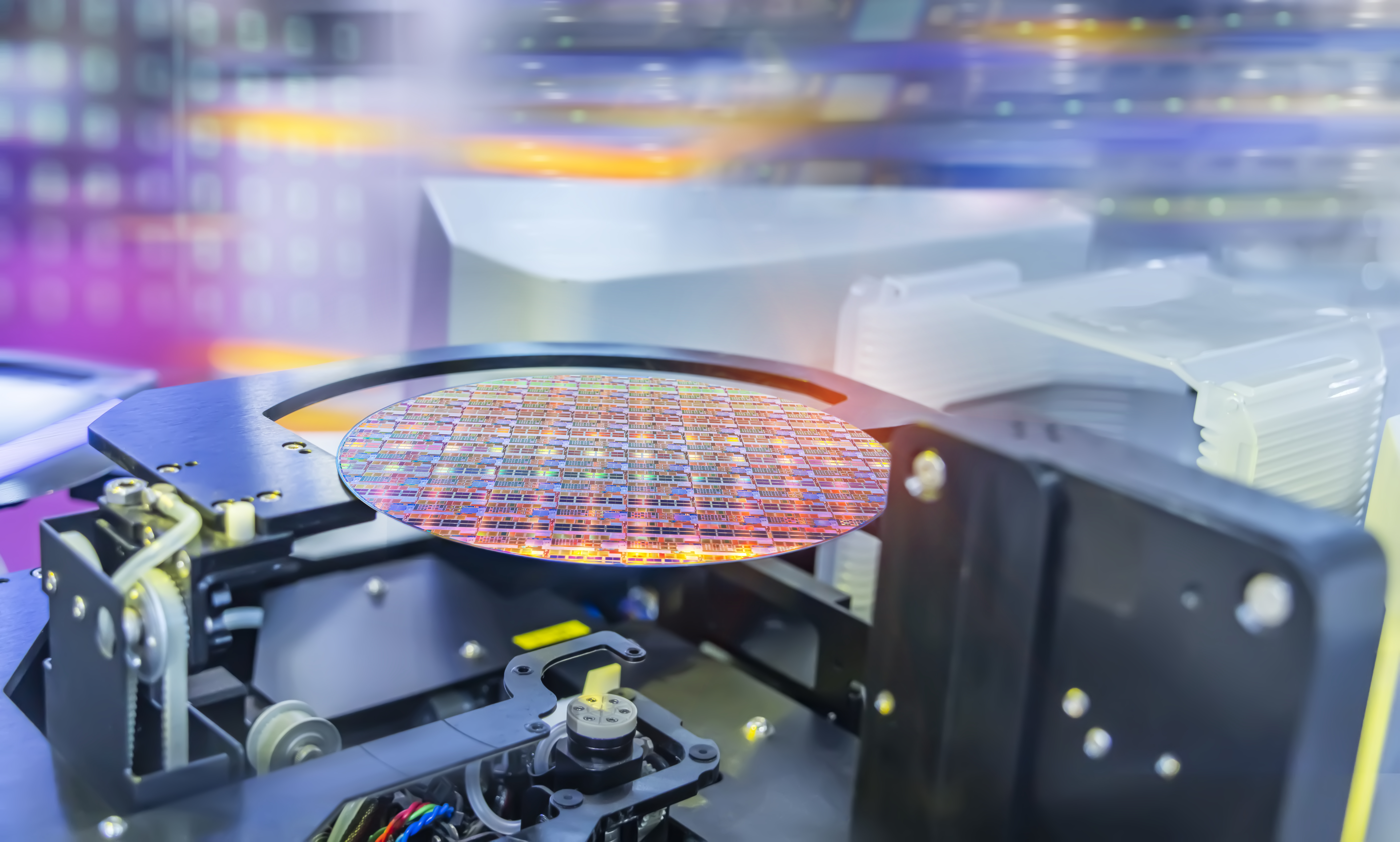
The chronicles of Intel, once the unquestioned cartographer of the digital realm, now resemble a palimpsest, overwritten by the anxieties of a diminishing dominion. Five years have passed, and the stock, a mere shadow of its former self, has declined by thirteen percent, while the broader market—that capricious deity—has ascended by eighty-three. This is not merely a matter of financial performance; it is a parable of entropy, a demonstration that even the most meticulously constructed empires are subject to the relentless erosion of time and competition.
The firm found itself adrift in the process race, a contest not of speed, but of infinitesimal dimensions. TSMC, a name whispered with increasing reverence in the halls of technological power, seized the advantage. And AMD, a cunning strategist, leveraged the capabilities of its rival’s competitor, expanding its reach like a fractal pattern. Four chief executives, each attempting to decipher the correct path through this silicon labyrinth, have come and gone, their strategies shifting like the sands of a forgotten desert. It is a testament to the inherent unknowability of the future, or perhaps, to the futility of attempting to impose order upon chaos.
The current custodian, Lip Bu-Tan, has doubled down on internal fabrication, a bold, almost Quixotic endeavor. The plan hinges upon ASML’s latest lithographic systems, instruments of such precision they border on the magical. Investors, as always, are divided. The optimists envision a renaissance, a reclaiming of lost ground. The skeptics, more attuned to the subtle currents of economic reality, perceive a reckless expenditure of capital, a tilting at windmills. Both, it seems, are trapped within the confines of their own limited perspectives.
The lithographic systems themselves are worthy of note. ASML, a Dutch firm possessing a near-monopoly on this critical technology, crafts instruments that etch circuit patterns onto silicon wafers with ever-increasing finesse. The older DUV systems, relics of a bygone era, produce larger, less efficient chips. The newer EUV systems, transported on multiple trucks like sacred artifacts, create the miniature worlds that power our modern existence. It is a peculiar form of creation, a manufacturing of thought itself.
TSMC, recognizing the strategic importance of this technology, was the first to embrace EUV, establishing a lead that Intel struggled to overcome. Intel, in a cost-conscious, yet ultimately misguided attempt to preserve capital, clung to DUV for too long, a decision that proved disastrous. AMD, meanwhile, shrewdly outsourced its production to TSMC, benefiting from the latter’s superior capabilities. The result? A shift in market share, a redistribution of power, and a cautionary tale for those who underestimate the importance of technological innovation.
Today, both TSMC and Intel utilize low-NA EUV systems, instruments capable of producing remarkably intricate chips. However, the true frontier lies in high-NA EUV, a technology that promises even greater density and efficiency. These systems, costing upwards of $400 million each, represent a significant investment, a gamble on the future. TSMC, adopting a cautious approach, plans to deploy these systems gradually, beginning in 2030. Intel, in a more aggressive maneuver, has already installed several systems, aiming to mass-produce advanced chips by 2027. The question, of course, is whether this haste will yield the desired results, or merely accelerate the firm’s decline.
2026, it is predicted, will be a pivotal year. It is the final opportunity for Intel to stabilize its high-NA EUV process and ramp up production of its 14A chips. Analysts anticipate further losses, a continuation of the firm’s recent struggles. Yet, they also foresee a potential turnaround, a return to profitability in 2027 and 2028. This optimistic forecast, however, rests upon a fragile foundation: the successful deployment of ASML’s high-NA EUV systems. It is a precarious balance, a gamble with potentially enormous consequences.
One is reminded of the Library of Babel, Borges’s infinite repository of all possible books. Within its countless volumes lie the blueprints for every conceivable technology, every possible future. Intel, in its quest for dominance, is attempting to navigate this labyrinthine space, to locate the precise sequence of innovations that will unlock its potential. Whether it succeeds remains to be seen. The silicon labyrinth, after all, is a notoriously unforgiving place.
Read More
- 20 Movies Where the Black Villain Was Secretly the Most Popular Character
- Celebs Who Narrowly Escaped The 9/11 Attacks
- Transformers Under the Microscope: What Graph Neural Networks Reveal
- Top 20 Dinosaur Movies, Ranked
- Trading on Thin Air: AI Agents Conquer Crypto Volatility
- Silver Rate Forecast
- Gold Rate Forecast
- Every Notable ‘Star Trek: The Original Series’ Actor Who Died
- 22 Films Where the White Protagonist Is Canonically the Sidekick to a Black Lead
- Invincible Season 4 Gender Swaps Tech Jacket As Fans Question Major Comic Change
2026-01-30 14:14