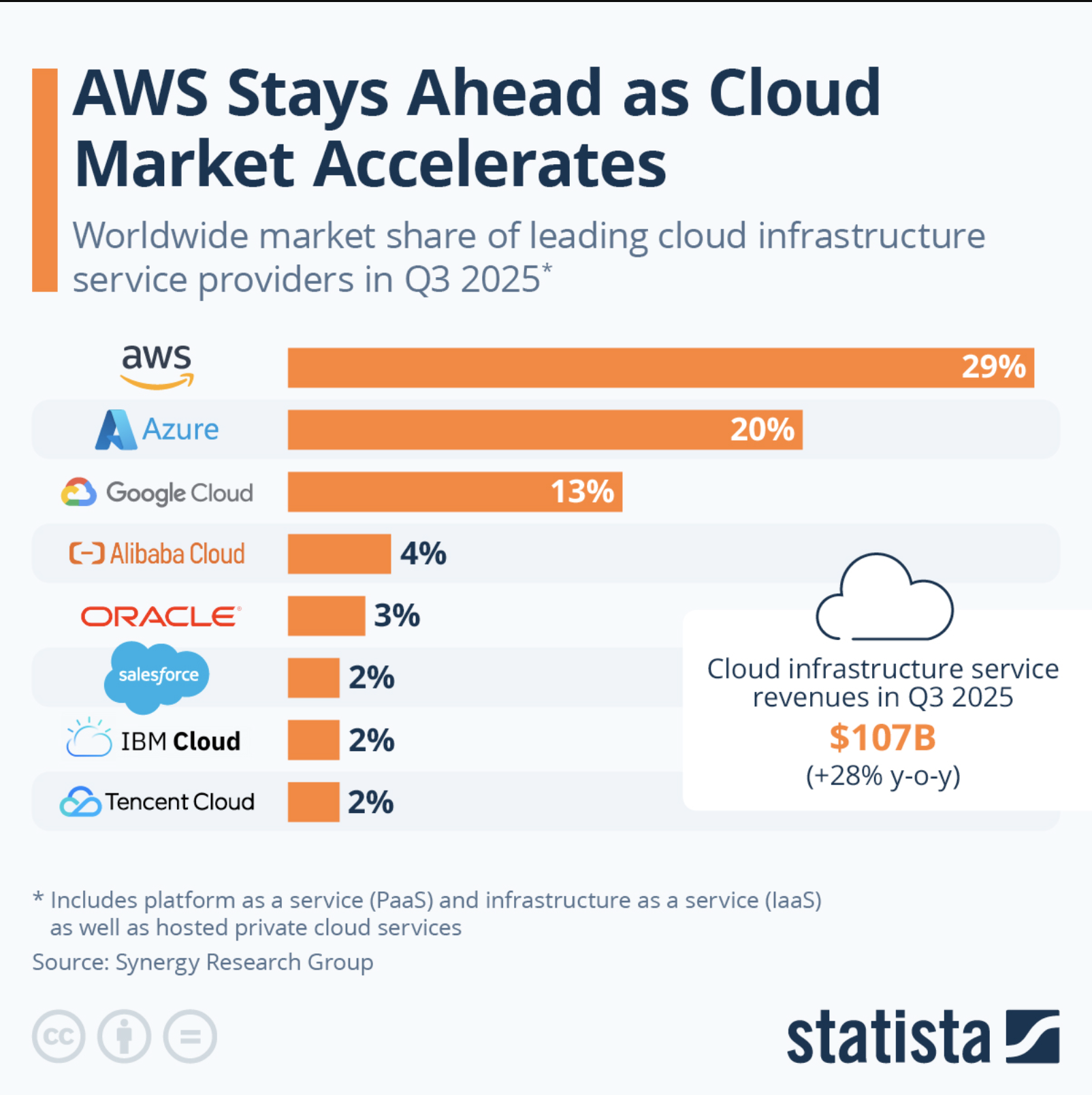
The cloud, that ethereal repository of data and desire, continues its relentless expansion. And amidst the predictable jostling of behemoths, a curious bloom has emerged: Oracle. Not, one might hastily assume, a revolutionary upstart, but rather a phoenix—or perhaps a particularly tenacious orchid—rising from the ashes of database dominion. They’ve managed, with a subtlety that belies their size, to position themselves as something more than mere infrastructure providers. They’ve become, dare one say, arbiters of computational elegance.
Oracle, once synonymous with relational databases—a phrase that now feels deliciously archaic—has discovered a peculiar aptitude for high-performance computing. It’s a niche, certainly, but one that resonates with a certain clientele—those who demand not just processing power, but a certain… finesse. A computational ballet, if you will. And this, naturally, has not gone unnoticed. The recent $300 billion arrangement with OpenAI—a sum that, when uttered, feels suspiciously like a whispered conspiracy—has, predictably, inflated their backlog to a rather imposing $523 billion. A number that, when contemplated, resembles a slowly unfurling scroll of future revenue.
Currently, Oracle occupies the fifth rung on the cloud ladder—a position that, while respectable, lacks a certain… pizzazz. Their 3% market share, a modest increment from 2% in the previous year, might seem insignificant to the statistically inclined. But consider the landscape: Grand View Research estimates the industry at a robust $944 billion, projecting a compound annual growth rate of 16%—a figure that suggests a future overflowing with data and, consequently, opportunity. Even a modest slice of this expanding pie—a persistent 3%—becomes, upon closer inspection, a rather substantial morsel.
Oracle by the Numbers
These conditions, predictably, have manifested in improved financials. In the first half of fiscal 2026 (ending November 30, 2025), their cloud segment alone generated over $15 billion in revenue—a 31% annual increase. A figure that, when viewed against the sluggish growth of other sectors, feels almost… indecent. The cloud segment now constitutes 49% of Oracle’s overall revenue—a rather dramatic shift, and one that suggests a deliberate, and remarkably successful, recalibration. Net income for the period rose to $9.1 billion, a considerable leap from the previous year’s $6.1 billion—a testament to the efficacy of their strategic repositioning. Analysts predict continued growth—17% in fiscal 2026, escalating to 29% the following year—figures that, while projections, possess a certain seductive allure.
Admittedly, this blossoming ambition has been financed by a rather substantial debt—$108 billion, to be precise. A figure that, when juxtaposed with their $30 billion book value, presents a slightly unsettling arithmetic. But consider this: their price-to-earnings ratio of 33 hovers close to the S&P 500 average of 31. A valuation that, given the accelerating revenue growth and rising profits, might just convince investors to overlook the debt—assuming, of course, that these increases translate into a sustained expansion of market share. A rather large assumption, perhaps, but one not entirely devoid of plausibility.
Oracle Looking Forward
Oracle’s cloud market share, therefore, appears poised for continued growth. A rather predictable conclusion, one might say, but one that, upon closer inspection, reveals a subtle interplay of strategic positioning, financial acumen, and a peculiar aptitude for high-performance computing. The company, despite its modest current share and concerning debt, has managed to carve out a niche—a space where computational elegance meets commercial viability. And in the ever-expanding cloudscape, such a niche—a carefully cultivated bloom in the silicon garden—might just prove to be surprisingly resilient. A quiet triumph, perhaps, but a triumph nonetheless.
Read More
- 20 Movies Where the Black Villain Was Secretly the Most Popular Character
- Top 20 Dinosaur Movies, Ranked
- Celebs Who Narrowly Escaped The 9/11 Attacks
- 25 “Woke” Films That Used Black Trauma to Humanize White Leads
- The 10 Most Underrated Jim Carrey Movies, Ranked (From Least to Most Underrated)
- Transformers Under the Microscope: What Graph Neural Networks Reveal
- The Best Directors of 2025
- Every Notable ‘Star Trek: The Original Series’ Actor Who Died
- 22 Films Where the White Protagonist Is Canonically the Sidekick to a Black Lead
- Trading on Thin Air: AI Agents Conquer Crypto Volatility
2026-01-28 21:32