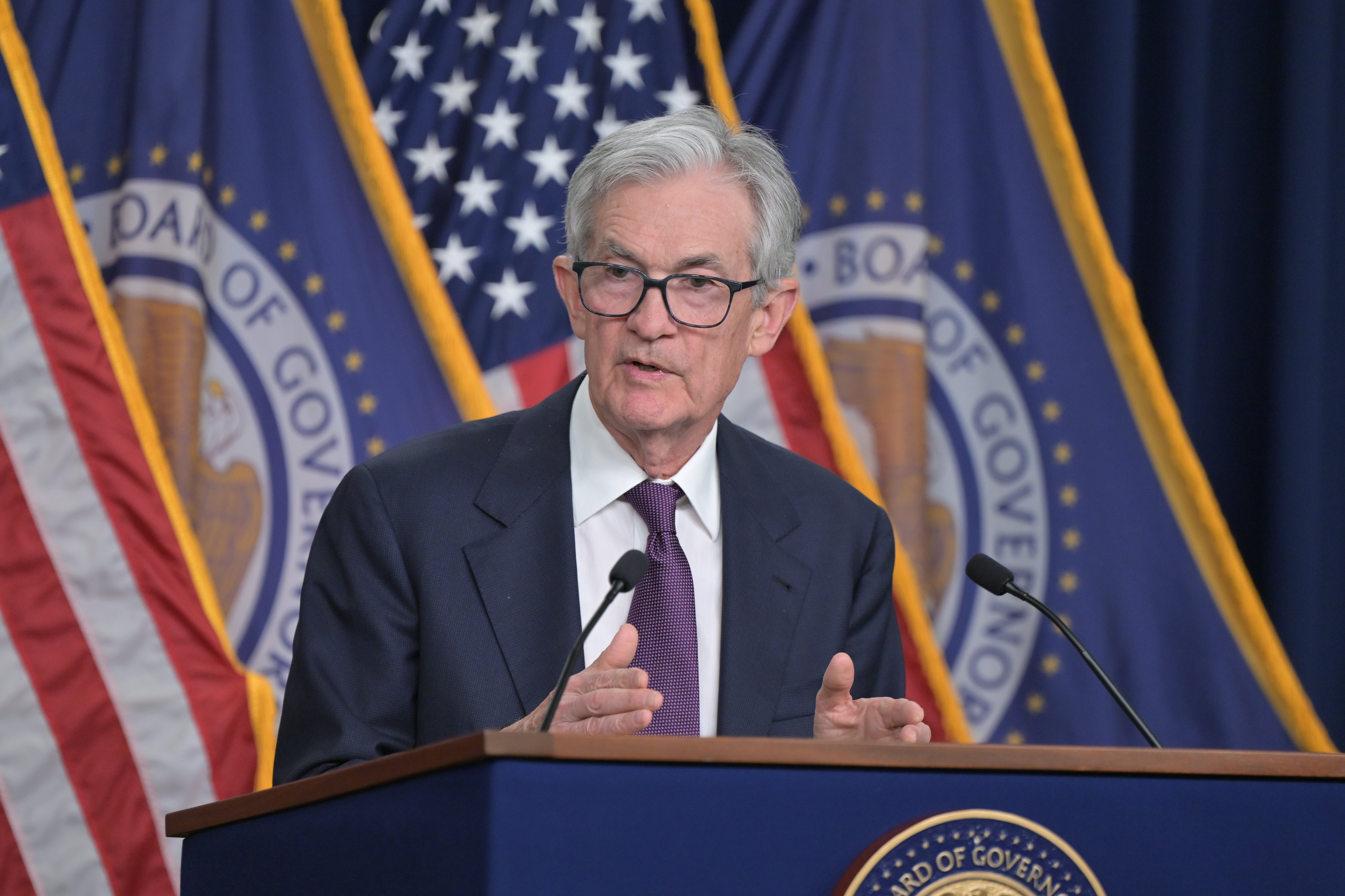
The S&P 500 has, thus far in this year, registered a modest gain. It hovers, at this writing, within a half-percentage point of its highest recorded level. This is not, however, cause for celebration, but rather a summons to sober assessment. The pronouncements of officials at the Federal Reserve, including Chairman Powell, suggest a disquietude rarely voiced so directly. They acknowledge, in effect, that the market’s current pricing reflects an optimism detached from underlying realities.
Wall Street anticipates continued gains through the remainder of the year. Such forecasts, while comforting to those already invested, should be regarded with a healthy skepticism. A correction, or even a substantial decline, remains a distinct possibility. To ignore this is not prudence, but a willful blindness to the inherent instability of speculative markets.
The Warning from the Federal Reserve
The Federal Reserve does not, of course, dictate market prices. It is not their function to engineer perpetual booms. However, Chairman Powell has recently observed that equity valuations are, by many measures, “fairly highly valued.” This is a carefully chosen phrase, a bureaucratic understatement masking a more urgent concern. It is the language of those who recognize a bubble forming, yet are constrained by their position from issuing a direct warning.
Minutes from the Federal Open Market Committee meetings corroborate this assessment. Policymakers have expressed concern over “stretched asset valuations” and the potential for a “disorderly fall” in prices. The latest financial stability report similarly notes that the S&P 500’s price-to-earnings ratio is nearing the upper limit of its historical range. These are not the pronouncements of alarmists, but of those responsible for maintaining the stability of the financial system.
A Historical Parallel
The current price-to-earnings ratio of the S&P 500 stands at 22.1, exceeding the ten-year average of 18.8. This premium is not sustainable. Historically, such levels have only been seen during two periods in the last four decades: the dot-com bubble and the immediate aftermath of the COVID-19 pandemic. Both instances were followed by significant market corrections. To repeat this pattern would not be surprising, only predictable.
An examination of past performance reveals a sobering truth. Following periods of elevated price-to-earnings ratios, returns have been, on average, lower than the long-term average. Over a one-year period, the average return has been 7%, compared to a historical average of 10%. Over a two-year period, the average return has been negative. This suggests that the market is currently priced for perfection, a dangerous assumption in a world characterized by uncertainty.
| Time Period | S&P 500’s Best Return | S&P 500’s Worst Return | S&P 500’s Average Return |
|---|---|---|---|
| One year | 39% | (24%) | 7% |
| Two years | 34% | (42%) | (6%) |
These figures are not guarantees, of course. But they serve as a reminder that past performance is not necessarily indicative of future results, particularly when valuations are stretched. To assume that the market will continue to rise indefinitely is a folly, a betrayal of rational thought.
The Illusion of Optimism
Wall Street analysts, predictably, remain optimistic. They anticipate an acceleration in revenue and earnings growth, projecting a 7.1% increase in revenue and a 15.2% increase in earnings for the current year. This optimism, however, is based on assumptions that may not materialize. The global economic outlook remains uncertain, and geopolitical risks are on the rise. To rely on such forecasts is to place faith in a system prone to wishful thinking.
| Wall Street Firm | S&P 500 Target Price (2026) | Upside |
|---|---|---|
| Oppenheimer | 8,100 | 17% |
| Deutsche Bank | 8,000 | 15% |
| Morgan Stanley | 7,800 | 12% |
| Seaport Research | 7,800 | 12% |
| Evercore | 7,750 | 12% |
| RBC Capital | 7,750 | 12% |
| Citigroup | 7,700 | 11% |
| Fundstrat | 7,700 | 11% |
| Yardeni Research | 7,700 | 11% |
| Goldman Sachs | 7,600 | 9% |
| HSBC | 7,500 | 8% |
| Jefferies Financial Group | 7,500 | 8% |
| JPMorgan Chase | 7,500 | 8% |
| UBS | 7,500 | 8% |
| Wells Fargo | 7,500 | 8% |
| Barclays | 7,400 | 6% |
| BMO Capital | 7,400 | 6% |
| CFRA | 7,400 | 6% |
| Bank of America | 7,100 | 2% |
| Median | 7,600 | 10% |
The median forecast among these analysts suggests a 10% upside from current levels. However, it is worth noting that Wall Street has a consistent record of overoptimism. Over the past four years, their forecasts have been off by an average of 16 percentage points. To rely on their predictions is to court disaster.
In conclusion, while continued gains are possible, investors should remain vigilant. Elevated valuations, coupled with economic uncertainty, suggest a heightened risk of correction. Prudence dictates a cautious approach, a willingness to protect capital, and a recognition that the pursuit of effortless gain is rarely rewarded.
Read More
- Top 20 Dinosaur Movies, Ranked
- 20 Movies Where the Black Villain Was Secretly the Most Popular Character
- Celebs Who Narrowly Escaped The 9/11 Attacks
- 25 “Woke” Films That Used Black Trauma to Humanize White Leads
- The 10 Most Underrated Jim Carrey Movies, Ranked (From Least to Most Underrated)
- The Best Directors of 2025
- Transformers Under the Microscope: What Graph Neural Networks Reveal
- Every Notable ‘Star Trek: The Original Series’ Actor Who Died
- Trading on Thin Air: AI Agents Conquer Crypto Volatility
- 22 Films Where the White Protagonist Is Canonically the Sidekick to a Black Lead
2026-01-28 11:42