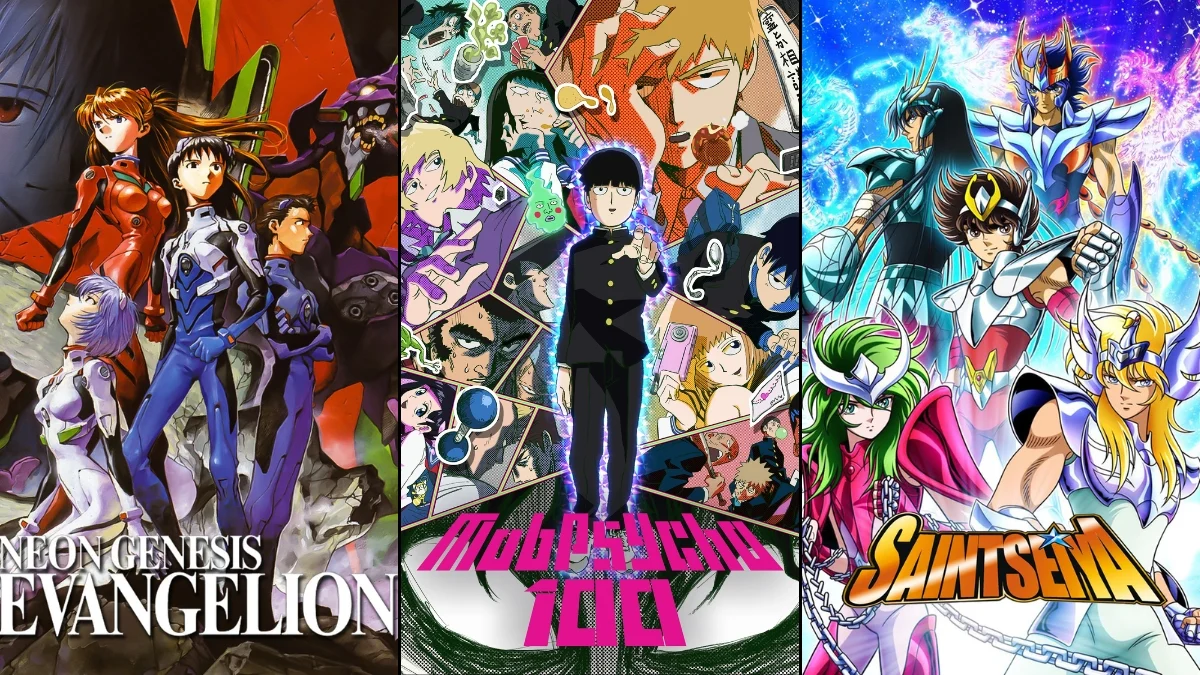
As anime becomes popular worldwide, the actors who voice beloved characters often ask for better pay that matches the show’s success. Sometimes, these discussions lead to disagreements, and studios decide to replace veteran voice actors instead of agreeing to their requests for higher wages or better work conditions. This can be upsetting for fans who are used to hearing a particular actor’s performance. These changes show the ongoing struggle between keeping production costs down and fairly compensating voice actors in the dubbing world.
‘Mob Psycho 100 III’ (2022)

Kyle McCarley, the voice of Shigeo ‘Mob’ Kageyama for the first two seasons of the anime, wasn’t asked to return for the third season after a disagreement with Crunchyroll. McCarley had asked for the production to use a union contract (SAG-AFTRA) to secure fairer pay and benefits for voice actors. When Crunchyroll refused to agree to these terms, they chose a new, non-union actor for the role. This decision caused a lot of debate among anime fans about how voice actors are treated. McCarley was even willing to work at his previous pay rate if Crunchyroll would just meet with the union.
‘Dragon Ball Z’ (1989–1996)

When the series first aired in North America, the voice cast changed significantly. This happened because production moved from Canada to Funimation’s studio in Texas, and the cost of using union actors in Vancouver was becoming too high. To save money per episode, actors like Peter Kelamis and Brian Drummond were replaced with Sean Schemmel and Christopher Sabat. This is a well-known example of a show changing its cast for budget and contract reasons. Ultimately, the new cast became the standard English-language voices for the series.
‘Neon Genesis Evangelion’ (1995–1996)

When Netflix began streaming ‘Neon Genesis Evangelion,’ they created a brand new English dub, replacing the original voice actors. Actors like Spike Spencer and Tiffany Grant expressed concerns that the new contract and pay were unacceptable. The decision to recast was made to simplify production under new leadership and within a tighter budget. This change surprised many fans, who had grown accustomed to the original cast’s voices over the past twenty years. The new dub included a revised script and a completely new voice cast to meet Netflix’s financial needs.
‘Saint Seiya’ (1986–1989)

When the series moved to a new platform and received a modern redub, the entire English voice cast was replaced. The original actors stated they weren’t asked to return because of disagreements about pay and contracts. The production team chose a new, non-union cast to save money, resulting in a complete change to the main characters’ voices. This caused a split among fans, with some preferring the original voices and others embracing the new ones. The recast highlights how changes in licensing can affect a production’s ability to afford its original performers.
Please share your thoughts on these voice cast changes in the comments.
Read More
- 20 Movies Where the Black Villain Was Secretly the Most Popular Character
- Top 20 Dinosaur Movies, Ranked
- Celebs Who Narrowly Escaped The 9/11 Attacks
- 25 “Woke” Films That Used Black Trauma to Humanize White Leads
- The 10 Most Underrated Jim Carrey Movies, Ranked (From Least to Most Underrated)
- The Best Directors of 2025
- Every Notable ‘Star Trek: The Original Series’ Actor Who Died
- Transformers Under the Microscope: What Graph Neural Networks Reveal
- 22 Films Where the White Protagonist Is Canonically the Sidekick to a Black Lead
- Gold Rate Forecast
2026-01-28 06:44