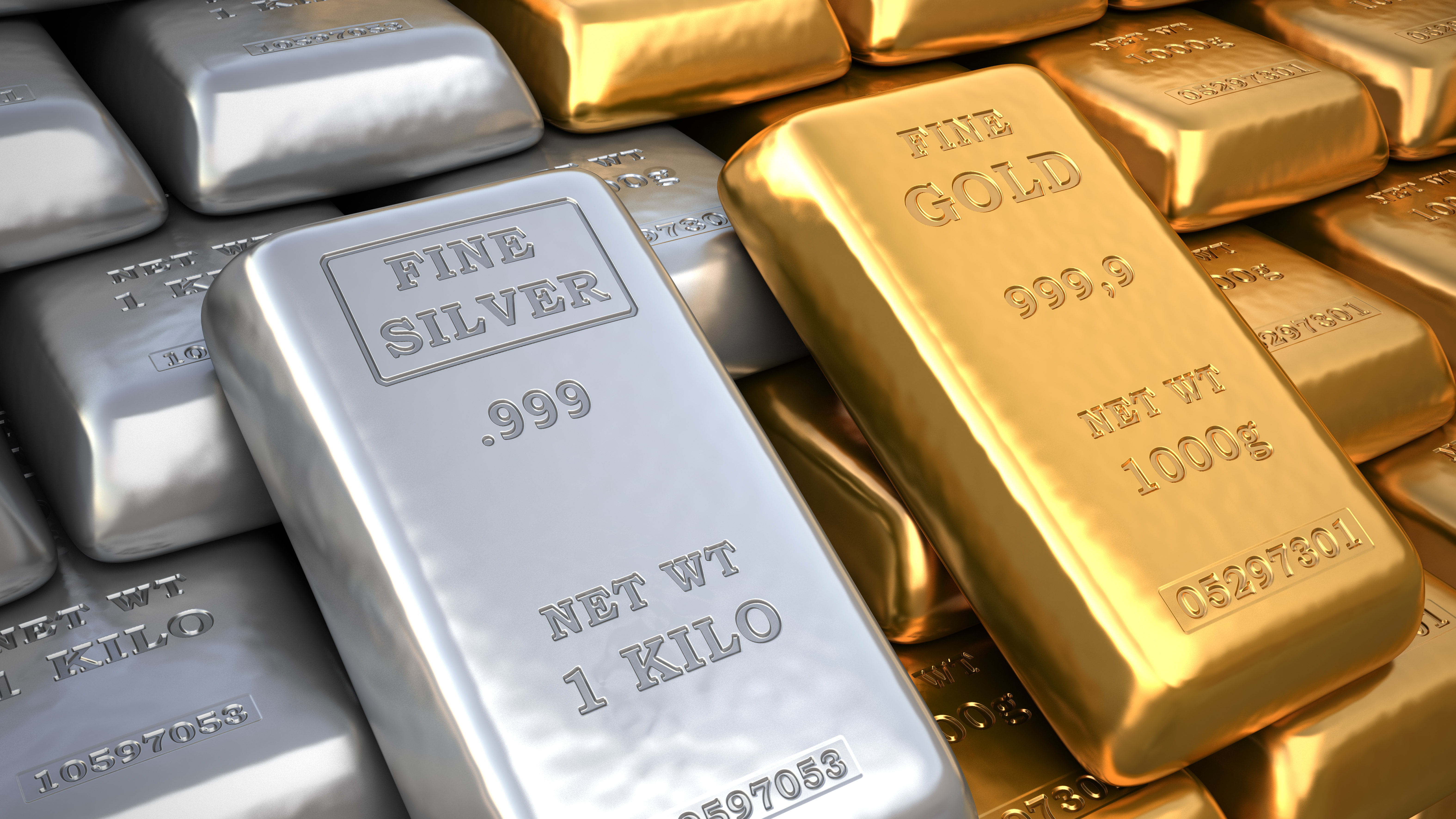
Gold, that peculiar substance we collectively agree has value (mostly because someone decided a long time ago that it did, and we’ve been politely pretending it makes sense ever since), has recently decided to redefine “expensive.” It’s now trading at levels that would make a dragon blush. The usual suspects are, of course, to blame: uncertainty, global tensions, and a dollar that appears to be undergoing an existential crisis. However, simply acquiring the shiny metal itself feels…precarious. Like investing in a very heavy, inert paperweight. A very, very expensive paperweight.
Therefore, we’ve been examining alternatives. Specifically, companies that actually dig the stuff up. Newmont Corporation (NEM +2.38%) and Agnico Eagle Mines (AEM +2.57%) present a rather intriguing proposition. They are, to put it mildly, exceptionally well-positioned to benefit from this ongoing metallic enthusiasm, even if the price of gold were to suddenly decide it prefers being a decorative element in a dentist’s office rather than a store of value. (Which, let’s be honest, isn’t entirely out of the question.)
Newmont: More Than Just Gold (and a Surprisingly Complex Business)
Newmont, the world’s largest gold miner by market capitalization, is currently experiencing a period of record profitability while simultaneously attempting to reduce its long-term debt. This is, of course, the ideal scenario. It’s like simultaneously winning the lottery and finding a perfectly good spare tire. (A rare event, statistically speaking.) However, it’s not just gold they’re extracting. They also mine copper, lead, zinc, and silver, creating a diversified metallic portfolio. This is a sensible strategy, akin to not putting all your eggs in one basket… or, in this case, all your precious metals in one mine. They are, notably, the only gold producer listed on the S&P 500, which is either a testament to their stability or a worrying indicator of the index’s overall metallic obsession.
The key metric, as always, is the ability to extract metal at a cost lower than the price you can sell it for. (A concept so simple, it’s astonishing we haven’t automated all investment decisions based on it.) In the third quarter, Newmont produced 1.4 million ounces of gold – a slight dip year-over-year, but then again, the Earth isn’t exactly cooperating with our extraction schedules. Their all-in sustaining cost (AISC) was $1,566 per ounce, while the realized price was a rather impressive $3,539 per ounce. That’s a profit margin that would make even a particularly shrewd accountant smile. They also managed to unearth 35,000 tonnes of copper, which, while less glamorous than gold, is still quite useful for things like wiring and plumbing. (And, occasionally, decorative fountains.)
Revenue clocked in at $5.5 billion, up nearly 20% year-over-year, and earnings per share (EPS) jumped a remarkable 108%. They promptly used these profits to retire roughly $2 billion in debt, a move that demonstrates a commendable level of fiscal responsibility. They still have $5.4 billion outstanding, but also $5.6 billion in cash, putting them in a strong position to expand. (Or, you know, buy a really, really big paperclip.)
However, a cloud looms on the horizon. Ghana, where Newmont operates two mines, is contemplating a revision of its investment stability agreements and a doubling of royalties to as much as 12% if gold exceeds $4,500 per ounce. (Which, as we’ve established, it already has.) This legislative process is expected to unfold early this year, potentially impacting first-quarter 2026 results. It’s a reminder that even the most profitable ventures are subject to the whims of geopolitical forces. (And, occasionally, bureaucratic paperwork.)
Despite a stock price increase of over 205% in the past year, Newmont is currently trading at roughly 19 times earnings, only slightly higher than the sector average of 17 times earnings. This suggests that, despite the recent gains, the stock may still be reasonably valued. (Especially considering that the sector average includes a significant number of unprofitable mining companies.)
Agnico Eagle: Stability and a Surprisingly Low Debt Load
Canada-based Agnico Eagle is the second-largest gold producer globally, operating 11 mines across various stable jurisdictions. (Stability, it turns out, is a rather desirable characteristic in the mining industry.) They are on track to produce a record 3.5 million ounces of gold this year. (Which, if melted down and formed into a single ingot, would be… substantial.)
Agnico reported a third-quarter net income increase of 86% year-over-year, reaching $1.06 billion, and EPS nearly doubled to $2.10. (Numbers that, frankly, are starting to feel rather abstract.)
However, a 145% rise in share price over the past year has pushed the stock to around 32 times earnings, raising concerns that much of the future growth may already be priced in. Furthermore, their return on equity (ROE) is 9.35%, which is below what you’d typically expect from a leading mining company. (Although, let’s be honest, “typical” doesn’t really apply to the mining industry.)
Financially, however, Agnico is well-positioned for expansion. They have $2.7 billion in cash and only $196 million in debt, having paid down $950 million this year. (A feat that, in the context of global finance, is akin to finding a perfectly matched pair of socks.) Like Newmont, they operate a high-margin operation, with an all-in AISC of $1,373 per ounce and a realized price of $3,476 per ounce. (Which, if you do the math, is a rather tidy profit.)
Glittering Prospects for Both Stocks (Probably)
Gold stocks, unsurprisingly, are lagging the breakneck growth rate of gold itself. But mining companies stand to benefit for years from these elevated gold prices. (Assuming, of course, that gold doesn’t suddenly decide it’s had enough and goes off to join a monastery.)
Investing in these two stocks can serve as a hedge against inflation, add diversification to your portfolio, and provide a modest dividend (both currently yielding below 1%). (It’s not going to make you a millionaire overnight, but it’s a start.)
These are two of the biggest global mining companies, with the advantages of scale in their operations. Unlike junior mining operations, their mines are up and running, and their costs are relatively fixed. So, if the price of gold does continue to stay high, so will their profits. (Which, ultimately, is the point of all this.)
Read More
- Top 20 Dinosaur Movies, Ranked
- 20 Movies Where the Black Villain Was Secretly the Most Popular Character
- Celebs Who Narrowly Escaped The 9/11 Attacks
- 25 “Woke” Films That Used Black Trauma to Humanize White Leads
- Spotting the Loops in Autonomous Systems
- The 10 Most Underrated Jim Carrey Movies, Ranked (From Least to Most Underrated)
- The Best Directors of 2025
- Gold Rate Forecast
- Transformers Under the Microscope: What Graph Neural Networks Reveal
- Every Notable ‘Star Trek: The Original Series’ Actor Who Died
2026-01-26 22:14