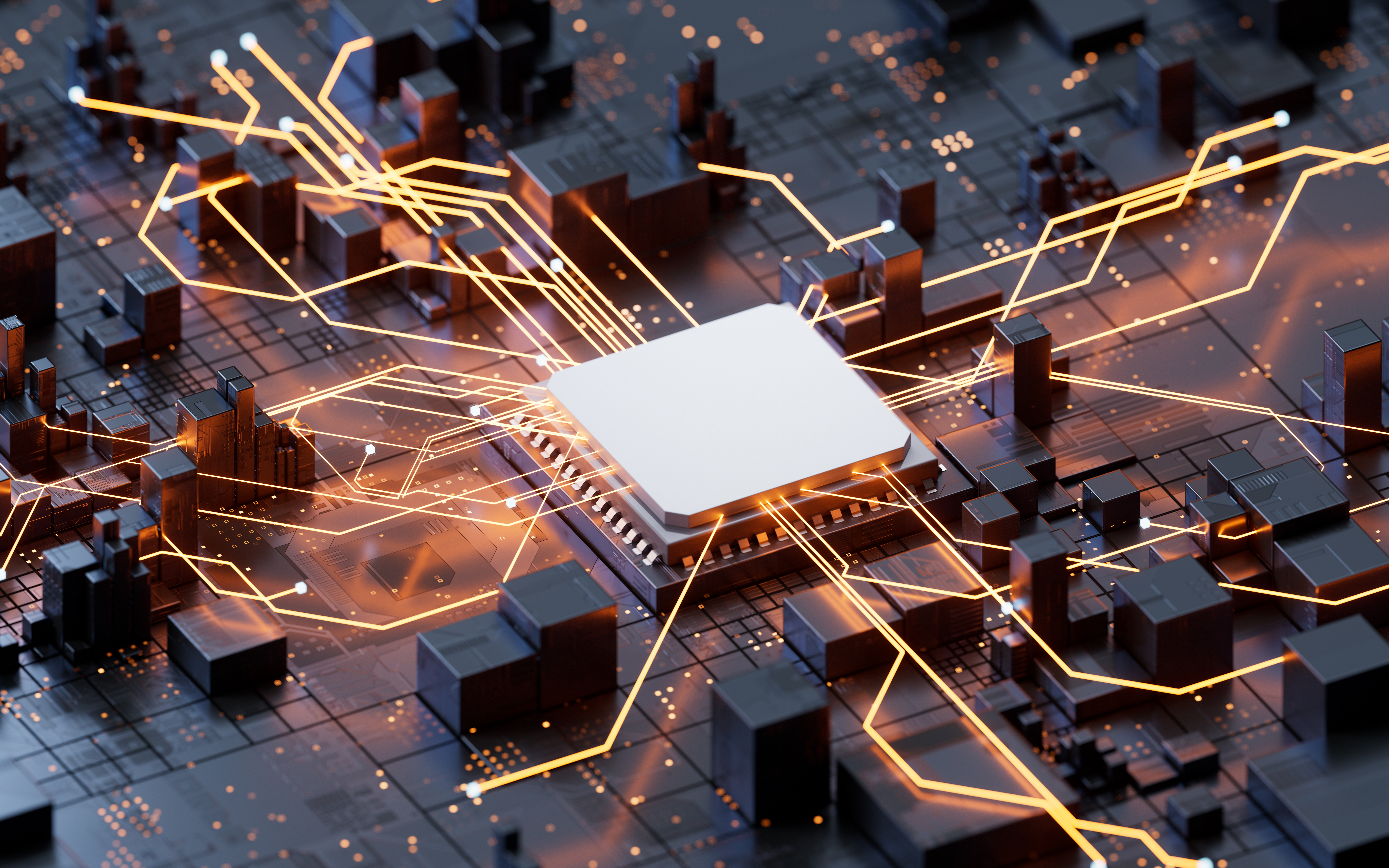
There was a time, not so long ago, when the memory market lay fallow, a landscape of oversupply and diminished returns. Micron Technology, a name once synonymous with innovation, found itself buffeted by the winds of fortune, its revenues halved in the fiscal year 2023, burdened by a debt that seemed to stretch into the indefinite future. It possessed, one might say, the melancholic air of a landed estate fallen into gentle decay.
But the seasons shift, and with them, the fortunes of men and companies. Now, as we approach 2026, a new cycle appears to be unfolding, a veritable blossoming of demand. The company stands poised, not merely to recover, but to flourish within the burgeoning realm of artificial intelligence. It is a curious transformation, a quiet resurrection in the digital fields.
The Substance of Remembrance
Micron occupies a singular position amongst the world’s memory manufacturers – one of three principal architects of DRAM, alongside the Korean giants, Samsung and SK Hynix. It also maintains a presence in the NAND market, though DRAM constitutes the greater part – approximately eighty percent – of its revenues.
The current surge in demand for DRAM is inextricably linked to the expansion of AI infrastructure. The graphic processing units and other specialized chips that power these systems require a particular form of memory – High Bandwidth Memory, or HBM – to achieve optimal performance. HBM serves as a repository of data, allowing these chips to access and transfer information with remarkable speed, thus accelerating processing capabilities. The race to develop large language models and the pursuit of swift inference times have, predictably, fueled an insatiable appetite for HBM.
The overall DRAM market finds itself in a state of constrained supply, a situation exacerbated by the deliberate prioritization of HBM production. The manufacturing of HBM demands a significantly greater investment of wafer capacity – three to four times that of standard DRAM. This scarcity, naturally, exerts upward pressure on prices. A similar, though less pronounced, shortage exists within the NAND market, driven by a lack of production and the increasing demand for high-performance solid-state drives for AI data centers.
These conditions, as one might expect, have engendered a turnaround in Micron’s fortunes. Revenues are rising, gross margins are expanding, and profits are, at last, beginning to accrue. The balance sheet, once burdened by debt, now exhibits a degree of fiscal health. It is a slow, deliberate ascent, not a sudden burst of exuberance.
Looking ahead, the company’s HBM supply for 2026 is, remarkably, already committed. Demand is projected to grow at a robust forty percent annual rate through 2028. Micron has responded by increasing its capital expenditure – from eighteen to twenty billion dollars – to expand capacity. While the market is likely to remain tight for the foreseeable future, the company appears well-positioned to capitalize on this burgeoning demand.
Thus, Micron stands as a potential beneficiary of the AI revolution, a quiet force within a rapidly evolving landscape. It is a story, perhaps, of resilience and adaptation, a testament to the enduring power of memory itself.
Read More
- Top 20 Dinosaur Movies, Ranked
- 20 Movies Where the Black Villain Was Secretly the Most Popular Character
- Celebs Who Narrowly Escaped The 9/11 Attacks
- 25 “Woke” Films That Used Black Trauma to Humanize White Leads
- Spotting the Loops in Autonomous Systems
- The 10 Most Underrated Jim Carrey Movies, Ranked (From Least to Most Underrated)
- The Best Directors of 2025
- Gold Rate Forecast
- Transformers Under the Microscope: What Graph Neural Networks Reveal
- Every Notable ‘Star Trek: The Original Series’ Actor Who Died
2026-01-26 17:42