
Right, so picture this: you’re a miner. Historically, your job involved a lot of swinging a pickaxe, or, more recently, operating enormous, complicated machinery. Now, imagine telling someone you’re relying on particles zipping around from exploded stars to find stuff buried underground. Sounds a bit…optimistic, doesn’t it? Yet, that’s precisely what’s happening, and it’s potentially a game-changer. Companies like Freeport-McMoRan, NexGen Energy, Rio Tinto, and BHP Group are all investing heavily in something called muon technology, and while it sounds like the plot of a particularly nerdy science fiction film, it could reshape how we extract resources. As a trader, I’m always looking for disruptive technologies, and this has all the hallmarks of one.
What are Muons, Anyway?
It all starts with cosmic rays. These aren’t rays in the sun-tanning sense, but incredibly energetic particles flung out by, well, exploding stars – supernovas, to be precise. Think of it as stellar shrapnel, travelling at nearly the speed of light. When these particles collide with Earth’s atmosphere, they create a cascade of other particles, including muons. Now, muons are fleeting – they exist for only a few microseconds – but travelling at such speeds, they can cover vast distances. One muon hits every square centimeter of the Earth every minute, apparently. Which, when you think about it, is a frankly astonishing statistic. They’re also about 200 times heavier than electrons, which is important because when they collide with materials, they lose energy, and that energy loss tells you something about what they hit.
Essentially, you can use detectors to map the density of underground deposits by observing how muons behave after passing through them. It’s like an incredibly sophisticated X-ray, but instead of using radiation, you’re relying on particles from outer space. It’s a bit like divining, really, only with significantly more physics and a lot less guesswork.
Who’s Playing With These Cosmic Rays?
This isn’t just theoretical anymore. Rio Tinto signed a five-year partnership with Ideon Technologies, a company specializing in muon tomography – essentially, creating 3D maps of what’s underground. BHP is already using Ideon’s tech to image nickel deposits in Australia. And NexGen, a uranium miner, is deploying it on its Rock I project in Canada, with ambitious plans to create what they believe will be the largest, lowest-cost uranium mine globally. The sheer scale of these investments speaks volumes. As a trader, I’m watching NexGen particularly closely; a low-cost uranium producer in the current climate is a compelling proposition.
Beyond Finding the Ore
It’s not just about locating deposits, either. Mining is a hazardous business, and safety is paramount. Freeport-McMoRan suffered a tragic mud rush incident in Indonesia, and they’re now installing muon detection technology to improve site safety. It’s a welcome development, and frankly, long overdue. Beyond safety, they’re even using it to improve leaching processes. Leaching, for the uninitiated, is a method of extracting valuable metals from low-grade ore or waste stockpiles. It’s a bit like making a very large cup of tea, only with chemicals and metal instead of hot water and tea leaves.
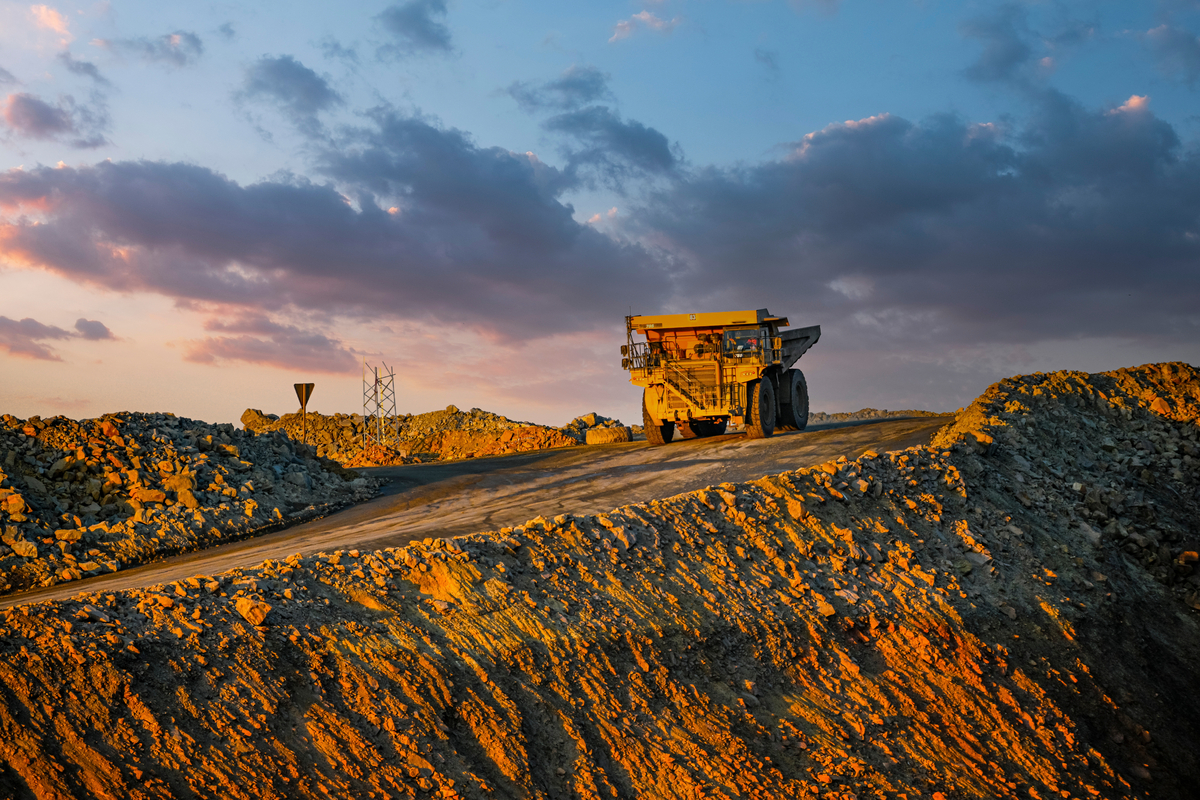
Rio Tinto, in particular, is pushing the boundaries of leaching with its Nuton technology, which uses cultivated microorganisms. The challenge is ensuring those microorganisms reach the right places in the stockpile. Muon technology helps them monitor the process and improve efficiency. They’ve even partnered with Amazon Web Services (AWS). AWS will use copper produced by Nuton, while Rio will use AWS platforms to simulate heap-leach performance and refine its decision-making. It’s a fascinating synergy, and a testament to the potential of data-driven mining. It’s also a bit mind-boggling when you consider we’re talking about using particles from exploded stars to optimize a chemical process.
The Future is Underground (and Cosmic)
So, what does all this mean? Essentially, it’s a high-tech revolution in mining. Accurately mapping deposits, improving safety, and developing innovative leaching technologies – it’s a powerful combination. As a trader, I see a significant opportunity in companies that are embracing this technology. It’s not just about finding more stuff; it’s about doing it more efficiently, more safely, and more sustainably. And in a world facing increasing resource demands, that’s a winning formula. It’s a bit like finding a cosmic shortcut to a more secure future, really. And who wouldn’t want that?
Read More
- Top 20 Dinosaur Movies, Ranked
- 20 Movies Where the Black Villain Was Secretly the Most Popular Character
- 25 “Woke” Films That Used Black Trauma to Humanize White Leads
- Silver Rate Forecast
- Gold Rate Forecast
- Spotting the Loops in Autonomous Systems
- From Bids to Best Policies: Smarter Auto-Bidding with Generative AI
- Celebs Who Narrowly Escaped The 9/11 Attacks
- 22 Films Where the White Protagonist Is Canonically the Sidekick to a Black Lead
- Can AI Lie with a Picture? Detecting Deception in Multimodal Models
2026-01-22 13:14