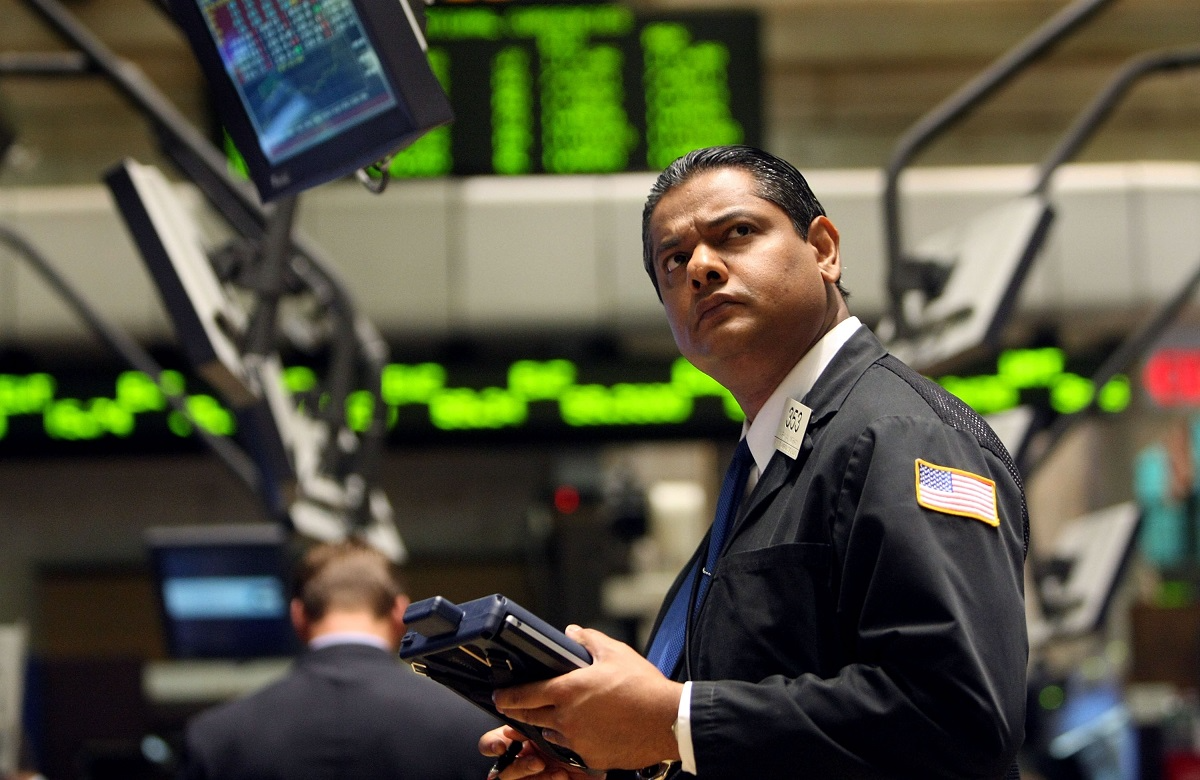
The market, as it invariably does, has delivered a third consecutive year of gains. The Dow Jones Industrial Average, the S&P 500, and the Nasdaq Composite have all risen – by 13%, 16%, and 20% respectively. This is a statistic, not a cause for celebration. Such consistent upward movement breeds a certain complacency, a forgetting of the inherent instability that underpins all financial systems. It is a condition we, as custodians of capital, must constantly guard against.
Recent data from the Federal Reserve reveals a figure that should give pause: $7.8 trillion parked in money market funds. This is not merely a large number; it is a symptom. It suggests a growing reluctance to participate in the risks of the market, a preference for safety even at the expense of potential reward. It is, in essence, a vote of no confidence, however subtle.
The Accumulation of Doubt
There are always headwinds. To pretend otherwise is to indulge in self-deception. The market is a complex organism, susceptible to a multitude of pressures. But the sheer scale of this capital accumulation – this vast pool of idle funds – is noteworthy. It is not simply a response to immediate concerns; it reflects a deeper, more pervasive skepticism.
Money market funds, by their nature, offer stability, but at a cost. They are a haven, not an engine of growth. The fact that this inflow continues even as interest rates decline is particularly telling. One might expect a shift towards riskier assets in a falling rate environment. Instead, we see a further consolidation of capital into these ostensibly safe harbors.
There is, of course, the possibility that this is simply institutional positioning, a temporary holding pattern before the next wave of investment. But to accept that explanation without question would be irresponsible. A more likely scenario is that a significant portion of this capital represents a collective judgment that the risk-reward ratio in the equity market has become unfavorable.
$7.8 Trillion is now sitting in Money Market Funds, a new all-time high 🚨🚨
The market currently trades at valuations that are, to put it mildly, optimistic. The Shiller P/E ratio, a measure of long-term earnings relative to price, is near its historical peak, second only to the excesses of the dot-com bubble. History suggests that such valuations are rarely sustainable. A correction, at some point, is not merely probable; it is inevitable.
Furthermore, this accumulation of cash echoes patterns observed before previous recessions. While correlation is not causation, it is a signal that cannot be ignored. We are not predicting a crash, but we are observing a condition that warrants careful consideration.

The Illusion of Control
It is tempting to dismiss these concerns as mere pessimism, to believe that the market will continue to defy gravity. But such thinking is a dangerous form of self-delusion. We are not in the business of predicting the future; we are in the business of managing risk. And the risk, at present, is skewed to the downside.
Corrections, bear markets, and crashes are an inherent part of the economic cycle. They are not anomalies; they are the natural consequence of human behavior, of the inevitable swings between optimism and fear. To pretend otherwise is to misunderstand the fundamental forces that drive the market.
Historically, bear markets have been relatively short-lived, lasting less than a year on average. But that is cold comfort to those who suffer losses. And while bull markets tend to be longer and more robust, they are not guaranteed. The past is not a reliable predictor of the future.
It’s official. A new bull market is confirmed. The S&P 500 is now up 20% from its 10/12/22 closing low. The prior bear market saw the index fall 25.4% over 282 days.
Despite the inevitable downturns, the market has historically delivered positive returns over the long term. But that is not a justification for complacency. It is a reminder that patience and discipline are essential virtues for any investor.
We cannot control the market. We can only prepare for it. And preparation, in this instance, means acknowledging the risks, managing our exposure, and maintaining a clear and rational perspective. The weight of idle capital is a warning. It is a signal that the time for caution is now.
Read More
- Can AI Lie with a Picture? Detecting Deception in Multimodal Models
- 25 “Woke” Films That Used Black Trauma to Humanize White Leads
- 22 Films Where the White Protagonist Is Canonically the Sidekick to a Black Lead
- From Bids to Best Policies: Smarter Auto-Bidding with Generative AI
- When AI Teams Cheat: Lessons from Human Collusion
- 20 Movies Where the Black Villain Was Secretly the Most Popular Character
- Silver Rate Forecast
- Top 10 Coolest Things About Invincible (Mark Grayson)
- Unmasking falsehoods: A New Approach to AI Truthfulness
- Top 20 Dinosaur Movies, Ranked
2026-01-19 14:13