Author: Denis Avetisyan
Researchers have developed a new framework that uses large language models to identify winning arguments by analyzing the persuasive techniques employed within them.
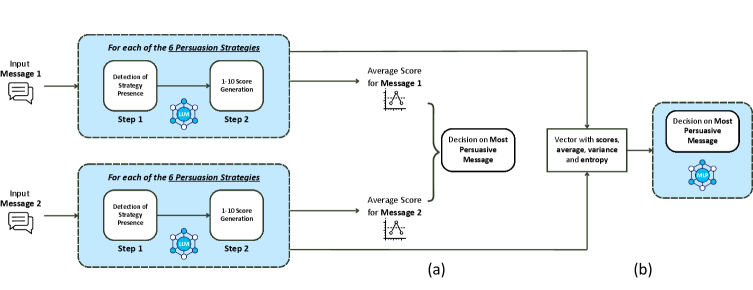
This paper introduces MS-PS, a system leveraging large language models to detect and evaluate arguments based on six core persuasion strategies, demonstrating improved accuracy across multiple datasets.
Effectively discerning persuasive arguments remains a challenge in natural language processing, despite its importance for understanding communication dynamics. This is addressed in ‘Detecting Winning Arguments with Large Language Models and Persuasion Strategies’, which introduces a novel framework leveraging large language models to identify winning arguments by analyzing the deployment of six core persuasion strategies. Results demonstrate that guiding LLMs with these strategies significantly improves persuasiveness prediction across multiple datasets, offering new insights into what makes an argument compelling. Could this strategy-aware prompting unlock more robust and interpretable methods for assessing argument quality and, ultimately, understanding human reasoning?
Decoding the Architecture of Persuasion
The art of persuasion frequently transcends overt appeals, instead relying on nuanced linguistic strategies that prove remarkably difficult for automated systems to identify. These techniques-ranging from framing information through selective emphasis to employing rhetorical questions or subtly shifting emotional tone-operate beneath the surface of explicit argumentation. Current natural language processing models, often trained on datasets prioritizing factual accuracy, struggle to discern these persuasive cues, which depend heavily on context, implicit meaning, and an understanding of human psychology. This presents a significant challenge for anyone attempting to build tools that can reliably detect manipulative messaging or assess the true intent behind online communication, as the very subtlety that makes these techniques effective also renders them largely invisible to algorithmic analysis.
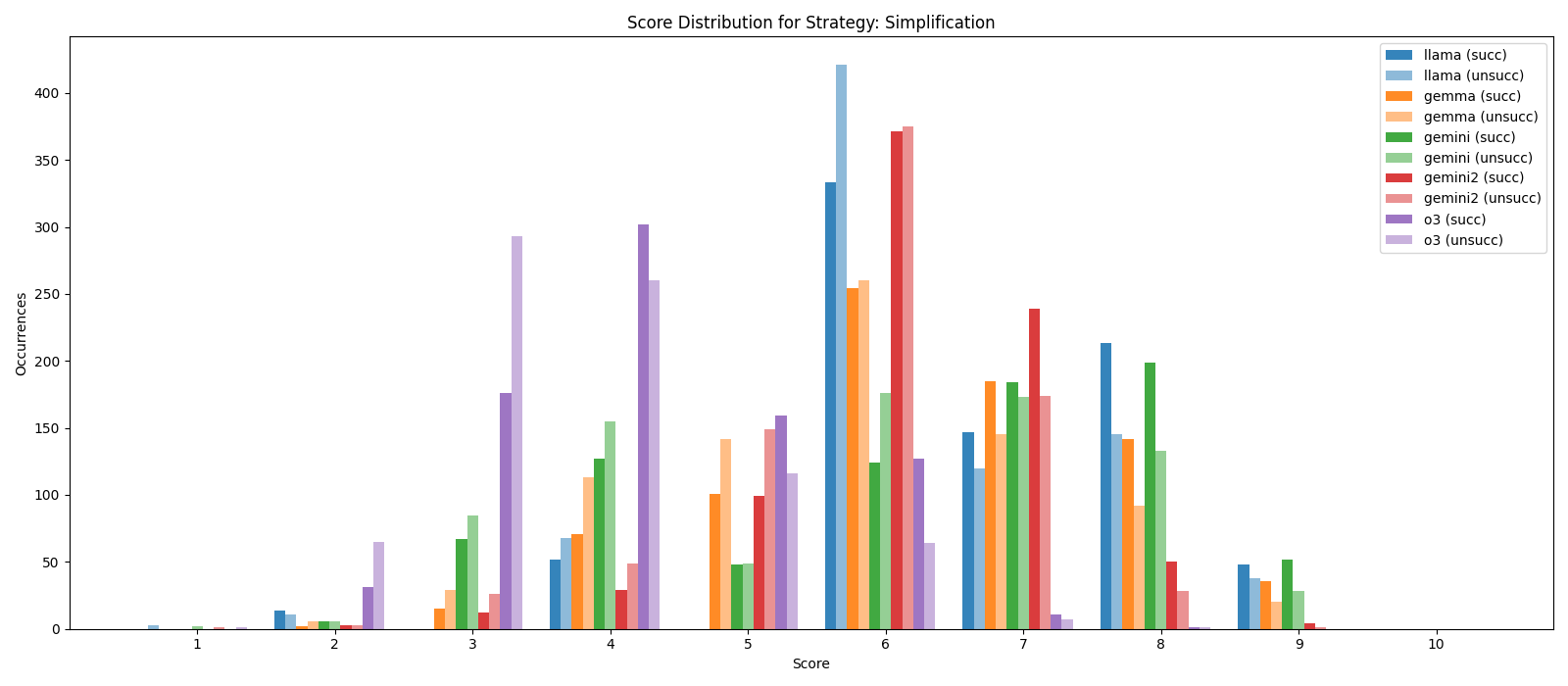
The efficacy of persuasive communication hinges on a toolkit of rhetorical strategies, demanding careful analysis to reveal underlying intent. Techniques such as simplification – reducing complex issues to easily digestible, though potentially misleading, terms – and attacking reputation, or ad hominem arguments, bypass logical reasoning in favor of emotional response. Discerning the presence and impact of these strategies is paramount; a message may appear neutral on the surface, yet subtly manipulate perception through framing or disparagement. Recognizing these persuasive maneuvers allows for a more critical evaluation of information, moving beyond surface-level understanding to uncover the true aims of the communicator and the potential consequences for the recipient.
The proliferation of digital platforms has unleashed an unprecedented volume of persuasive communication, demanding innovative approaches to its analysis. Traditional methods of identifying rhetoric are ill-equipped to handle the sheer scale of online discourse, where subtle cues and rapidly evolving strategies are commonplace. Consequently, research is increasingly focused on developing automated tools capable of detecting persuasive messaging within massive datasets of text and social media interactions. These tools utilize techniques from natural language processing and machine learning to identify patterns associated with specific persuasive techniques, assess the emotional tone of communication, and even predict the potential impact of messages on target audiences. The ability to analyze persuasive communication at scale is not merely an academic pursuit; it holds significant implications for fields ranging from political science and marketing to public health and cybersecurity, offering the potential to understand – and potentially mitigate – the effects of manipulation and misinformation.
A Systematic Framework: MS-PS for Deconstructing Influence
The MS-PS method systematically identifies persuasive arguments within text by assigning scores based on predefined persuasive strategies. This approach moves beyond subjective interpretation by quantifying the presence of techniques such as appeals to emotion, logical reasoning, or authority. Each identified strategy contributes to an overall ‘Strategy Score’ for the message, enabling comparative analysis of different texts or segments of text. The framework relies on a defined rubric for each strategy, ensuring consistent application and replicability of the scoring process, ultimately facilitating a measurable assessment of persuasive intent.
The MS-PS framework utilizes a ‘Strategy Score’ to numerically represent the degree to which specific persuasive techniques are employed within a given message. This score is not simply a binary presence/absence indicator; rather, it’s a weighted value derived from analyzing textual features indicative of each strategy. The weighting accounts for the intensity and prominence of the technique’s application. For example, a highly emphasized emotional appeal will generate a higher score than a subtle instance of the same technique. These individual Strategy Scores are then aggregated to provide an overall assessment of persuasive intent, allowing for comparative analysis between different messages or sections within a single message. The scoring methodology is designed to be objective and reproducible, facilitating consistent evaluation across various datasets and applications.
The MS-PS framework provides a systematic method for evaluating persuasive intent through quantifiable metrics. This is achieved by assigning a numerical score reflecting the degree to which persuasive strategies are employed within a given message. Performance evaluations, specifically using the Anthropic dataset, demonstrate the framework’s efficacy, achieving a Micro F1 Score of up to 0.80. This score indicates a strong balance between precision and recall in identifying persuasive techniques, offering a measurable metric for assessing influence and enabling comparative analysis of persuasive communication.
Validating the Architecture: Datasets and Model Refinements
The effectiveness of the MS-PS framework has been quantitatively demonstrated through its application to several established datasets. Specifically, performance was evaluated using the Anthropic Dataset, a resource for evaluating language model behavior; the Winning Arguments Dataset, designed for assessing argumentative reasoning; and the Persuasion for Good Dataset, focused on persuasive communication analysis. These datasets provided a standardized basis for measuring MS-PS’s ability to accurately predict and analyze persuasive strategies and argumentative strength across varied contexts and input types.
Modifications to the core MS-PS framework include the MS-PS-AVG and MS-PS-MLP variants, designed to improve both accuracy and predictive power. Specifically, the MS-PS framework has demonstrated an accuracy rate of up to 92% when applied to the original Winning Arguments dataset. These variants achieve this performance through algorithmic adjustments that refine the initial model’s capacity for accurate assessment and prediction, building directly upon the foundational principles of the core MS-PS methodology.
The application of advanced analytical methods, specifically Large Language Models (LLMs) and Chain-of-Thought Prompting, demonstrably improves the performance of the persuasion analysis framework. When applied to the Persuasion for Good dataset, these methods achieved a reduction in Mean Squared Error (MSE) of up to 50%. This indicates a substantial improvement in the accuracy of predicting persuasive outcomes through enhanced analytical and reasoning capabilities facilitated by the LLMs and Chain-of-Thought prompting techniques.
Beyond Detection: Implications for a More Resilient Information Ecosystem
The ability to pinpoint persuasive strategies extends beyond simply flagging manipulative content; it offers a pathway to actively counter disinformation and bolster reasoned judgment. By understanding how arguments are constructed to influence belief, interventions can be designed to pre-emptively inoculate individuals against deceptive tactics. This proactive approach, unlike reactive fact-checking, focuses on enhancing critical thinking skills and promoting media literacy. Consequently, a shift occurs from damage control to empowerment, enabling individuals to independently assess information and make informed decisions, ultimately fostering a more resilient and discerning public sphere. The implications stretch across numerous domains, from public health campaigns to political discourse, offering a powerful tool for safeguarding against undue influence.
Analysis of online discourse reveals underlying patterns in how arguments are constructed and disseminated, and topic modeling serves as a powerful tool for identifying these prevalent persuasive themes. When applied to datasets like the Winning Arguments Dataset – a curated collection of online debates – this technique effectively distills complex discussions into a set of dominant topics, highlighting the core ideas that resonate with audiences. This process not only maps the landscape of online argumentation, but also reveals the strategies frequently employed to sway opinion, allowing researchers to understand what arguments are winning, and, crucially, how they are framed to achieve that success. The ability to automatically identify these themes provides a foundation for further investigation into the psychological mechanisms driving persuasion and the potential for mitigating manipulative content.
The robust performance of the MS-PS model – achieving R-squared values consistently above 0.7 across varied datasets – suggests a strong foundation for future investigations into individualized persuasion detection. Rather than a one-size-fits-all approach, upcoming research aims to tailor these detection systems to individual cognitive profiles and biases, potentially identifying persuasive techniques that resonate specifically with each user. However, this personalization necessitates careful consideration of the ethical landscape; the ability to pinpoint vulnerabilities to persuasion raises concerns about manipulation and autonomy, prompting a crucial need to establish guidelines and safeguards for responsible implementation of this technology. This includes addressing potential biases embedded within the models themselves and ensuring transparency in how persuasive appeals are identified and flagged.
The framework detailed in this research embodies a holistic approach to understanding persuasive communication. It recognizes that effective argumentation isn’t simply about the content of claims, but the strategic application of rhetorical devices. This aligns with the sentiment expressed by Tim Bern-Lee: “The Web is more a social creation than a technical one.” Just as the Web’s power stems from interconnectedness, so too does persuasive force arise from the skillful weaving of strategies – as MS-PS demonstrates through its analysis of six key persuasion techniques. The system’s strength lies in acknowledging this complexity, mirroring a design philosophy where understanding the whole is paramount to optimizing any single component.
Beyond Detection: Charting a Course for Persuasion Science
The framework presented here, while a demonstrable improvement in discerning persuasive arguments, operates within a limited scope. It identifies that a strategy is present, and to a degree, its strength. But a city is not defined by its buildings alone; it’s defined by the flow between them. Future work must move beyond isolated strategy detection toward understanding the interaction of these techniques. A robust system will recognize that an appeal to authority gains little traction when immediately followed by a demonstration of that authority’s bias – the structure of the argument dictates its ultimate effect.
Current approaches, even those leveraging large language models, often treat persuasion as a collection of independent variables. A more fruitful path lies in modeling the cognitive processes at play. Identifying a strategy is merely noting a component; predicting success requires understanding how that component is integrated into a larger narrative, and how that narrative resonates with pre-existing beliefs. The infrastructure should evolve without rebuilding the entire block, but also without ignoring the foundational weaknesses beneath the pavement.
Ultimately, the field must grapple with the inherently subjective nature of persuasion. Winning arguments aren’t objectively “true”; they are effectively received. Truly elegant solutions will incorporate models of audience psychology, acknowledging that the same argument, presented with the same strength, will land differently depending on the recipient’s prior experiences and biases. To truly understand persuasion is to understand the complex, messy, and often irrational core of human cognition.
Original article: https://arxiv.org/pdf/2601.10660.pdf
Contact the author: https://www.linkedin.com/in/avetisyan/
See also:
- Top 10 Coolest Things About Invincible (Mark Grayson)
- Unmasking falsehoods: A New Approach to AI Truthfulness
- Silver Rate Forecast
- Top 20 Dinosaur Movies, Ranked
- Gold Rate Forecast
- TV Shows That Race-Bent Villains and Confused Everyone
- 25 “Woke” Films That Used Black Trauma to Humanize White Leads
- Smarter Reasoning, Less Compute: Teaching Models When to Stop
- From Bids to Best Policies: Smarter Auto-Bidding with Generative AI
- Celebs Who Narrowly Escaped The 9/11 Attacks
2026-01-17 07:53