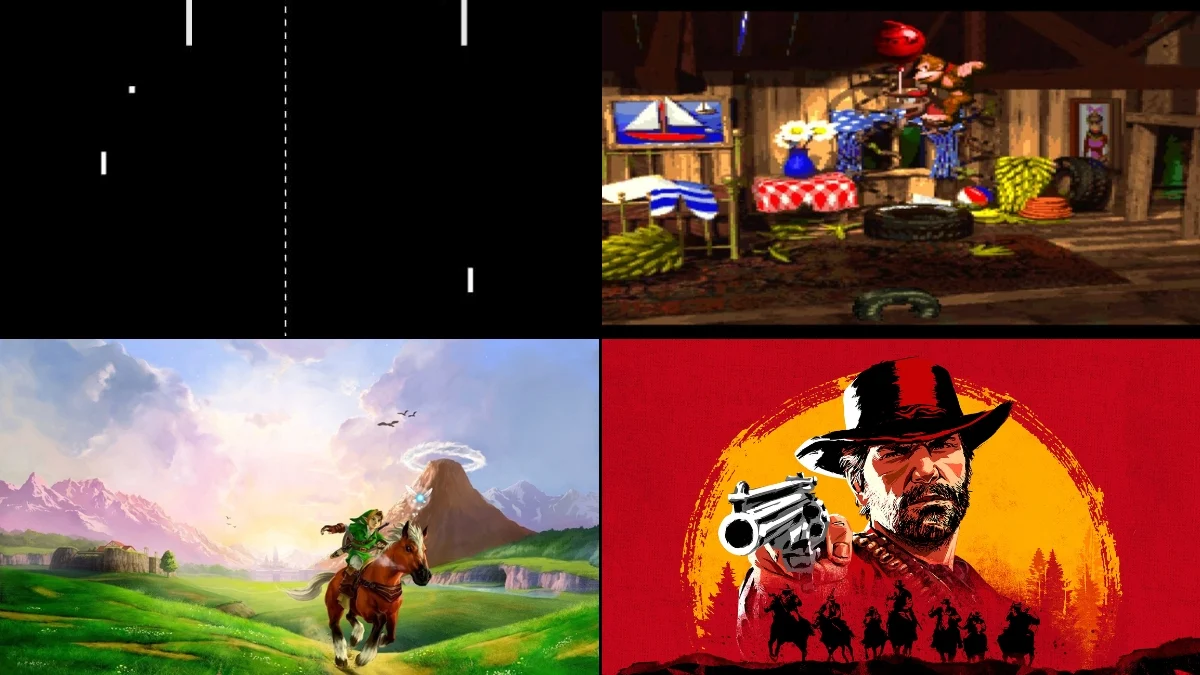
Video game graphics have come a long way, evolving from basic pixels to incredibly realistic worlds that are almost indistinguishable from reality. Over the years, certain games have been particularly important, introducing new technologies and artistic styles. These improvements often meant creating new game engines and specialized computer parts to handle detailed animations and lighting. This ongoing pursuit of better visuals continues to shape gaming, as developers aim to create more immersive experiences with greater detail and a cinematic feel.
‘Pong’ (1972)

Atari’s classic arcade game brought electronic tennis to a wide audience for the first time. Created by Allan Alcorn, the game used basic white shapes for paddles and a ball. It set the visual standard for early video games, proving that electronic images could realistically recreate sports on TV.
‘Super Mario Bros.’ (1985)

Nintendo created and released this classic platform game for the Nintendo Entertainment System. It was a visual leap forward, boasting bright colors and detailed character movements that were unlike anything seen on home consoles before. The game’s smooth scrolling created a feeling of expansive, connected worlds in the Mushroom Kingdom. This title became a benchmark for how 2D games were designed, especially when it came to level creation and keeping characters consistent.
‘Wolfenstein 3D’ (1992)
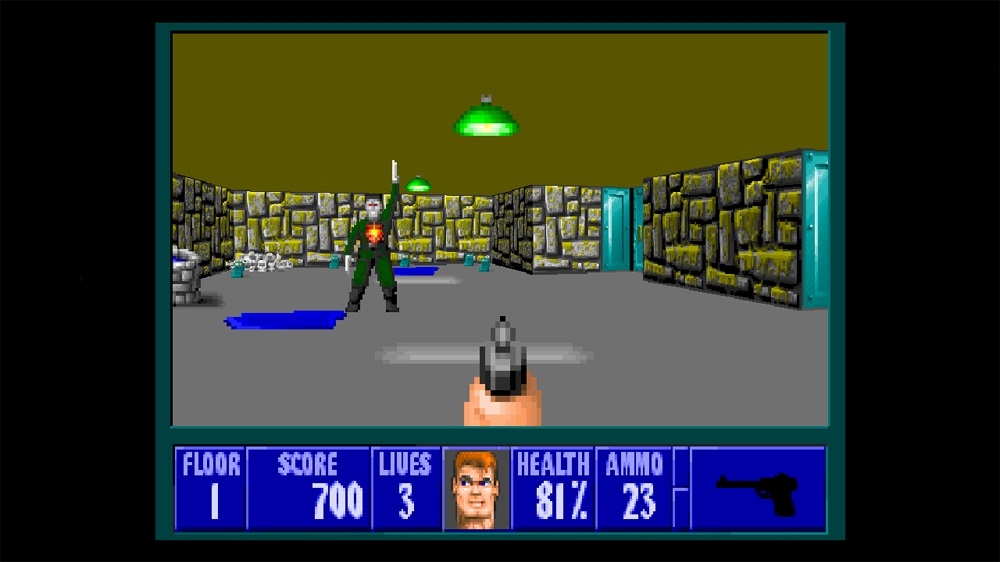
Created by id Software and published by Apogee Software, this game is famous for making first-person shooter games popular. It used a clever technique called ray casting to create the illusion of 3D graphics on older computers that could normally only display 2D images. Players explored detailed corridors that felt immersive and gave a new sense of depth to action games. It proved that fast-paced, action-packed gameplay was possible and paved the way for many games that followed in the next ten years.
‘Virtua Fighter’ (1993)

This arcade fighting game, created by Sega AM2, was a groundbreaking title as the first to use fully 3D graphics. It ran on the Model 1 hardware, allowing for smooth, detailed character models and fast-paced animations. Instead of the typical hand-drawn characters of the time, it used wireframe and flat-colored polygons to create realistic human forms. This move to 3D graphics significantly changed how fighting games looked and set the standard for future development in the genre.
‘Doom’ (1993)

id Software’s groundbreaking game built upon their earlier successes with major improvements to graphics. It featured varied heights, angled walls, and realistic lighting to create immersive and spooky environments. The game’s complex level design and shadow effects set a new visual standard and helped popularize 3D graphics cards. For years, it remained a key example of what was possible with PC gaming.
‘Donkey Kong Country’ (1994)

Rare created this game for Nintendo using powerful Silicon Graphics computers to build detailed 3D models. These models were then turned into sprites, allowing the Super Nintendo to display them with impressive clarity. The game’s smooth animations and detailed textures gave the illusion of 3D graphics on a 16-bit console. Its visually stunning presentation, which looked like it belonged on more advanced systems, was a major reason for its popularity and commercial success.
‘Super Mario 64’ (1996)

This platforming game was developed by Nintendo as a key launch title for the Nintendo 64. It was groundbreaking for its time, featuring a moving camera and a completely 3D world where players could move freely. The game’s visuals were enhanced with techniques like Gouraud shading and mipmapping, creating smooth textures and realistic lighting throughout Princess Peach’s castle. It set a new standard for how 3D characters move and interact with their surroundings, influencing game design for years to come.
‘Quake’ (1996)

John Carmack and the team at id Software created this game to showcase the latest advancements in 3D graphics. It was a pioneer in using fully 3D models and environments, moving beyond the traditional 2D sprites of the time. The game’s engine allowed for realistic movement and lighting effects, like shadows and depth. This innovative technology went on to influence and serve as the basis for many other successful games.
‘Final Fantasy VII’ (1997)

Okay, so I recently played this RPG that Square made for the PlayStation, and it totally blew me away. It was designed to really show off what the CD-ROM could do. Basically, they used these gorgeous pre-rendered backgrounds, and then put 3D characters on top of them while you were exploring and fighting. But the coolest part? The cutscenes were done with really high-quality computer graphics and flowed right into the gameplay, telling a seriously complex story. Honestly, the way they did that visual storytelling was a game-changer, and I think a lot of other games tried to copy it for years after.
‘The Legend of Zelda: Ocarina of Time’ (1998)

This groundbreaking game, developed by Nintendo, completely reimagined action-adventure games in 3D. It pioneered a targeting system, called Z-targeting, which dramatically changed how players fought enemies in a 3D world. The game also featured large, immersive environments with a realistic day-night cycle that affected both the lighting and the behavior of everything around you. Its impressive visual style and sense of scale set the standard for many open-world games that followed.
‘Metal Gear Solid 2: Sons of Liberty’ (2001)

Konami and Kojima Productions created ‘Metal Gear Solid 2: Sons of Liberty’ to showcase the power of the PlayStation 2. The game was visually impressive for its time, featuring detailed characters with realistic expressions and clothing. It used cutting-edge weather effects and real-time shadows to create a cinematic experience within the game’s setting, the Big Shell. ‘Metal Gear Solid 2’ raised the bar for graphics and interactivity on sixth-generation consoles.
‘Half-Life 2’ (2004)
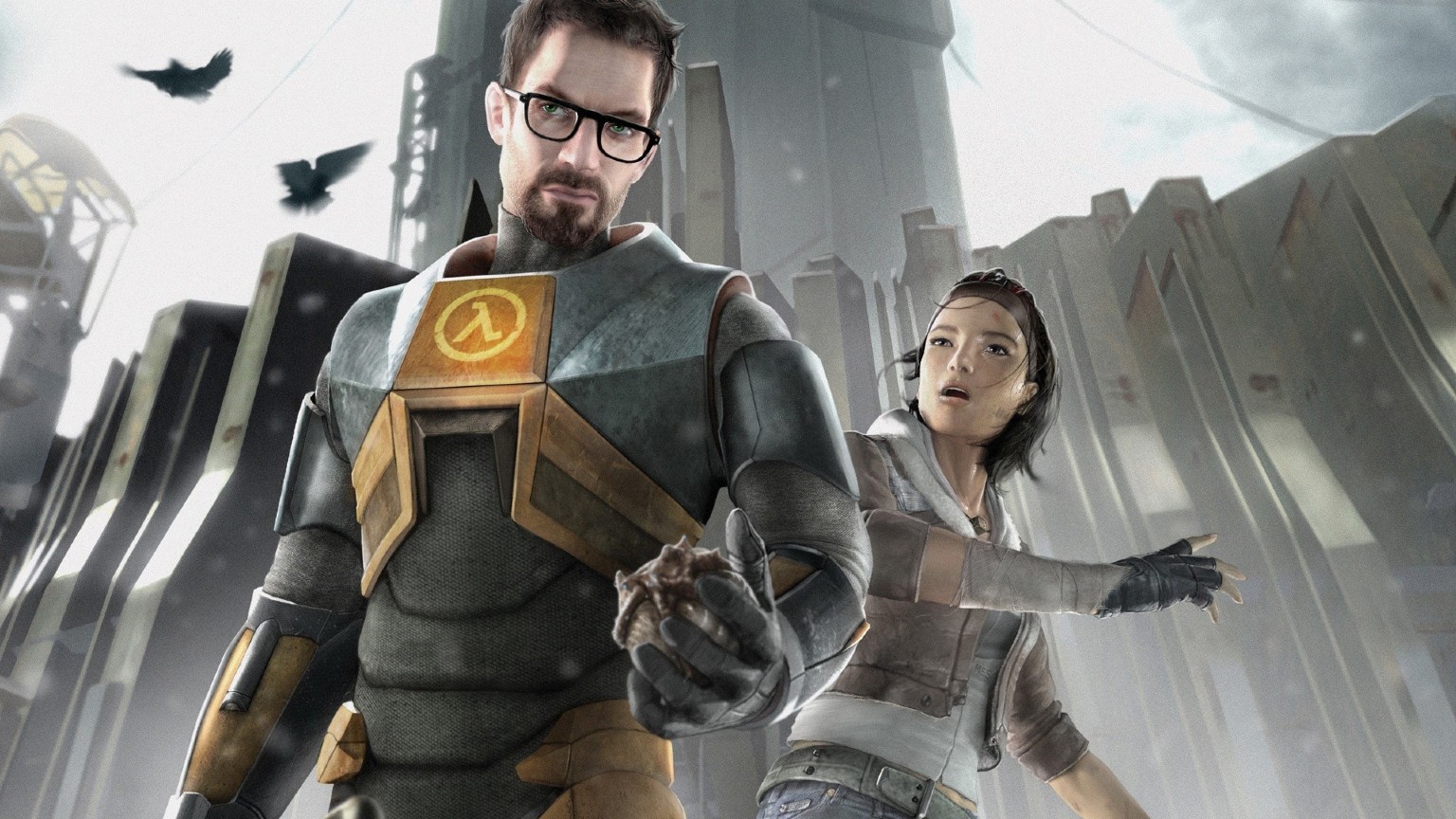
Valve created ‘Half-Life 2’ using their Source engine, which was revolutionary for its realistic physics and character animations. The game’s technology allowed characters to express a full range of emotions and convincingly lip-sync their lines, while the physics engine made the game world feel dynamic and responsive. Combined with detailed graphics, these features brought the immersive and unsettling world of City 17 to life for players worldwide.
‘Crysis’ (2007)

Crysis was a first-person shooter created by Crytek and published by Electronic Arts to demonstrate the capabilities of the CryEngine 2. It was known for its incredibly realistic graphics, featuring advanced lighting and detailed tropical settings that were very demanding on computers at the time. The game pioneered features like interactive plants and realistic water, setting a new standard for visual quality in PC games. Because of its high requirements, ‘Crysis’ became popular as a benchmark to test the power of new computer hardware.
‘Uncharted 2: Among Thieves’ (2009)
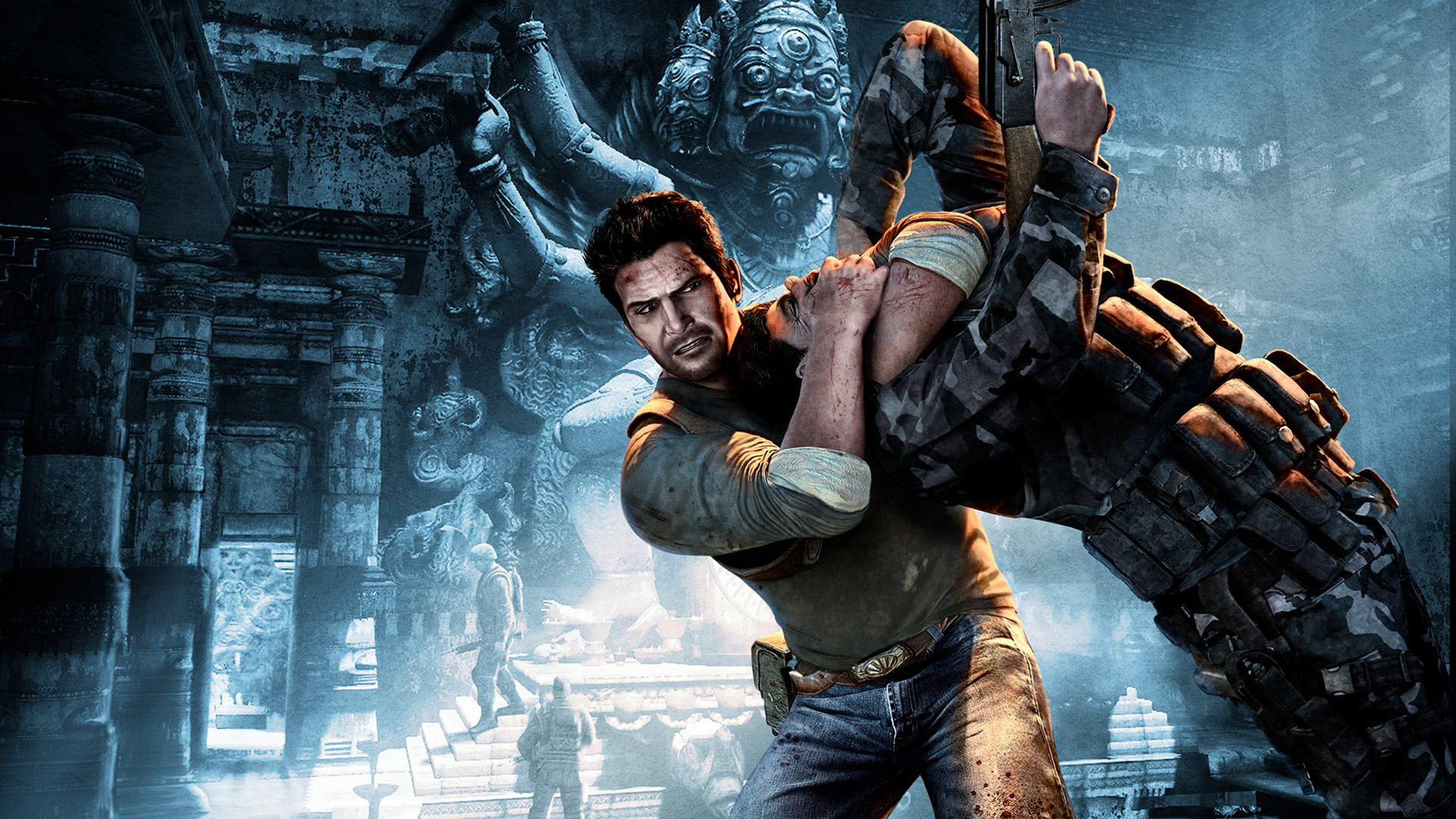
Naughty Dog created ‘Uncharted 2: Among Thieves’ for the PlayStation 3 to truly test the power of its Cell processor. The game was known for its huge, detailed environments, smooth transitions between playing and cutscenes, and realistic snow and ice effects set in the Himalayas. Its stunning visuals and lifelike characters helped redefine what was possible in story-focused games.
‘The Last of Us’ (2013)

Naughty Dog and Sony created this game to push the PlayStation 3 to its visual limits. It featured impressive lighting and effects, building a believable and harsh post-apocalyptic world. The characters, Joel and Ellie, felt incredibly real thanks to detailed animations and expressions, drawing players into their emotional story. The game proved that strong artistic vision could still deliver a stunning experience even on older hardware.
‘The Witcher 3: Wild Hunt’ (2015)

CD Projekt Red created and released this expansive open-world role-playing game using their own REDengine 3. The game boasts a huge, beautifully detailed world with varied landscapes and believable weather. Cutting-edge technology was used for things like plants and hair, making the experience incredibly immersive. The combination of massive environments and detailed characters in ‘The Witcher 3: Wild Hunt’ made it a visually groundbreaking game.
‘Red Dead Redemption 2’ (2018)

This critically acclaimed western game, created by Rockstar Games, is famous for its incredibly detailed and immersive world. It uses cutting-edge lighting and weather effects to make the environment feel truly alive. Characters age realistically and react to their surroundings, and even the animals behave in believable ways. Years after its release, the game’s impressive graphics and realistic world continue to set a high standard for the video game industry.
‘Microsoft Flight Simulator’ (2020)

Asobo Studio created this flight simulator, and Xbox Game Studios released it using the power of cloud computing and real-world satellite data. The game uses information from Bing Maps and artificial intelligence to build a remarkably accurate version of the entire Earth. It features realistic, dynamic weather and beautiful, three-dimensional clouds that respond to sunlight and moonlight. This impressive technology lets players fly over incredibly detailed and lifelike cities and landscapes anywhere in the world.
‘Cyberpunk 2077’ (2020)

CD Projekt Red’s game is a visual showcase, pushing the limits of real-time ray tracing and lighting. It’s set in a richly detailed, neon-lit city and features incredibly realistic characters. The game uses cutting-edge technology to create believable lighting and reflections, making Night City feel truly immersive. Regular updates continue to make it one of the best-looking games available for powerful computers.
‘Alan Wake 2’ (2023)

Alan Wake 2, a psychological horror game developed by Remedy Entertainment and published by Epic Games, received high praise for its stunning graphics. The game’s advanced technology, including full path tracing and detailed character models, created visuals that looked incredibly realistic. It featured complex lighting and environments, seamlessly blending different realities and setting a new standard for graphics in modern video games.
Please share your thoughts on these graphical milestones in the comments.
Read More
- 20 Movies Where the Black Villain Was Secretly the Most Popular Character
- Celebs Who Narrowly Escaped The 9/11 Attacks
- Transformers Under the Microscope: What Graph Neural Networks Reveal
- Top 20 Dinosaur Movies, Ranked
- Trading on Thin Air: AI Agents Conquer Crypto Volatility
- Silver Rate Forecast
- Gold Rate Forecast
- Every Notable ‘Star Trek: The Original Series’ Actor Who Died
- 22 Films Where the White Protagonist Is Canonically the Sidekick to a Black Lead
- Games That Faced Bans in Countries Over Political Themes
2026-01-05 04:25